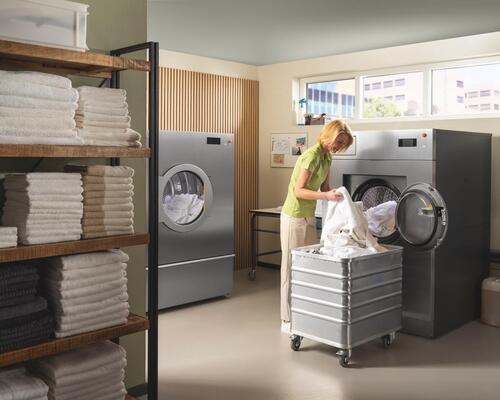
In today’s premium spa environment, every detail shapes the guest experience – right down to
the softness of towels and the freshness of linens. ... more
The Thailand Spa Consumer Report 2012, the first survey dedicated to spa-goers in the country, highlights how the industry has generated a strong consumer following with many visiting spas multiple times a year. Julie Garrow reports
By Julie Garrow | Published in Spa Business Handbook 2013 issue 1
The first-ever report focused on spa-goers in Thailand was released by industry research specialist Intelligent Spas at the inaugural World Spa and Well-being Convention held in Bangkok (see p26) last September. The Thailand Spa Consumer Report 2012 was sponsored by the Tourism Authority of Thailand and conducted on behalf of the Thai Spa Association. The bi-lingual survey offered in Thai and English was completed by 316 people via a self-fill, online survey during July and August 2012. This convenience sample was used to better understand actual spa-goers’ recent behaviours, current preferences and forecast spa visits. The analysis covered spa visits near where the respondent lived, as well as their spa experiences while travelling, providing very interesting comparisons.
Spa habits at home It’s promising to see Thai spa-goers visited spas near where they lived 6.6 times on average during the 12 month period before completing the survey. Also interesting is that almost 18 per cent visited a spa more than once a month near where they lived during the same period.
Surprisingly in this digital age, the most common form of awareness is still word of mouth, with 24 per cent of spa-goers hearing about the last spa they visited from friends and family. The internet was the second most popular channel mentioned and 17 per cent of respondents found a local spa via online searches. Seven per cent learned about a spa after they received a gift certificate.
The majority of respondents visited a spa for relaxation (79 per cent) compared with just 8 per cent who went for beautification and 7 per cent for a reward or to spoil themselves. The treatment most commonly experienced during the last spa visit was a body scrub/exfoliation, with about a third of spa goers selecting this. Twenty-six per cent chose a Thai massage.
Over 50 per cent of respondents went to the spa with someone including their friends (32 per cent), their spouse (11 per cent) or their family (10 per cent). Seventy-one per cent took time to enjoy the spa’s public water-based facilities such as plunge pools, whirlpool, steamroom and/or sauna.
Average prices of spa treatments in Thailand are relatively cheap and 80 per cent of spa-goers spent less than US$100 (€76, £64), with 30 per cent of that allocated to retail items. Skincare products were the most common retail item purchased at the spa according to the report.
Spa travel The key differences in spa habits of Thai spa consumers while travelling include: - Fifty-eight per cent visited a spa alone when they were travelling compared to 46 per cent who went alone to a spa near their home - More respondents (44 per cent) chose a body scrub/exfoliation while travelling compared to when visiting a spa near where they lived (31 per cent) - Seven per cent stayed at a spa while travelling for at least three hours compared to just 1 per cent of local spa goers who stayed for that duration - Twenty-five per cent chose not to use the public water-based facilities while travelling even though they were available, compared to 18 per cent of those spa-ing near home - Travellers surveyed reported spending 130 per cent more on tips/gratuities compared to non-travellers
Preferences and forecasts Over 40 per cent of Thai spa-goers stated that their favourite spa treatment was aromatherapy massage, although this was chosen in only 17 per cent of the last local spa visits and 19 per cent of the last travelling spa visits.
The most important factor when choosing a spa was that spa therapists have formal qualifications. This was rated 6.4 on a scale of one to seven, where seven was defined as extremely important.
Of those surveyed who did not visit a spa within the year before completing the questionnaire, 42 per cent said they felt spas were too expensive and 18 per cent said they were too busy to go to a spa.
When it comes to future use, the Thai spa consumers stated that, on average, they planned to visit spas near where they live 6.6 times on average, during the 12 months following the survey. Three quarters of respondents said they were likely to visit a spa while travelling, six or less times in the 12 months following the survey.
Takeaway points Research is interesting to read but taking action based on the intelligence is often difficult. The following points aim to provide examples of how spas, consultants and other users may interpret the survey findings and apply them to make positive changes, in order to address the current behaviours and preferences of spa-goers.
Firstly, understand the power of word-of-mouth and ensure the spa’s values and operations incorporate high service standards and continuous training to maximise client satisfaction. Sometimes staff delivering treatments to travellers become complacent assuming they will never return, however this survey showed that 10 per cent of respondents visiting a spa while travelling had previously visited that spa and a further 26 per cent chose that spa after hearing some positive things about it via word-of-mouth.
Secondly, this survey suggests that spas should promote the professional qualifications of spa therapists to provide clients with a better peace of mind that their spa treatment will be delivered by a skilled therapist. Making this information available on the spa’s website and/or mentioning therapists by name and qualification level when potential clients call to enquire, are both ways to help generate more spa visits and make the decision to choose one spa over another easier.
Thirdly, pricing is more important to spa-goers than an extensive range of treatments so examine the spa menu to check if the pricing is competitive and delete treatments or packages not being selected. Ensure popular treatments are easily visible in the spa menu and available as a single treatment, as well as packaged with other relevant treatments to enable up-selling.
The Thailand Spa Consumer Report 2012 was organised by the Thai Spa Association and sponsored by the Tourism Authority of Thailand, Voya, Spa Ritual, Kamalaya, BEAUTYdepartmentstore and Ramburi. Purchase the full report at www.intelligentspas.com.
ABOUT THE AUTHOR
Julie Garrow, MD of Intelligent Spas, founded the specialist spa industry research company in 2001 and has conducted surveys in over 100 countries to date. She has a 20-year career in hospitality and leisure research. tel: +65 6248 4736 email: [email protected] twitter: @IntelligentSpas web: www.intelligentspas.com skype: IntelligentSpas
Four Seasons Resort The Nam Hai in Hoi An, Vietnam, has put together a Global Wellness Day
(GWD) agenda with activations rooted in nature and shaped by four pillars of Joy – in
alignment with the day’s theme #JoyMagenta.
The Global Wellness Summit (GWS) will celebrate its 20th anniversary at the 2026 event in
Phuket, Thailand, later this year with the theme: The Science, Art and Soul of Wellness.
Auko, an all-inclusive development, is opening in Phong Nha in Vietnam in Q3 2026, with a
series of 30 tented eco-lodges and wellness hospitality operations by Lumina Wellbeing.
Therme Manchester’s 28-acre development, which will include interconnected glass pavilions
that measure 65,000sq m, will be the largest bathing and wellbeing attraction in the world once
complete, according to prof David Russell, CEO of Therme UK.
Naples Beach Club, a Four Seasons Resort, has opened a 2,800sq m spa called The Sanctuary,
with the design and concept inspired by the Native American people that populated Florida’s
Southwest coast – the Calusa.
Swire Hotels’ luxury hospitality brand Upper House has revealed it will roll out its two-day
House of Healing retreats at its three hotels in Hong Kong, Chengdu and Shanghai.
LVMH-owned beauty house Guerlain will launch up to five spas with partners a year as part of
its plan to expand globally, according to the brand’s international spa and wellness director,
Diane Davody.
A new global study by Kevin Kelly and Peter Yesawich, called WELLSurvey 2.0, has revealed
more than half of consumers in the UK, US and Germany would not choose numerous high-
profile wellness resort brands for a future trip.
Luxury hospitality and wellness pioneer Jeremy McCarthy has launched Leisure Alchemy, a
digital platform that will provide professionals with strategic guidance on how to build
transformational leisure experiences that drive profit.
+ More news
COMPANY PROFILES
BC Softwear Ltd Established in 2002 by Barbara Cooke, BC SoftWear provides unmatched expertise in the crafting of th [more...]