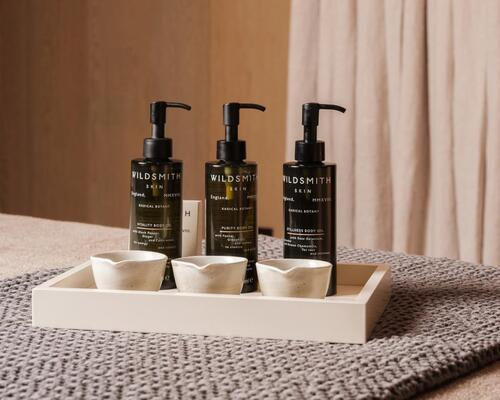
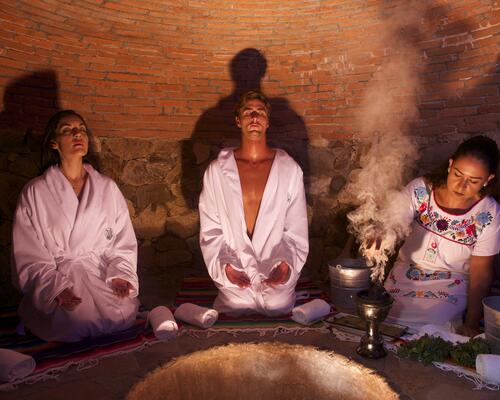
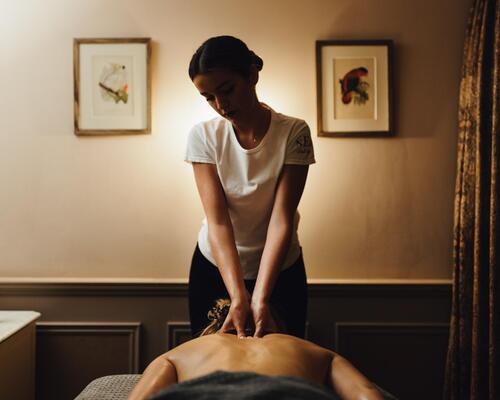
In a world where imbalance often accumulates quietly, Wildsmith unveils its newest
wellbeing innovation: Silent Loads, an approach designed to meet the needs of modern spa
guests with precision and depth. ... more
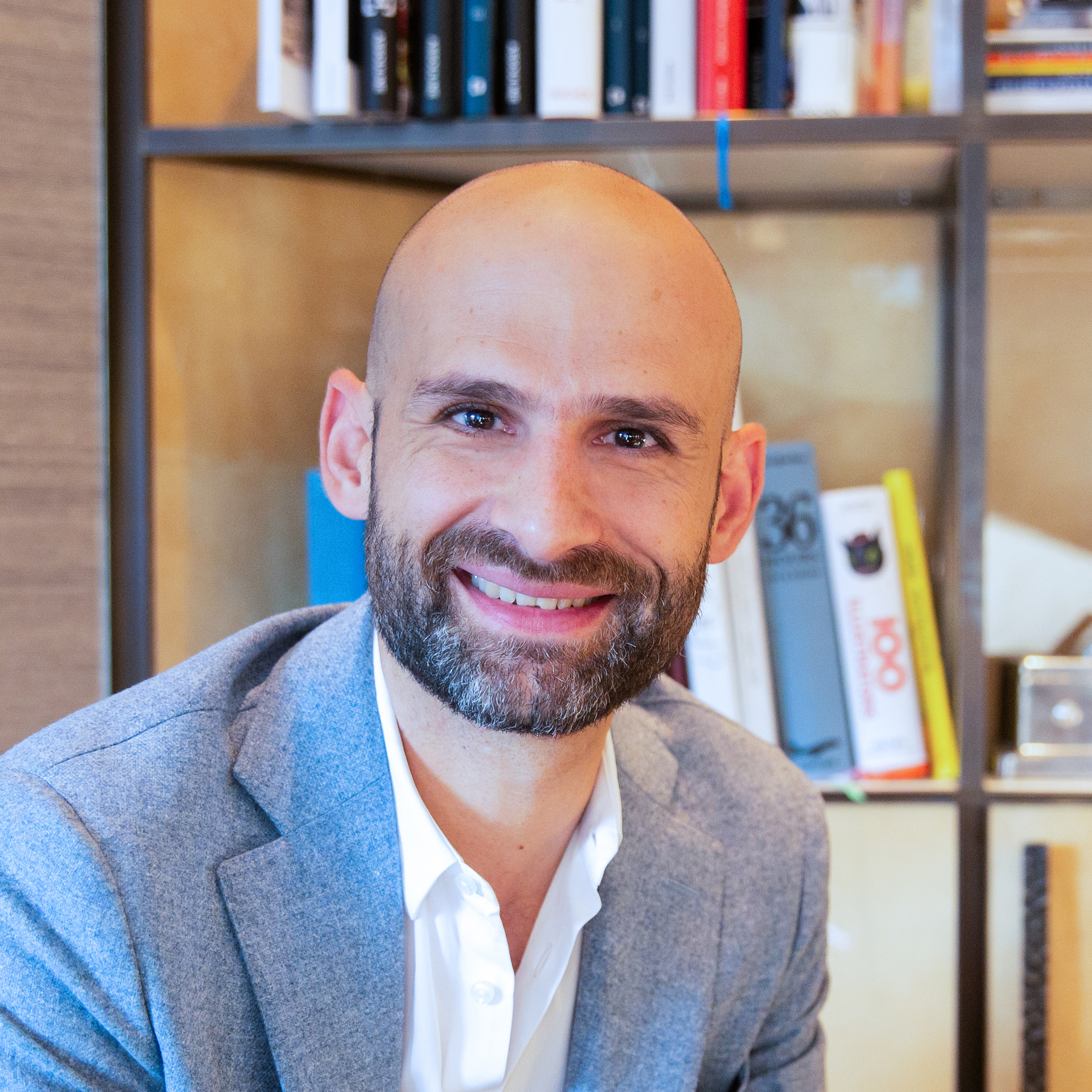
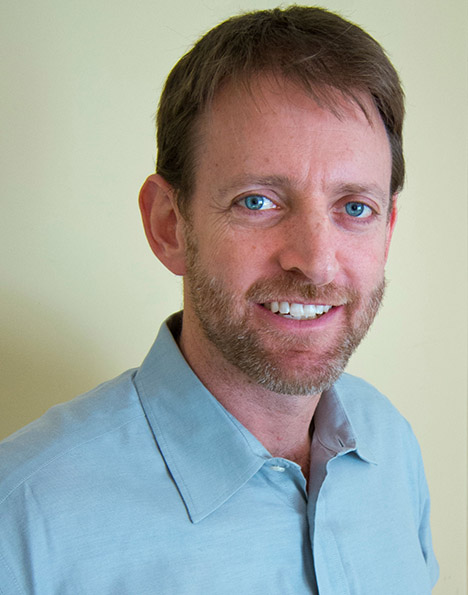
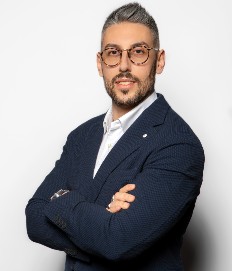
Jeremy McCarthy, Director of Global Spa Development and Operations, STARWOOD HOTELS & RESORTS
As director of global spa development and operations for Starwood Hotels & Resorts, Jeremy McCarthy supports the spas for all its brands including St Regis, the Luxury Collection, Westin, Sheraton, Le Méridien and W (see SB10/3 p24). That’s 400 spas in more than 100 countries with at least another 120 in development. He’s worked in hospitality for 22 years and since joining Starwood in 2006 has helped develop and implement five in-house spa concepts. In addition, he recently completed a masters degree in Applied Positive Psychology at the University of Pennsylvania, Philadelphia and wrote the book The Psychology of Spas & Wellbeing.
How did you get into the spa business? In 1991, I was working as a recreation manager at Four Seasons Santa Barbara, in California when we decided to open a spa. My background was in fitness – I was a personal trainer, swim coach and triathlete – so was excited to be setting up a small gym, but I didn’t know anything about spas.
That turned into 14 years with Four Seasons opening and operating luxury spas around the world. After that, I spent a few years opening a gigantic new spa at the famed La Costa Resort & Spa in southern California and then I came to Starwood seven years ago.
What have been your biggest recent achievements? My second son Max was born in January 2012, I published my book on The Psychology of Spas & Wellbeing and I updated our Heavenly Spa concept for Westin hotels by bringing in Aromatherapy Associates as the new product house and creating new treatments and marketing collateral.
Is your life on track? I don’t believe that there is such a thing as a track for life. So I feel my life is flying along completely off track... and that is exactly how it should be.
If you weren’t doing this, what would you be doing? I’d be a college professor. It’s still my personal career goal – this year, for the third time, I taught an online course in positive leadership as part of the Spa and Hospitality Management Certificate at UC Irvine in the US.
What are your goals at Starwood? This is a long list. In 2012, we updated our Heavenly Spa and Shine Spa concepts for Westin and Sheraton, this year I hope to refresh our Away Spa concept for W and begin refreshing our Explore Spa concept for Le Méridien. We also have a ton of website projects around our spas. Long term, I’m always thinking about ways to better support and engage with all of our spa managers as they’re the ones who really make things happen. In my spare time, we are also opening a heck of a lot of new spas!
What spurred you on to do a psychology degree? I actually studied psychology as an undergraduate before I ever started my career in spas, and I’ve always believed it had a direct impact as this business is all about how we make people feel. My studies in positive psychology – which focuses on research around enhancing wellbeing – not only influence everything I do in the spa world, from facility design, to treatment development and leadership skills, they’ve led me to work on other projects for Starwood around driving customer service and enhancing workplace culture.
What did you learn from your recent trip around Asia? I spent a lot of time in China as we have so much development there and in Asia going on (75 new spas in total). It was a massive education and I’m still trying to process it all. The Chinese spa market is an interesting juxtaposition of a growing middle class with a desire for greater luxuries, technology and modern conveniences, set against the backdrop of a rich history of ancient holistic healing traditions. There’s a lot that we can learn from its holistic perspectives on health, thoughtful approaches to facility design (incorporating elements, nature and feng shui principles) and gracious humility in customer service.
There’s so much change happening in China that spas need to be able to offer different things to different market segments. Some people want the typical spa journey we’re familiar with in the west: you go to a locker room, use the facilities, wait in the relaxation area and then are escorted to your treatment room. But other guests expect a more traditional and private approach where you’re escorted to your treatment suite so you can use the facilities in private. In some ways, this is like having two different spa experiences available under one roof. We have to ensure we meet the needs of both of these customers.
There’s also a social aspect to spas in China. Spas are a place to connect with others, or even do business, in a very relaxed setting. The design has to allow for this interaction.
What changes will we see in spas? I think we are on the brink of a total revolution in spa technology driven by tablets. In our Iridium Spas for St Regis, for example, the guest no longer has to check in at the front desk. They’re escorted directly to the relaxation area and we can check them in using mobile devices. At the new Shine Spa at the Sheraton Macao, guests are provided an iPad where an app helps them determine their signature elements (earth, wood, metal, fire, water, or air) so that we can better personalise the treatments to their needs. Soon, booking appointments, checking in, spa waivers, evaluation forms, spa tours, spa reading materials and more will be on touchscreen devices.
What are the biggest threats to growth? I don’t necessarily think there’s a big threat to growth, but I do expect to see continued diversification. We’re seeing this happen now with the growth of medical spas or the Massage Envy franchise model. The prototypical spa has not changed much in the last few decades, and so the industry could use some fresh innovation and creativity to keep growing.
What are the biggest opportunities? A lot of the global spa growth will come from emerging markets such as China, India and Russia. The success of Massage Envy has shown that, even in wealthier nations, finding new business models to make spas more accessible to a wider audience is a key driver.
Anyone who wants to get into this industry should differentiate from everyone else. Offer a spa for families, or a literary spa that hosts book discussions, or a spa that does only walk-in business – no appointments needed. There’s a huge market out there that’s not been tapped into as most of the existing spas are fighting over the same customers.
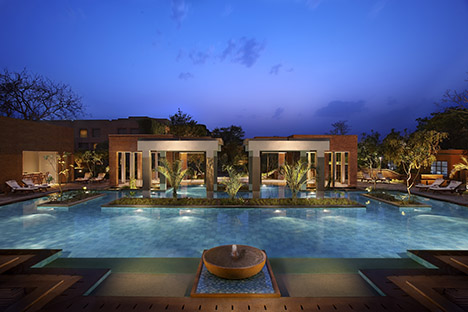
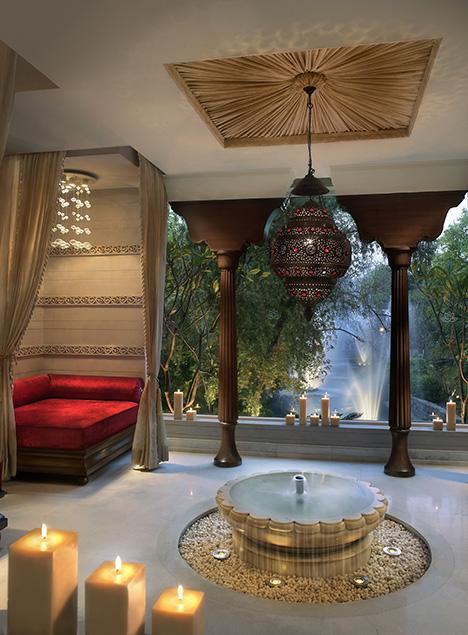
The ITC Mughal in Agra, India, is part of Starwood Hotels & Resorts’ worldwide collection, and its five-star facilities include The Royal Spa
The ITC Mughal in Agra, India, is part of Starwood Hotels & Resorts’ worldwide collection, and its five-star facilities include The Royal Spa
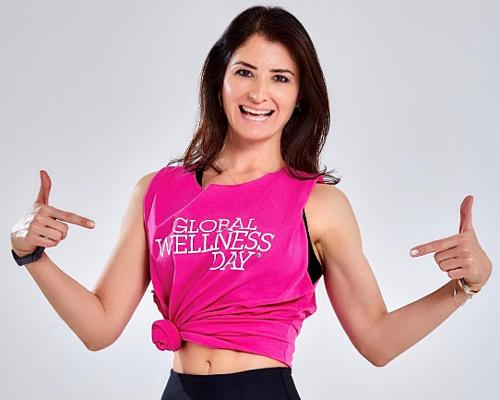
Four Seasons Resort The Nam Hai in Hoi An, Vietnam, has put together a Global Wellness Day
(GWD) agenda with activations rooted in nature and shaped by four pillars of Joy – in
alignment with the day’s theme #JoyMagenta.
The Global Wellness Summit (GWS) will celebrate its 20th anniversary at the 2026 event in
Phuket, Thailand, later this year with the theme: The Science, Art and Soul of Wellness.
Auko, an all-inclusive development, is opening in Phong Nha in Vietnam in Q3 2026, with a
series of 30 tented eco-lodges and wellness hospitality operations by Lumina Wellbeing.
Therme Manchester’s 28-acre development, which will include interconnected glass pavilions
that measure 65,000sq m, will be the largest bathing and wellbeing attraction in the world once
complete, according to prof David Russell, CEO of Therme UK.
Naples Beach Club, a Four Seasons Resort, has opened a 2,800sq m spa called The Sanctuary,
with the design and concept inspired by the Native American people that populated Florida’s
Southwest coast – the Calusa.
Swire Hotels’ luxury hospitality brand Upper House has revealed it will roll out its two-day
House of Healing retreats at its three hotels in Hong Kong, Chengdu and Shanghai.
LVMH-owned beauty house Guerlain will launch up to five spas with partners a year as part of
its plan to expand globally, according to the brand’s international spa and wellness director,
Diane Davody.
A new global study by Kevin Kelly and Peter Yesawich, called WELLSurvey 2.0, has revealed
more than half of consumers in the UK, US and Germany would not choose numerous high-
profile wellness resort brands for a future trip.
Luxury hospitality and wellness pioneer Jeremy McCarthy has launched Leisure Alchemy, a
digital platform that will provide professionals with strategic guidance on how to build
transformational leisure experiences that drive profit.
+ More news
COMPANY PROFILES
Lemi Group Lemi Group designs and produces treatment tables, chairs and multi-functional furniture and equipmen [more...]