The Scandinavian city has plans to go fossil-fuel free by 2050 and was named the first European Green Capital. Andrea Jezovit investigates how environmental awareness in Stockholm’s leisure and hospitality sectors is helping the city meet its goal
By Andrea Jezovit | Published in Leisure Handbook 2014 issue 1
It has 12,000 hectares of green space, and 800 km of cycle lanes. There’s a national park in its centre, it’s pedestrian- and public-transport-friendly, and its hospitality industry is an eco-conscious traveller’s dream. Stockholm is a model example of sustainability.
The city has a proud tradition of environmentalism. “I think it originates from our closeness to green areas,” says vice mayor Kristina Alvendal, who heads the city planning division. “And the fact Stockholm lies on water – it’s a city on islands. With that closeness to nature, I suppose it’s in our blood.”
This awareness has led to achievements that won over the European Commission in its Green Capital decision. In 1990, CO2 emissions of 5.4 tonnes per Stockholmer were registered, but the city’s climate action plan has reduced this by 25 per cent. A congestion charge discourages car-use, green vehicles are encouraged, and there’s an efficient public transport system which 80 percent of the city’s 800,000 residents use daily. All city-owned buildings are being made more energy efficient, and innovative waste and water management have been made a priority.
GREEN SPACE GALORE Stockholm’s management of parks and green space sets a world-class example. Public green space makes up 47 per cent of the city and 90 per cent of residents live no further than 300m from a park or green area, a guideline built into new developments as the city grows, Alvendal says. Stockholmers love their parks—according to one study, 60 per cent of residents visit a park or green space several times per week in the summer.
The city’s 27sq km national park, Ekoparken, became the world’s first national urban park when it was established in 1994. It boasts rare species, the densest population of giant oak trees in Europe and hundreds of protected buildings, including museums and palaces.
Today it’s the most frequented urban park and tourist destination in Sweden, as well as a conservation area protecting biodiversity for future generations. And it’s not the region’s only protected area: Stockholm county as a whole boasts over 200 nature reserves, including two national parks, for a total of 35,000 hectares of protected land.
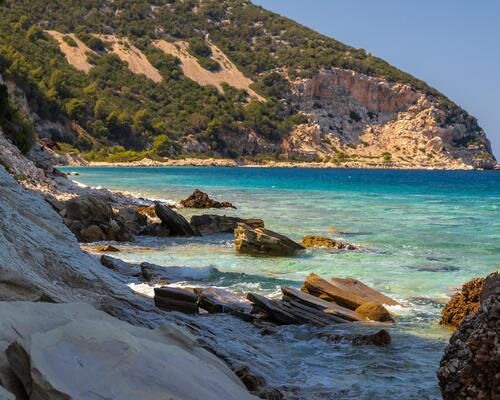
The city has also taken action to safeguard its 24 bathing beaches: in 2008, legislation introduced new standards for bathing water, and Stockholm is famed for the pristine swimming and fishing it offers.
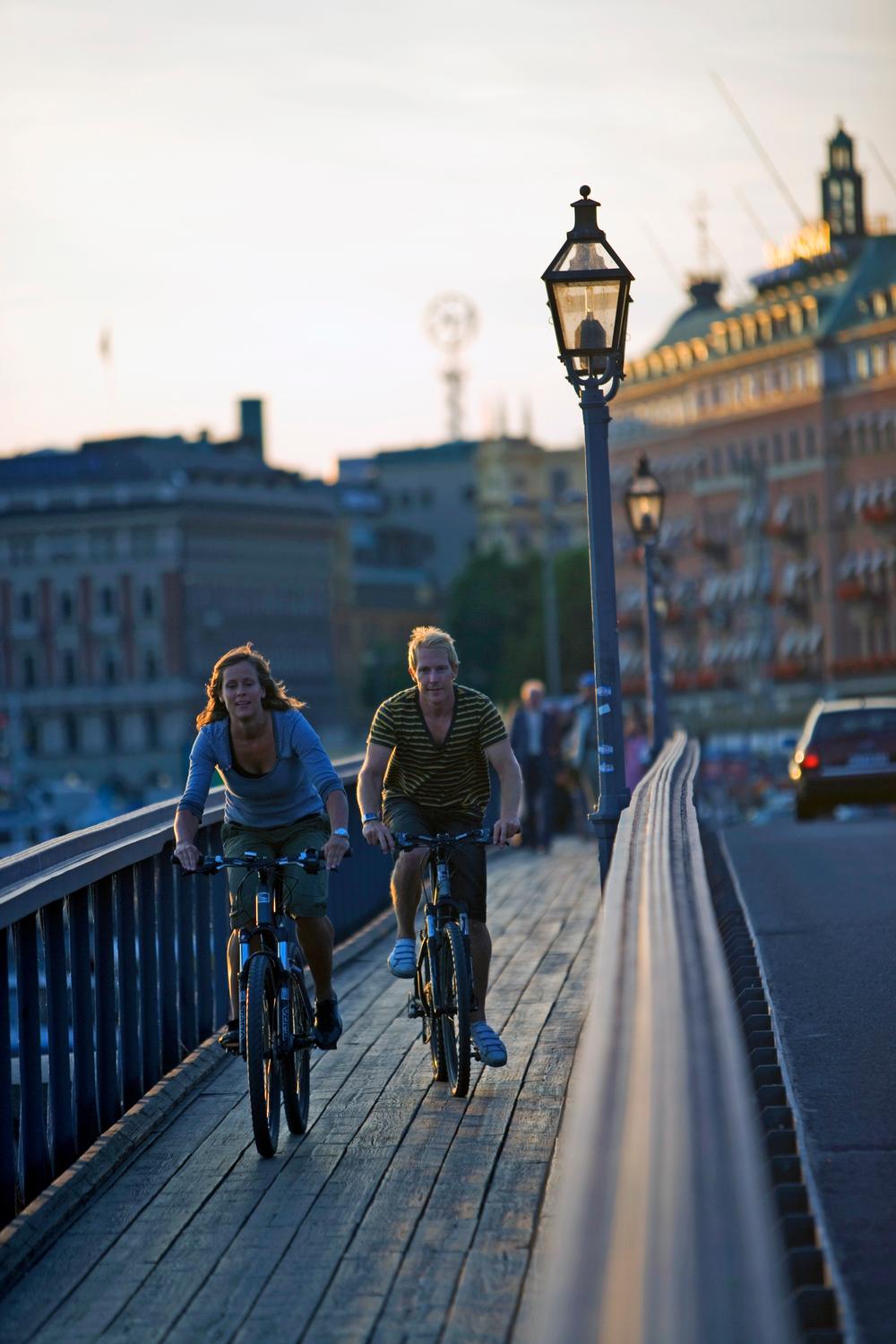
Cycling has become just as much a part of Stockholm life as green space. In 2007, the city was honoured as ‘The Biking Promoting City of the Year’, and it aims to become one of the leading biking cities in Europe. It’s well on its way—the number of cyclists in the city has increased by 70 percent in the last five years, and today 100,000 people ride their bikes daily across the 800km of cycle lanes.
Alvendal cites the success of the Stockholm City Bikes programme, run by the city in conjunction with Clear Channel, as one reason for the influx of new cyclists; it allows pass-holders to borrow and return bicycles from 70 sites around the city. Twenty-four hour service depots are also located along important cycling lanes, and the number of lanes is set to grow. “That’s part of the overall strategy for Stockholm’s growth,” Alvendal says. “We know people will continue taking their bike and the more Stockholmers we have, the more need there is for this sort of transport. So we have a programme for new bike lanes in the city as new developments are built.”
A NEW GREEN DISTRICT Stockholm’s next major development is one of Europe’s largest regeneration projects, and is ambitious not just in scale but in terms of sustainability. Set for completion in 2025, the SEK20bn (£1.86bn), 660-acre Royal Seaport will contain 10,000 apartments, 30,000 work spaces, a cultural district and a revamped harbour, on a brownfield site beside the Ekoparken national park. And, as one of 18 developments around the world in the Clinton Foundation’s Climate Positive Development programme, the community will not only be fossil fuel-free, but will also strive to reduce emissions to below zero.
The city already has experience constructing one world-famous sustainable community—Hammarby Sjöstad, a new residential district for 35,000 with strict environmental requirements on buildings, waste and traffic. “We’re now taking the next step, based on our experiences with Hammarby Sjöstad,” says Royal Seaport environmental strategist Tomas Gustafsson. “We’re talking very energy efficient buildings; separation and sorting of waste; and sustainable transport: public transport, bike lanes, walking lanes and city rail. We’re talking about using organic waste to produce biogas which will be used to drive the cars and buses.”
Measures will be taken to integrate the community with Ekoparken in a safe way. Ecological corridors will be constructed to allow different species to move between the park and green spaces within the development, old oak trees will be protected, and the closest homes to the park will be carefully distanced and feature height restrictions to better integrate them into the surrounding nature.
The new cultural district will be situated in the site’s old gasworks – home to 100-year-old heritage buildings – and will include an opera house and museum or gallery.
Creating green cultural buildings is something Stockholm is already focused on. The Stockholm cultural administration’s ‘Climatesmart Culture’ programme has overseen a number of projects, including installing LED lighting in areas of the City Museum of Stockholm and Kulturskolan, a city-run arts centre and an application for the EU’s Climate Change, Monuments & Heritage project, which aims to increase the energy efficiency of historic buildings while preserving them. Solar cells have also been added to the roof of Kulturhuset, a cultural venue which also has an environmental-themed café and exhibition space, Ekoteket.
GREEN HOSPITALITY Separate from council initiatives, the city’s hospitality industry is contributing by following environmental guidelines.
In particular, green has become the norm for hotel chains in Stockholm—as well as across Sweden and Scandinavia. The fact that several major new Stockholm hotel developments will operate with an eye to sustainability is just business as usual. Scandic, which operates 19 properties in the city, launched its flagship location, the Scandic Grand Central, in a 100-year-old former office building in 2011. The property was renovated to include Scandic’s regular environmental standards for Sweden, such as district heating based on renewable energy, advanced waste separation, energy-efficient insulation and water-conserving showers.
Scandic, which is based in Stockholm and operates 140 hotels around the Nordic region and northern Europe, began its environmental programme in the 1990s, looking to promote energy efficiency as a way of saving on costs. Today, its leading sustainability programme has come to define the company. “We could never stop, because there’d be a revolution within the company,” says Inger Mattsson, Scandic’s manager of sustainable business. “It’s become a part of company culture.”
Since 1996, Scandic has cut CO2 emissions per guest per night by 78 percent, energy consumption per guest per night by 31 percent, water consumption per guest per night by 22 percent, and unsorted waste per guest per night by 40 percent. Each hotel compares consumption figures with others monthly, and all staff members receive extensive environmental training.
A big effort is made to solicit green ideas from all staff, which has been important, Mattsson, says. In 1994, one suggested not changing towels every night for long stay guests. “That’s become an industry standard,” he says.
Like Stockholm, Scandic has big ambitions for going fossil fuel-free – the chain hopes to achieve this at its hotels by 2025, but it will be a big challenge. “Quite a lot of it is out of our hands. Take district heating – how do we influence society and suppliers in 10 different countries to deliver district heating based only on renewable energy?” Mattsson, says. “I believe we’ll manage, but it will be tough.”
Rezidor has also long worked on sustainability in its Nordic hotels. The Radisson Blu Waterfront Hotel & Stockholm Waterfront Congress Centre includes interesting environmental innovations. The hotel’s glass façades double as 1,040sq m solar collectors and gather 1 MW of energy daily, the equivalent of 90,000 normal low energy bulbs and the building is cooled by lake water stored in 250 tonnes of ice tanks in the basement.
Rezidor’s Arlandia and Sky City hotels, located in Sigtuna Arlanda near Stockholm’s airport, are both participants in Respect Europe’s Climate Neutral Enterprise programme, and have brought their remaining emissions down to zero by supporting Clean Development Mechanism projects around the world; and each of Rezidor’s Swedish hotels has been certified by the Nordic Swan eco-label.
Scandic’s properties, along with Stockholm hotels operated by Rica, Sheraton, Choice Hotels and Nobis AB, have also been certified by Swan in recent years. “The Nordic Swan is much stricter than other environmental labels,” says regional Radisson Blu coordinator Sabina Helmerson. “This has caused us to reconsider some of our operational procedures, such as energy consumption per room and waste management. We wouldn’t have explored this change without the influence of an eco-label.”
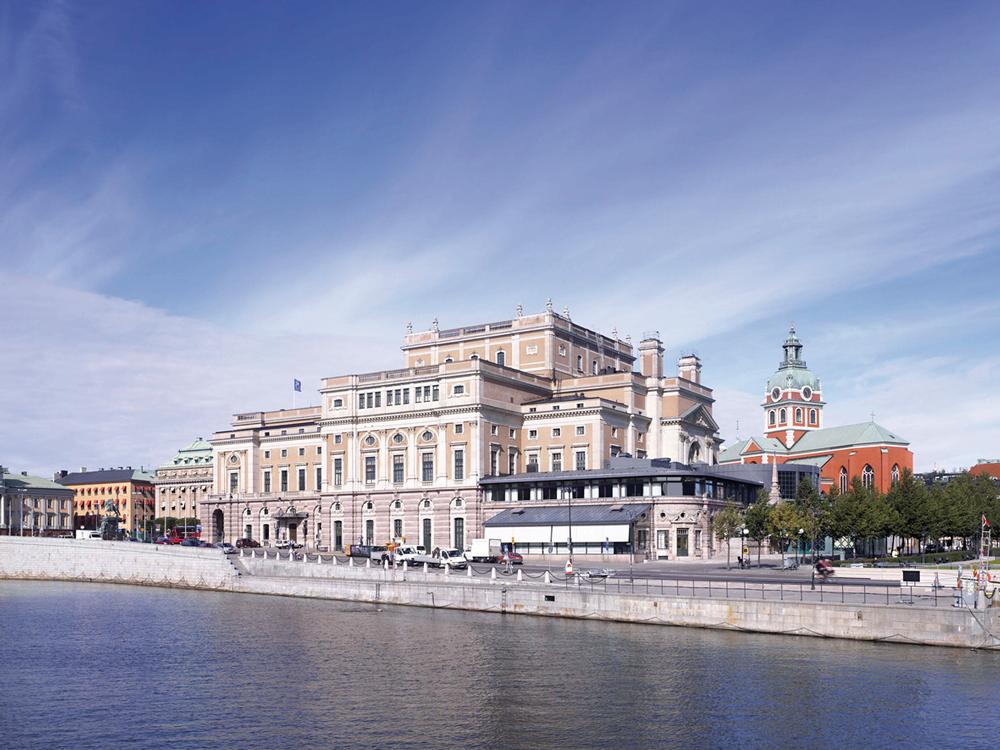
Operakällaren, a Michelin-starred Stockholm restaurant operated by Nobis AB, was the first gourmet restaurant in Sweden to receive the Swan label. Nobis Hotel Stockholm MD Claes Anerud says it’s a challenge – requirements concerning energy, electricity, water, chemical usage and waste must be met. “You also have to commit to buying a certain percentage of ecological farmed products and locally produced product. That’s not always is easy when you’re in the middle of a large city,” he says.
Another Stockholm restaurant, Rosendals Trädgård, takes a different approach to sustainability. The café has a garden and greenhouses where organic fruits and vegetables are grown; leftovers are composted, and anything that can’t be grown on-site is sourced locally. “Swedes, and Stockholm residents are very keen on all things eco, so in the past few years quite a few restaurants and bakeries here have joined the movement,” managing director Maria Bergkvist Vordstedt says.
GREEN TRAVELLER’S PARADISE With all the green hotels, green restaurants and inviting green spaces, the Stockholm Visitors’ Board has been actively promoting Stockholm as a green city for years, with a number of environmental-themed events.
The city hosted an Earth Hour conference and free concert, as well as the International Water Prize, and a huge Love Stockholm festival which featured a Stockholm pavilion showcasing the green city. “Although there’s no annual green festival as such, because Stockholm is always a green city; it’s our way of living,” says Stockholm Visitors Board PR manager Ann-Charlotte Jansson.
As the first European Green Capital, Stockholm hosted an environmental conference to share sustainable urban development knowledge with other European cities and a professional study visits programme to teach others about the city’s environmental work.
Vice mayor Alvendal is excited for other cities to see what Stockholm has accomplished. “If we as a city provide a good role model, I think we can inspire others to take responsibility.”
The European Green Capital Award The European Commission presents this annual award to a European city with a record of great environmental achievements, ambitious goals for further improvements and the ability to promote best practices to other cities.
Stockholm was the first to be awarded Green Capital status in 2010, followed by Hamburg, 2011; Vitoria-Gasteiz, 2012; Nantes 2013; Copenhagen, 2014 and; Bristol, 2015. Cities are bidding in 2013 for the 2016 award.
You can find out more about the awards here: www.europeangreencapital.eu
Stockholm was the first to be awarded Green Capital status
The European Green Capital Award
Footnote
At the time of writing, Kristina Alvendal was head of Stockholm’s city planning, real estate and housing division.
She has since taken up a post as CEO of Airport City Stockholm – Sweden’s first aiport city – which is being developed on 800 hectares of land. Find out more here: http://www.airportcitystockholm.com
From Leisure Management Issue 2 2010, p46
The Operakällaren restaurant was awarded the Nordic Swan eco label
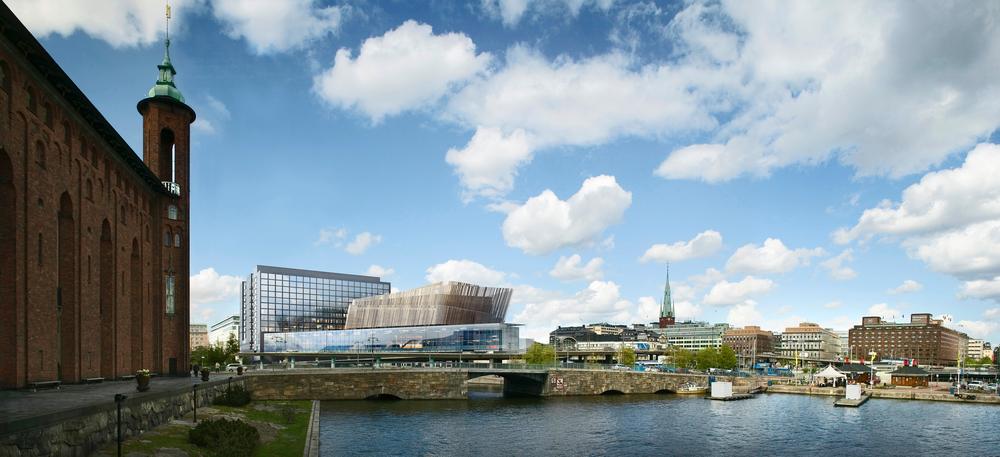
The Radisson Blu Waterfront Hotel (glass building on left of image) is cooled using lake water
Eighty-four per cent of consumers now say wellness is a top priority in their lives, with this
percentage increasing year on year, according to a preview presentation of McKinsey’s Future of
Wellness 2026 research report.
Mass protests have been taking place since Monday 1 June in Albania over the development of
a luxury resort by Donald Trump’s daughter Ivanka Trump and her husband Jared Kushner.
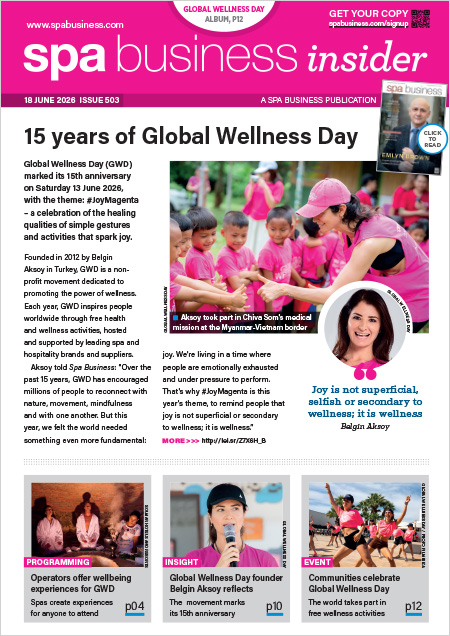
Global Wellness Day (GWD) marked its 15th anniversary on Saturday 13 June 2026, with the
theme: #JoyMagenta – a celebration of the healing qualities of simple gestures and activities
that spark joy.
Global luxury hospitality brand, Six Senses, has partnered with longevity healthcare provider,
HUM2N, to launch a clinic at Six Senses London, at The Whiteley.
As part of its first hotel partnership, Mayrlife – the medical health resort company known for its
site in Altaussee, Austria – has launched a day clinic at the Rosewood Vienna.
Premium London health club, KX Chelsea, will imminently unveil its most significant
redevelopment since its launch in 2002 to create an integrated wellness model combining
training, recovery and relaxation.
Rosewood Le Guanahani St Barth, on the northeast coast of Saint Barthélemy in the French
West Indies, is offering a programme of ocean-inspired yoga classes between 8-14 June to
celebrate Global Wellness Day (GWD).
Hotel de France, located on the British Isle of Jersey, has created a wellness retreat package
that includes a hot yoga session that will take place in Jersey Zoo’s butterfly sanctuary.
The Ritz-Carlton, Langkawi, in Malaysia, has revealed a schedule for Global Wellness Day
(GWD) that includes guided rainforest walks, mindful movement and guided coastal meditation
experiences.
Longevitix, a clinical platform for preventive and longevity medicine, has launched its AI-
powered intelligence system to help physicians deliver continuous, personalised longevity-
focused care at scale.
+ More news
COMPANY PROFILES
Power Plate Power Plate is owned, manufactured and distributed by Northbrook, Ill.-based Performance Health Syst [more...]