21-23 Jun 2026
Midlands (Venue TBA),
Liphook,
United Kingdom
|
22-22 Jun 2026
Worldwide,
|
26-27 Jun 2026
Tobacco Docks,
London,
United Kingdom
|
03-05 Jul 2026
Copenhagen,
Copenhagen,
Denmark
|
19-21 Jul 2026
The Global Ambassador ,
Phoenix,
United States
|
22-25 Jul 2026
The Global Ambassador ,
Phoenix,
United States
|
23-26 Aug 2026
The Riviera Maya Edition Kanai,
Playa del Carmen,
Mexico
|
10-12 Sep 2026
MITEC Kuala Lumpur,Malaysia,
Malaysia
|
|
|
 |
| Exclusive: New technologies driving digital culture says Google Cultural Institute's James Davis |
|
|
| By Tom Anstey 21 Apr 2016 |
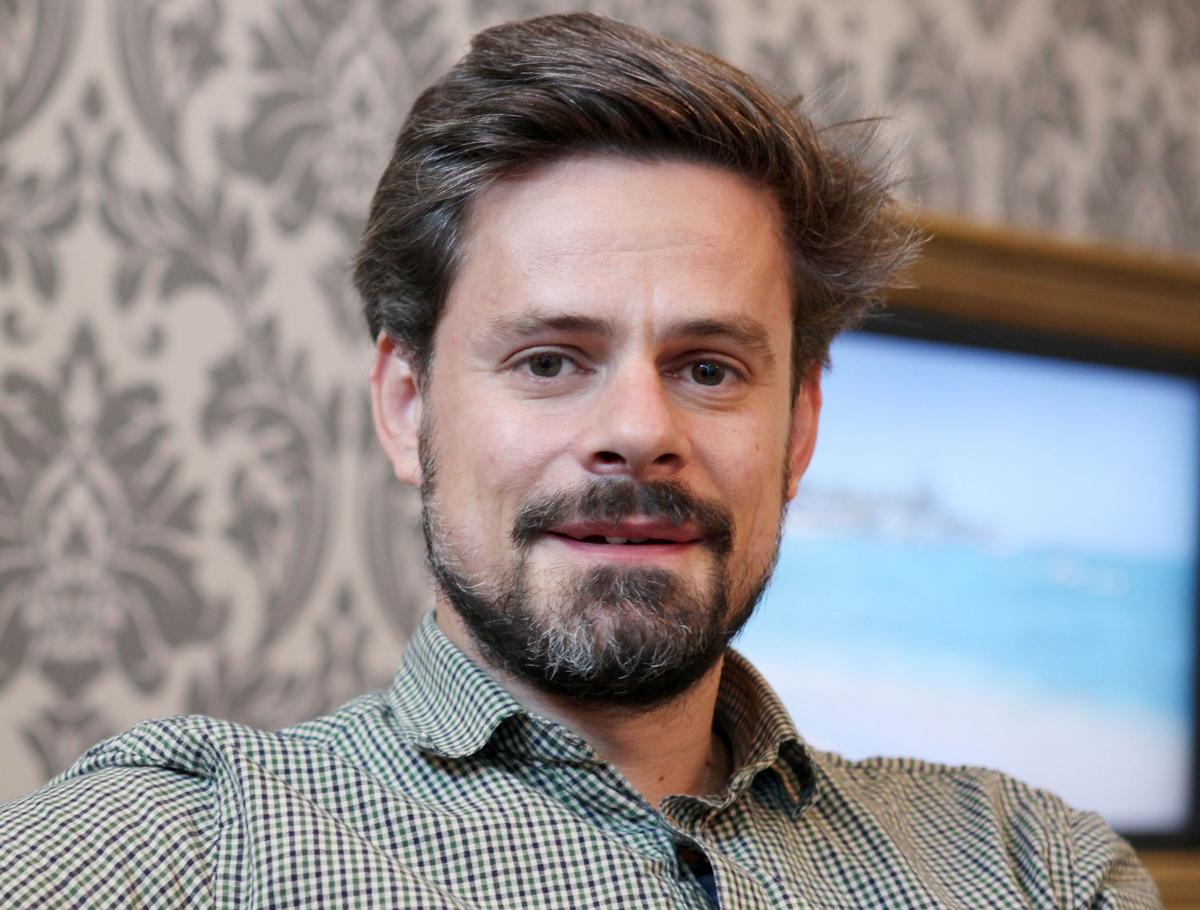
Davis joined the Google Cultural Institute in June 2011 after spending seven years working at Tate Online and Tate Britain
|
|
James Davis, program manager of the Google Cultural Institute, has revealed how Google’s technological advances will benefit the future of the arts and culture sectors, with digital opening up a new pathway for the consumer.
Davis, who joined Google in June 2011 after spending seven years at Tate Online and Tate Britain, told Attractions Management that what we are seeing now from Google is just the start and that as accessibility increases, so will interest in arts and culture.
“I think digital culture is heading to much bigger audiences,” said Davis. “One of the real compelling reasons to have digital cultural experiences is that if you’re interested in something the other side of the world, that might be an obstacle for you going to see it. However if it’s available directly from your pocket, then it’s extremely accessible to you.
“We are absolutely convinced that the global audience for culture will increase because of people having access to cultural organisations all around the world and as a result I think and hope that physical attendance will increase,” he continued. “It’s something we’ve begun to see anecdotally. If you get a larger audience interested in this topic – for example introducing people to a particular museum for the very first time – some of them are going to go to that museum when they weren’t beforehand because they hadn’t heard of it. That’s the direction that the Google Cultural Institute is going.”
In the five years since Google create its Cultural Institute in 2011, the project has gone from strength-to-strength. The project now has more than 1,000 cultural partners from 60 countries, and has several-thousand exhibits and millions of artefacts digitised in its public archive. 675,000 people have created galleries on the platform, telling their own stories and curating their own exhibitions, while the project has a large and critically engaged social following.
“I think Google has created a new way into art and culture for consumers and audiences,” said Davis. “We hope to develop best standards in the field. We know what we’re doing with technology so we hope to be able to create standards that become more shareable with the community. The aim is that the art and culture sector will be able to benefit from our investments in experimentation and iteration over the last few years.”
Davis added that Google sees its cultural platform as an add-on rather than a replacement, with the hope that its service encourages people to actually visit museums and galleries.
“We don’t want to change the nature of how cultural experiences occur because we’re not cultural experts and that’s not our job,” he said. “We want to add a digital component to them rather than take away from the experience, hopefully driving people to seek out culture in more physical forms.”
As it continues to add to its archive and team with more and more institutions around the world, the Institute is also trying to stay on the cutting edge, creating innovation for the sector as it operates, using tools like its own various Google platforms, as well as its physical Culture Lab in Paris to develop a new way of thinking and to drive forward a new approach to art and culture using future technologies.
“We have a continuing iteration process so some of the work that we’ve been doing with our mobile app, we’re going into more experimentation with machine learning,” said Davis. “Using our powerful algorithms applied to cultural artefacts, we’re trying to see how we can provide access to them, how we can encourage serendipitous encounters and what useful ways that might be integrated with other experiences through platforms like Google Now and Google Search.
“The second thing we’re looking at is virtual reality. We’re very proud that Google Cardboard came from our Culture Lab. I led a project last year with performing arts organisations applying the technology we developed and allowing you to get on stage during a performance and look around in 360 degree vision. We’re really intrigued about the possibilities of VR and 360 video, those are the two big areas for us coming next.”
|
|
|
| News |
| 1 to 12 of 9479 news stories |
|
|
|
12 Jun 2026
Global luxury hospitality brand, Six Senses, has partnered with longevity healthcare provider, HUM2N, to launch a clinic at Six Senses London, at The Whiteley. This collaboration is significant as it reflects a shift by Six ... More
|
 |
|
|
|
10 Jun 2026
Premium London health club, KX Chelsea, is gearing up to unveil its most significant redevelopment since its launch in 2002. The club has been reimagined to create an integrated wellness model combining training, recovery and ... More
|
|
|
|
|
15 Jun 2026
Barons Eden, the UK parent company that operates luxury destination properties in England, has rebranded to become Hiddenwell. The change to the parent identity was carried out following research conducted to help the business strengthen ... More
|
|
|
|
|
09 Jun 2026
Hotel de France, located on the British Isle of Jersey, has created a wellness retreat package that includes a hot yoga session that will take place in Jersey Zoo’s butterfly sanctuary. The all-inclusive two-night Ayush ... More
|
|
|
|
|
08 Jun 2026
Longevitix, a clinical platform for preventive and longevity medicine, has launched its AI-powered intelligence system to help physicians deliver continuous, personalised longevity-focused care at scale. Longevitix combines years of scattered patient data into a complete ... More
|
|
|
|
|
07 Jun 2026
Luxury wellness resort, The Retreat Costa Rica, has introduced its Vida Mía Longevity Centre at the property’s Vida Mía Healing Centre and Spa. The longevity centre adds physician-guided programming to the resort, which was founded ... More
|
|
|
|
|
08 Jun 2026
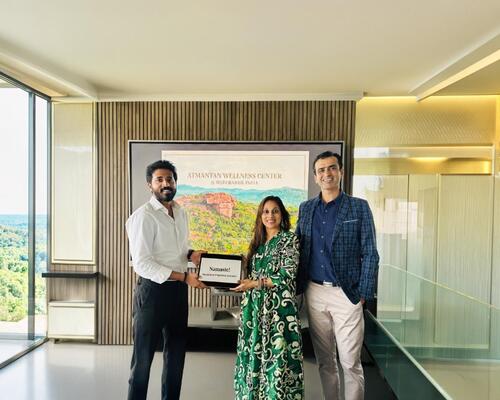
Atmantan Wellness Centre, an integrative wellness destination in Mulshi, near Pune in India, is expanding its portfolio by adding a new centre in Hyderabad that will launch between 2028 and 2029. Atmantan is a retreat ... More
|
|
|
|
|
11 Jun 2026
As part of its first hotel partnership, Mayrlife – the medical health resort company known for its site in Altaussee, Austria – has launched a day clinic at the Rosewood Vienna. Mayrlife offers holistic health ... More
|
|
|
|
|
10 Jun 2026
Rosewood Le Guanahani St Barth, on the northeast coast of Saint Barthélemy in the French West Indies, is offering a programme of ocean-inspired yoga classes between 8-14 June to celebrate Global Wellness Day (GWD). GWD ... More
|
|
|
|
|
09 Jun 2026
The Ritz-Carlton, Langkawi, in Malaysia, has revealed a schedule for Global Wellness Day (GWD) that includes guided rainforest walks, mindful movement and guided coastal meditation experiences. Founded in 2012 by Belgin Aksoy in Turkey, GWD ... More
|
|
|
|
|
05 Jun 2026
Mexican operator, Solmar Hotels and Resorts, is hosting a series of events in celebration of Global Wellness Day, including a Temazcal ceremony at its Playa Grande Resort and Spa in Los Cabos. The not-for-profit movement, ... More
|
|
|
|
|
12 Jun 2026
Global Wellness Day (GWD) marked its 15th anniversary on Saturday 13 June 2026, with the theme: #JoyMagenta – a celebration of the healing qualities of simple gestures and activities that spark joy. Founded in 2012 ... More
|
|
|
|
|
| Cariitti Oy |
| Cariitti is a Finnish family business founded by Kari Ruokonen in 1998 that offers versatile
[more] |
|
|
 |
|