GWI launches White Paper Series: ‘Understanding Wellness’
By Jane Kitchen 01 Aug 2019
The Global Wellness Institute (GWI), a nonprofit research and educational resource for the wellness industry, has launched a new white paper series with an aim to bring clear, expert insights on how wellness is evolving now and into the future.
The ‘Understanding Wellness’ white paper series are designed to be a “go-to primer” for policymakers, businesspeople, researchers and students.
Authored by GWI senior research fellows Ophelia Yeung and Katherine Johnston, the first paper, The Global Forces Driving the Growth of the Wellness Economy, examines the four macro forces that are propelling consumer demand and the ongoing, surging growth of the wellness economy around the world.
Future topics will include important definitions and terminologies, a thorough history of wellness, and the wellness movement’s social and economic implications.
“Wellness is a concept that is both ancient and contemporary,” said Yeung. “Because of that, most people have an intuitive understanding of what it means, how to apply it to daily life, or how to create business opportunities out of it. The wellness economy is now a US$4.2tr global industry. Yet, the questions that we most often encounter are: ‘What is wellness?’ ‘Why is it growing?’ and ‘What does it really mean?’ In the ‘Understanding Wellness’ series, we want to answer these questions because a common language for and basic understanding of wellness can help bridge the divide with other industries and disciplines and broaden its applications and impacts.”
The white paper suggests that in recent decades, vast economic, technological, social, demographic, and environmental changes have transformed every aspect of our lives — our homes and communities, food, work, shopping, education, friendship, leisure, travel, etc. — with both positive and negative impacts on our wellbeing, and that the growth of wellness practices and businesses is a consumer response to these developments.
The paper outlines the four forces driving the wellness boom, as follows:
1) The world’s population is growing sicker, lonelier and older. Deteriorating health, the spread of loneliness and mental illness, and the ramifications of aging all negatively impact people’s happiness and wellbeing. In response, consumers around the world are proactively turning to wellness approaches as alternatives to address these challenges.
2) The environmental crisis is also a health crisis. Environmental degradation and its causes are bringing immediate, direct, severe and widespread harm to human health and wellbeing—from the air we breathe to how we procure and consume food to how we live and travel. As people become aware of these risks, they’re seeking out alternative lifestyles that are simultaneously healthier for themselves and more sustainable for the planet.
3) Health systems are failing to keep up while the economic burden rises. Health systems are failing in countries all around the world, and the economic burden is unsustainable. Therefore, it’s not surprising that consumers, employers and even governments are turning to wellness approaches to complement and address deficiencies in healthcare and to turn from “sick care” to prevention.
4) Demographics, value systems and lifestyles are all evolving toward wellness. Consumer values are changing fast, moving toward a lifestyle of wellness that is fundamentally shifting consumer behaviours and consumption patterns. This shift is bolstered by the rise of the middle class, urbanisation, the accessibility of so many new options, and a burgeoning concern about the impact of ubiquitous technology.
“Over the last 11 years, our work has focused on defining and measuring the industries that comprise the wellness economy — and GWI has become the leading resource for wellness industry data,” said Johnston. “Through that work, we have built up a vast conceptual knowledge of wellness, its drivers, and its implications. We’re excited to present foundational information about wellness through this new white paper series.”
The first paper examines the four macro forces that are propelling consumer demand and the ongoing, surging growth of the wellness economy around the world Credit: Shutterstock/524257324
Mass protests have been taking place since Monday 1 June in Albania over the development of a luxury resort by Donald Trump’s daughter Ivanka Trump and her husband Jared Kushner. The country’s capital city, Tirana, ...More
Eighty-four per cent of consumers now say wellness is a top priority in their lives, with this percentage increasing year on year, according to a preview presentation of McKinsey and Company’s Future of Wellness 2026 ...More
The UK spa review and discovery platform for consumers, the Good Spa Guide, has announced it will host the Good Spa Guide Awards 2026 during an event on 16 November at Sopwell House Hotel and ...More
Global luxury hospitality brand, Six Senses, has partnered with longevity healthcare provider, HUM2N, to launch a clinic at Six Senses London, at The Whiteley. This collaboration is significant as it reflects a shift by Six ...More
Premium London health club, KX Chelsea, is gearing up to unveil its most significant redevelopment since its launch in 2002. The club has been reimagined to create an integrated wellness model combining training, recovery and ...More
Barons Eden, the UK parent company that operates luxury destination properties in England, has rebranded to become Hiddenwell. The change to the parent identity was carried out following research conducted to help the business strengthen ...More
Hotel de France, located on the British Isle of Jersey, has created a wellness retreat package that includes a hot yoga session that will take place in Jersey Zoo’s butterfly sanctuary. The all-inclusive two-night Ayush ...More
Longevitix, a clinical platform for preventive and longevity medicine, has launched its AI-powered intelligence system to help physicians deliver continuous, personalised longevity-focused care at scale. Longevitix combines years of scattered patient data into a complete ...More
Luxury wellness resort, The Retreat Costa Rica, has introduced its Vida Mía Longevity Centre at the property’s Vida Mía Healing Centre and Spa. The longevity centre adds physician-guided programming to the resort, which was founded ...More
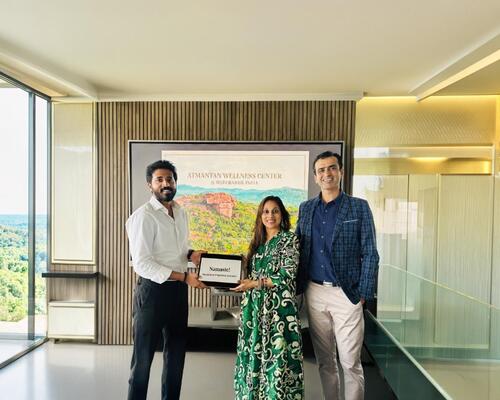
Atmantan Wellness Centre, an integrative wellness destination in Mulshi, near Pune in India, is expanding its portfolio by adding a new centre in Hyderabad that will launch between 2028 and 2029. Atmantan is a retreat ...More
As part of its first hotel partnership, Mayrlife – the medical health resort company known for its site in Altaussee, Austria – has launched a day clinic at the Rosewood Vienna. Mayrlife offers holistic health ...More
Rosewood Le Guanahani St Barth, on the northeast coast of Saint Barthélemy in the French West Indies, is offering a programme of ocean-inspired yoga classes between 8-14 June to celebrate Global Wellness Day (GWD). GWD ...More
In the fast-paced world of fitness and wellness, where high-intensity workouts push us to
our limits and the sweat pours, the importance of efficient recovery cannot be overstated. ... more
GWI launches White Paper Series: ‘Understanding Wellness’
POSTED 01 Aug 2019 . BY Jane Kitchen
The first paper examines the four macro forces that are propelling consumer demand and the ongoing, surging growth of the wellness economy around the world Credit: Shutterstock/524257324
The Global Wellness Institute (GWI), a nonprofit research and educational resource for the wellness industry, has launched a new white paper series with an aim to bring clear, expert insights on how wellness is evolving now and into the future.
The ‘Understanding Wellness’ white paper series are designed to be a “go-to primer” for policymakers, businesspeople, researchers and students.
Authored by GWI senior research fellows Ophelia Yeung and Katherine Johnston, the first paper, The Global Forces Driving the Growth of the Wellness Economy, examines the four macro forces that are propelling consumer demand and the ongoing, surging growth of the wellness economy around the world.
Future topics will include important definitions and terminologies, a thorough history of wellness, and the wellness movement’s social and economic implications.
“Wellness is a concept that is both ancient and contemporary,” said Yeung. “Because of that, most people have an intuitive understanding of what it means, how to apply it to daily life, or how to create business opportunities out of it. The wellness economy is now a US$4.2tr global industry. Yet, the questions that we most often encounter are: ‘What is wellness?’ ‘Why is it growing?’ and ‘What does it really mean?’ In the ‘Understanding Wellness’ series, we want to answer these questions because a common language for and basic understanding of wellness can help bridge the divide with other industries and disciplines and broaden its applications and impacts.”
The white paper suggests that in recent decades, vast economic, technological, social, demographic, and environmental changes have transformed every aspect of our lives — our homes and communities, food, work, shopping, education, friendship, leisure, travel, etc. — with both positive and negative impacts on our wellbeing, and that the growth of wellness practices and businesses is a consumer response to these developments.
The paper outlines the four forces driving the wellness boom, as follows:
1) The world’s population is growing sicker, lonelier and older. Deteriorating health, the spread of loneliness and mental illness, and the ramifications of aging all negatively impact people’s happiness and wellbeing. In response, consumers around the world are proactively turning to wellness approaches as alternatives to address these challenges.
2) The environmental crisis is also a health crisis. Environmental degradation and its causes are bringing immediate, direct, severe and widespread harm to human health and wellbeing—from the air we breathe to how we procure and consume food to how we live and travel. As people become aware of these risks, they’re seeking out alternative lifestyles that are simultaneously healthier for themselves and more sustainable for the planet.
3) Health systems are failing to keep up while the economic burden rises. Health systems are failing in countries all around the world, and the economic burden is unsustainable. Therefore, it’s not surprising that consumers, employers and even governments are turning to wellness approaches to complement and address deficiencies in healthcare and to turn from “sick care” to prevention.
4) Demographics, value systems and lifestyles are all evolving toward wellness. Consumer values are changing fast, moving toward a lifestyle of wellness that is fundamentally shifting consumer behaviours and consumption patterns. This shift is bolstered by the rise of the middle class, urbanisation, the accessibility of so many new options, and a burgeoning concern about the impact of ubiquitous technology.
“Over the last 11 years, our work has focused on defining and measuring the industries that comprise the wellness economy — and GWI has become the leading resource for wellness industry data,” said Johnston. “Through that work, we have built up a vast conceptual knowledge of wellness, its drivers, and its implications. We’re excited to present foundational information about wellness through this new white paper series.”
RELATED STORIES
GWI launches Wellness Retail Initiative POSTED 19 Jul 2019. BY Jane Kitchen The Global Wellness Institute (GWI) has announced a new initiative to explore
opportunities wellness is creating in retail.
Architect Bill Bensley to speak about sustainability at Global Wellness Summit POSTED 17 Jul 2019. BY Lauren Heath-Jones The Global Wellness Summit (GWS) has announced that landscape-designer-turned-
architect Bill Bensley will deliver a keynote speech on hospitality design and sustainability
at this year's summit in Hong Kong.
New GWI Initiative to focus on UN’s Sustainable Development Goals POSTED 03 Jul 2019. BY Jane Kitchen A new Global Wellness Institute Initiative has been launched to focus on the United
Nations’ 17 Sustainable Development Goals (SDGs), and in particular, SDG #3, which is
‘Good health & Well-being’.
GWI Initiative names top hot springs trends worldwide POSTED 14 Jun 2019. BY Jane Kitchen The Global Wellness Institute has released the top five trends in hot springs as identified
by the GWI’s Hot Springs Initiative.
The UK spa review and discovery platform for consumers, the Good Spa Guide, has announced
it will host the Good Spa Guide Awards 2026 during an event on 16 November at Sopwell House
Hotel in St Albans, UK.
Eighty-four per cent of consumers now say wellness is a top priority in their lives, with this
percentage increasing year on year, according to a preview presentation of McKinsey’s Future of
Wellness 2026 research report.
Mass protests have been taking place since Monday 1 June in Albania over the development of
a luxury resort by Donald Trump’s daughter Ivanka Trump and her husband Jared Kushner.
Global Wellness Day (GWD) marked its 15th anniversary on Saturday 13 June 2026, with the
theme: #JoyMagenta – a celebration of the healing qualities of simple gestures and activities
that spark joy.
Global luxury hospitality brand, Six Senses, has partnered with longevity healthcare provider,
HUM2N, to launch a clinic at Six Senses London, at The Whiteley.
+ More news
COMPANY PROFILES
Pearl Tree Pearl Tree was established in 2014 by Soraya and
Sarry Jouzy with a mission to champion
personal w [more...]