We talk to Dave Wright, CEO of
Myzone, about the world’s first
interchangeable heart rate monitor
that provides real-time feedback
– and the impact of COVID-19
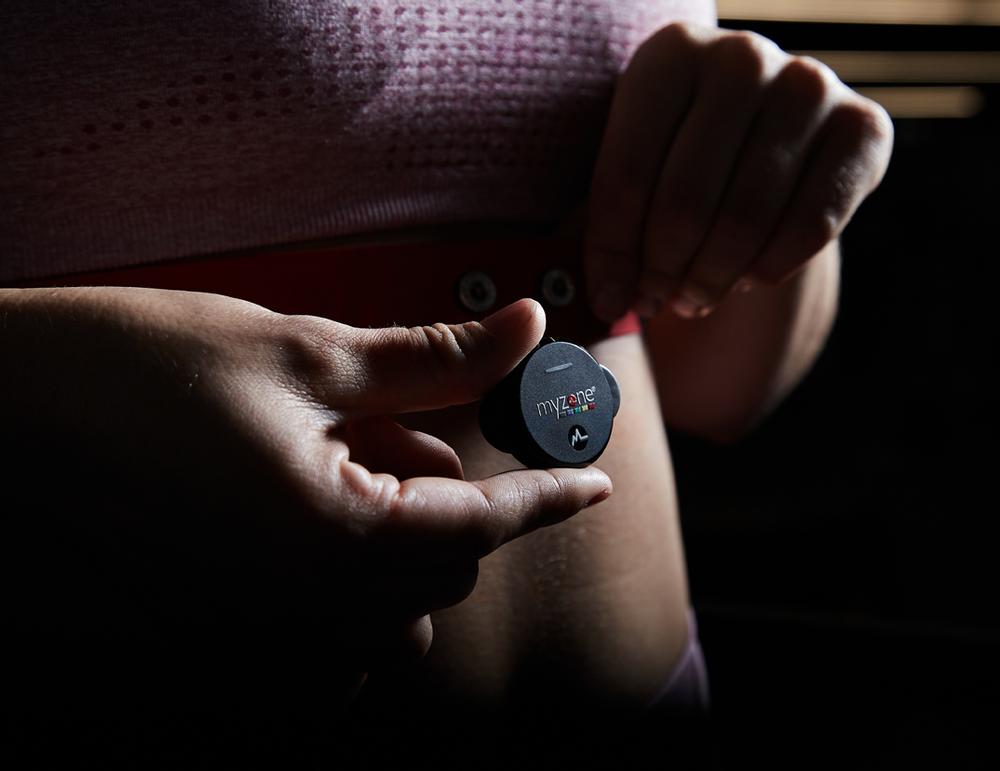
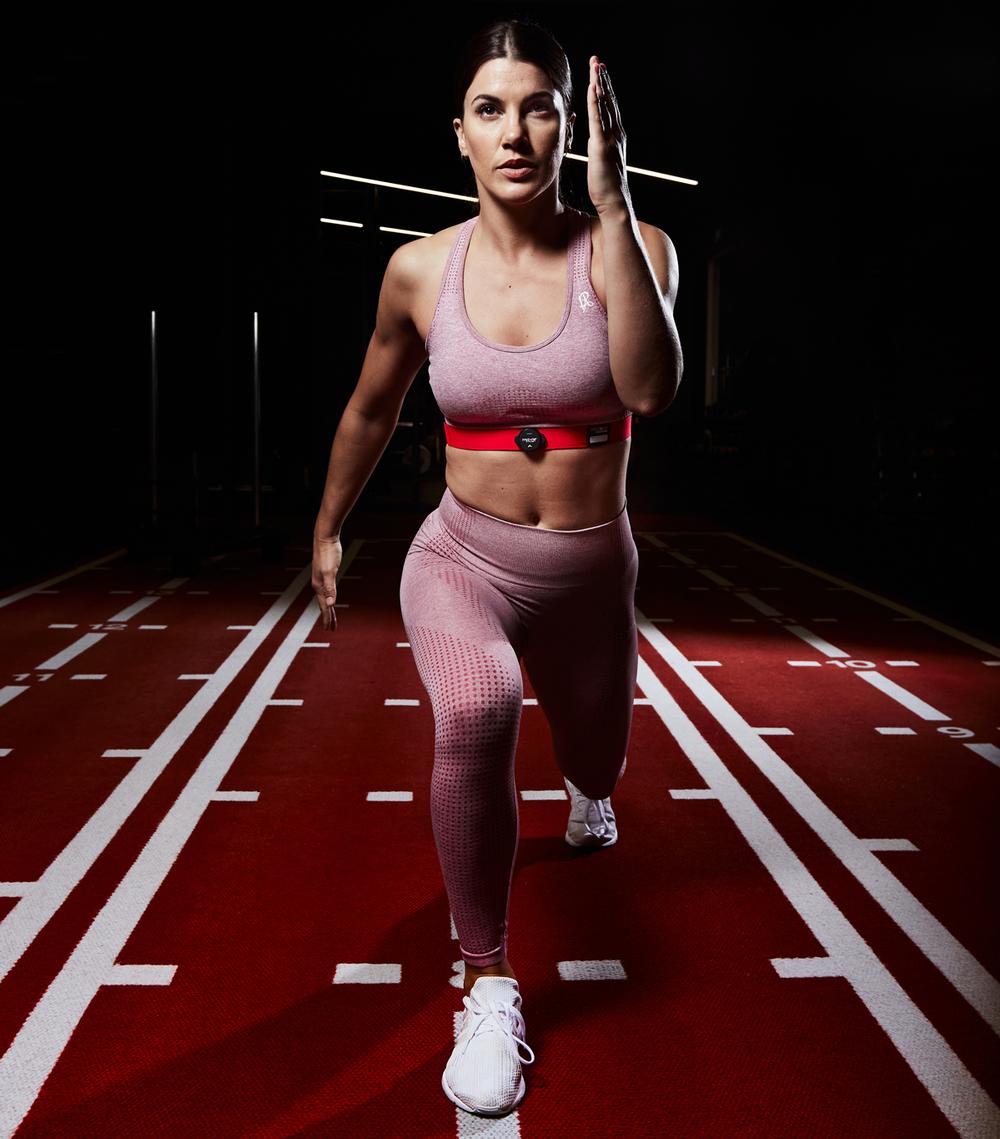
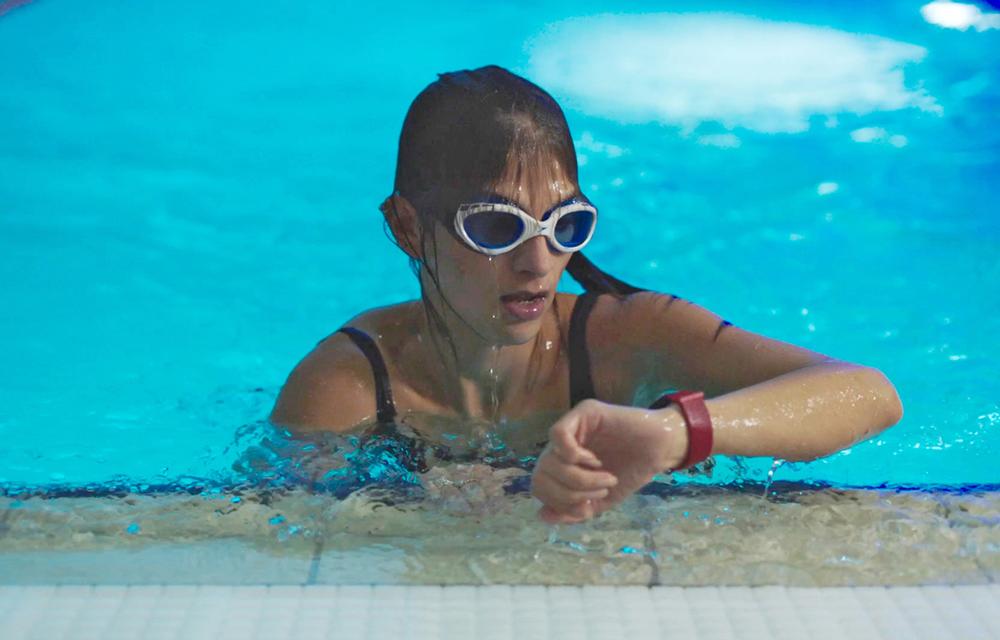
The MZ-Switch can be worn on the chest, arm or wrist
Dave, tell us about MZ-Switch MZ-Switch is the world’s first interchangeable heart rate monitor that can be worn on the wrist, chest and arm. It gives users feedback on their heart rate in real-time and converts this into clear and simple colour-based zones based on the intensity of effort they’re putting into their activity.
Wearing the monitor on the wrist and arm provides 95 per cent PPG accuracy (photoplethysmography), for non-gripping activities such as walking, running and swimming (wrist only), while the chest-based application provides 99.4 per cent EKG accuracy (Electrocardiogram) for more intense activity such as functional or gym training.
Why are you launching it now? All over the world, gyms and fitness centres have been forced to close as part of regional and national lockdowns in an attempt to halt the spread of COVID-19. As a result, people have been increasingly exercising outdoors and activities such as walking, running and cycling have become even more popular.
In development for more than a year, MZ-Switch is perfect for these kinds of activities. Users simply strap the device onto their chest, wrist or arm to track their activity and get an accurate reading of how hard they’re working during exercise, wherever they’re working out.
We believe that its ease of use, combined with unrivalled versatility will bring the benefits of heart rate tracking to a variety of new markets. MZ-Switch makes it incredibly easy for gym members to experience Myzone during group exercise, for the corporate sector to encourage employees to become more active during the working day and for schools to utilise heart-rate technology during PE classes.
How does it work? MZ-Switch uses our unique point system, known as Myzone Effort Points (MEPs), to help people commit to regular exercise and enjoy the journey. Users earn MEPs when they exercise in their target heart rate zone.
Myzone’s five coloured zones are based on a user’s maximum heart rate and each zone awards a different number of MEPs, so the more effort someone puts into their workout, the more points they earn. Now, thanks to MZ-Switch, users have endless opportunities to earn MEPs and keep active.
How will it benefit facility owners? MZ-Switch is accurate, versatile and easy to use. It connects with gym equipment, in-club display screens and the Myzone app, so users can share their workouts.
With so many people being forced to exercise outside the club and away from gym buddies, the club community is more important than ever. With MZ-Switch, members can still experience that sense of belonging, wherever they are working out.
It also connects with other devices, such as the Apple Watch and Garmin, as well as third party apps, including MapMyRun, MyFitnessPal and Strava.
How have your customers adapted during the pandemic? More forward-thinking operators have adopted a hybrid approach to their operations, offering both digital and in-club services to survive the crisis. It’s been a challenging experience for some, with many owners and operators forced to venture beyond their comfort zone to get to grips with new technology to transform their businesses.
The hybrid offering is here to stay, but it means that operators need an effective digital solution to stay connected with their members, whether they choose to train in the gym, outside the four walls of the club or to work out at home.
When the industry fully reopens, the social distancing requirements imposed by government will mean that most clubs won’t be able to host the usual number of customers in a group class for some time.
Our new MZ-Remote+ platform combines recorded classes with live programming where instructors see the real-time effort of everyone in a session, even when they’re working out at home. This allows clubs to engage with their members working in and out of the club and also to reach new users. Launched in May 2020, MZ-Remote has proved a critical tool for operators, with some claiming it has saved their business.
What has the pandemic taught us? We’ve learned so many things during this crisis, not least the importance of having a strong balance sheet. The pandemic has shown the need for reasonable lease agreements and the importance of the relationships that we have with our landlords. It has also highlighted the need for deep connections with our members, quality engagement with our teams and staff who add value.
There’s no doubt that the importance of exercise has been brought to the forefront of public debate throughout the pandemic. But the crisis has also shown that we need stronger political influence to ensure a greater understanding of the value that our industry offers for people’s mental and physical wellbeing.
We know that regular exercise can improve immunity and bolster people’s defence against COVID-19. We also know, from data around the world, that our facilities offer safe spaces to exercise.
But we need to change the message that we are sending to the world, so governments understand that our sector is about health, not just fitness. There are too many stereotypes associated with the term fitness. It’s not as sexy as sport and we still haven’t managed to really explain the term physical activity.
We also need a more unified approach to media communications. Each country seems to have a fractious approach to their communication – if our communications were more united and cohesive then our message about the vital role that physical activity plays both in society and public health would be more easily understood.
Eighty-four per cent of consumers now say wellness is a top priority in their lives, with this
percentage increasing year on year, according to a preview presentation of McKinsey’s Future of
Wellness 2026 research report.
Mass protests have been taking place since Monday 1 June in Albania over the development of
a luxury resort by Donald Trump’s daughter Ivanka Trump and her husband Jared Kushner.
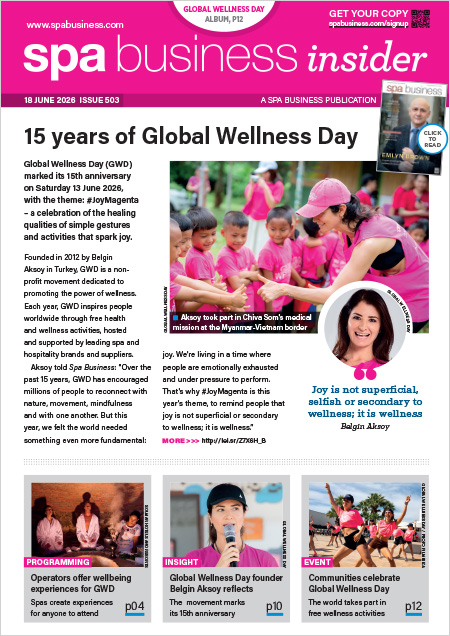
Global Wellness Day (GWD) marked its 15th anniversary on Saturday 13 June 2026, with the
theme: #JoyMagenta – a celebration of the healing qualities of simple gestures and activities
that spark joy.
Global luxury hospitality brand, Six Senses, has partnered with longevity healthcare provider,
HUM2N, to launch a clinic at Six Senses London, at The Whiteley.
As part of its first hotel partnership, Mayrlife – the medical health resort company known for its
site in Altaussee, Austria – has launched a day clinic at the Rosewood Vienna.
Premium London health club, KX Chelsea, will imminently unveil its most significant
redevelopment since its launch in 2002 to create an integrated wellness model combining
training, recovery and relaxation.
Rosewood Le Guanahani St Barth, on the northeast coast of Saint Barthélemy in the French
West Indies, is offering a programme of ocean-inspired yoga classes between 8-14 June to
celebrate Global Wellness Day (GWD).
Hotel de France, located on the British Isle of Jersey, has created a wellness retreat package
that includes a hot yoga session that will take place in Jersey Zoo’s butterfly sanctuary.
The Ritz-Carlton, Langkawi, in Malaysia, has revealed a schedule for Global Wellness Day
(GWD) that includes guided rainforest walks, mindful movement and guided coastal meditation
experiences.
Longevitix, a clinical platform for preventive and longevity medicine, has launched its AI-
powered intelligence system to help physicians deliver continuous, personalised longevity-
focused care at scale.
+ More news
COMPANY PROFILES
Pearl Tree Pearl Tree was established in 2014 by Soraya and
Sarry Jouzy with a mission to champion
personal w [more...]