Arup Foresight talks to CLAD about healthy wellness buildings and holistic design
By Kim Megson 05 May 2016
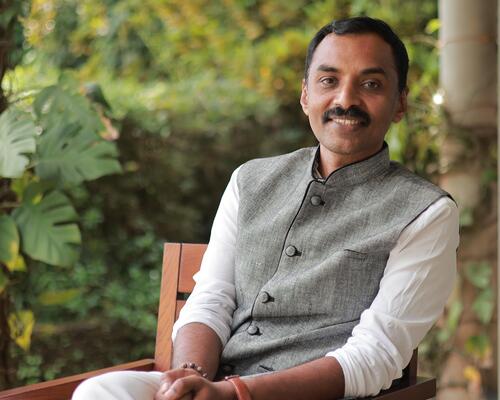
Hargrave said the increasingly sophisticated demands we make of our buildings necessitate a more holistic approach in how they are designed and developed Credit: Arup
The global foresight manager at international architecture and engineering firm Arup has told CLAD that closer collaboration between architects, designers, developers and investors is essential if the buildings of the future are to successfully boost our health and wellbeing.
Josef Hargrave said the increasingly sophisticated demands we make of our buildings necessitate a more holistic approach in how they are designed and developed.
“We’re moving from a world where building design has been driven to a large degree by sustainability targets to one where the impact on user and health and wellbeing is being increasingly considered,” he said.
“The horizon and breadth of things that architects and designers have to consider to achieve this is always increasing, and as a consequence the complexity of getting it right grows.”
“Energy systems will become more complex going forward so we need a more reactive and responsive way of design,” he said. “The only way to thrive is to embrace total architecture – the idea that everyone on the project team should be aware of everyone's needs and capabilities and the agreed path forwards. Everyone should have a basic understanding of lighting, for example.
“Without this, you can create something that has components which are all designed in an excellent way, but doesn't work as a whole.
“There are always competing interests from various stakeholders – from the investor who wants to see a return, to the community who want to make sure their needs are considered, and the designer who wants the best quality outcome. Our work is to bring them together holistically.”
Arup’s Foresight team is an internal think-tank and consultancy which tracks the changing design trends impacting built environments, and how they might overcome challenges such as growing and shrinking populations, climate change and inequality. They have recently released a report on how our cities could look and function in the year 2050.
Asked by CLAD to outline how the design of leisure buildings is changing, Hargrave said they are increasingly being created and controlled “like the operating system on your phone.”
“It's going to be much more platform based in the future,” he explained. “In hotels, for example, you’ll download an app to control your lighting and control your heating and cooling system in a way that is much more compatible and integrated than it is right now.
“Going from this notion of a silo system to something that follows the principles of an app will create many more opportunities to customise solutions within buildings and cities and provide greater control for the individual.”
“There will also be new forms of leisure and new forms of sport – drone racing for example – so there’s lots of cool stuff happening in that space that can be explored.
“A whole raft of consumer-focused trends will be driven by tech, but these are very difficult to project. There will always be new surprises – like the scale and capability of virtual reality – but how that will change people’s experiences of spaces and places remains a big unknown.”
Abu Dhabi-based investment firm Mubadala Capital has made a binding, fully financed €1 billion offer to acquire Pierre and Vacances SA, the European holiday resort operator behind the continental European Center Parcs business. The cash ...More
People taking GLP-1 weight loss medications such as Ozempic, Wegovy, Mounjaro and Zepbound may be losing weight, but they’re also becoming less physically active, according to new research presented at the ENDO 2026 annual meeting ...More
Global retreat trade show, Synergy The Retreat Show, has launched a resource called The Source, which hosts an open-access online Transformation Series programme. Different retreat leaders, hoteliers, travel designers, practitioners and wellness innovators will host ...More
Mass protests have been taking place since Monday 1 June in Albania over the development of a luxury resort by Donald Trump’s daughter Ivanka Trump and her husband Jared Kushner. The country’s capital city, Tirana, ...More
Eighty-four per cent of consumers now say wellness is a top priority in their lives, with this percentage increasing year on year, according to a presentation of trends indentified by McKinsey and Company, the outfit ...More
The Standards Authority for Touch in Cancer Care (SATCC) charity has announced its first five-day Living with Cancer and Beyond retreat, which will be held at Carden Park Hotel and Spa in Cheshire, UK, from ...More
The UK spa review and discovery platform for consumers, the Good Spa Guide, has announced it will host the Good Spa Guide Awards 2026 during an event on 16 November at Sopwell House Hotel and ...More
Global luxury hospitality brand, Six Senses, has partnered with longevity healthcare provider, HUM2N, to launch a clinic at Six Senses London, at The Whiteley. This collaboration is significant as it reflects a shift by Six ...More
Premium London health club, KX Chelsea, is gearing up to unveil its most significant redevelopment since its launch in 2002. The club has been reimagined to create an integrated wellness model combining training, recovery and ...More
Barons Eden, the UK parent company that operates luxury destination properties in England, has rebranded to become Hiddenwell. The change to the parent identity was carried out following research conducted to help the business strengthen ...More
Hotel de France, located on the British Isle of Jersey, has created a wellness retreat package that includes a hot yoga session that will take place in Jersey Zoo’s butterfly sanctuary. The all-inclusive two-night Ayush ...More
Longevitix, a clinical platform for preventive and longevity medicine, has launched its AI-powered intelligence system to help physicians deliver continuous, personalised longevity-focused care at scale. Longevitix combines years of scattered patient data into a complete ...More