In the world of visitor attractions, the term from which augmented reality gains its name – virtual reality – hasn’t had a good track record. Remember DisneyQuest of the 1990s? Huge computers, large displays, lots of interaction promise, but in just a couple of years, this multi-million dollar investment seemed like a retro 1950s low budget sci-fi movie.
The term virtual reality is now mostly confined to the world of computer games and internet mass player games, but it’s been around much longer than most realise, originally coined in 1938 by French author Antonin Artaud to describe the immersive reality of well staged theatre. He described the ability to transport the audience to another more existential place as “la réalité virtuelle”.
With the term rooted in the experience economy of the early 20th century, perhaps 75 years later the term will prove to have merit and be more relevant to the staging of events and experiences in attractions worldwide?
The technology
Augmented reality (AR) can best be described as an individual perception of the real world being overlaid with information delivered visually as computer graphics, sound and interactively via touch or haptic feedback – a combination of virtual and real. One development engineer recently described it as “an automotive repair manual delivered directly to your brain as you’re lying under the car repairing it”.
The technology is dependent on accurate positioning of where the user is, by a combination of GPS and WiFi location finding linked with information on orientation, acceleration and direction fed back from sensors in the AR device or associated mobile device. To make the technology wearable, all the major computing power is remote in the cloud.
The cloud is best understood as a powerful communication network connecting you and your display device to huge computers in data centres operated by companies such as Amazon and Google. On these computers, information you seek is processed and delivered back almost instantaneously.
Visionaries
AR is a technology term that is soon to become popularised by the tech giants shaping our communications and interactions – Google, Apple and start-ups such as Oculus VR and Atheer Labs.
Google in particular has grabbed the headlines with the beta test phase of its Google Glass technology. The head-worn device feeds visual information to the peripheral vision area of one eye and allows the overlay of information delivered via the web over the real world encountered by the user. Doubling up as a phone and a video camera, it allows interaction between the user and remote participants or storage of information on social media websites, and probably much else besides. It’s a classic example of a technology invented to enable, but as yet no one’s really sure the full extent of things it can and will enable and ultimately how that will be monetised.
Google Glass is in its trial phase, thrown open to several thousand people to try it out and develop applications. The trials prior to the 2014 consumer launch are known as the Explorer phase – rather ironic given that that’s also the name of Microsoft’s web browser – with the community of testers having rather geekily become known as Glassholes.
The development’s being led by Sergey Brin, co-founder of Google. The device on trial is a two-way communications technology in the form of a pair of designer spectacles with only one lens. It recovers and transmits information via the mobile data networks to computer servers that apply huge amounts of commuting power to provide instant information to the user.
Also part of another trend, wearable computing, Google Glass is set to create a new perspective on how we use a mobile device and how information and service providers can deliver content to users not actively searching for it; instead, passively allowing information to be overlaid onto their daily activities.
Heads up
AR is potentially set to challenge one of the biggest weaknesses and social pariahs that’s come with the mobile device so far. From Blackberrys and iPhones to computer tablets, the mobile is driving the increasing “heads down” nature of human behaviour. Whether it’s walking down the street, sitting in a bar or even around the dinner table, more and more people can be observed immersed in social and other interactions, staring down at, tapping into a screen.
The advent of mass consumer AR devices may just change that. Imagine a world where you wear your phone; it delivers maps, information and other details to you as you look up at something. Though fraught with privacy issues, this way of searching by using the real word as the trigger and the context has enormous potential. Take a photo by voice command and share it over the web to colleagues, friends and family. Navigate to a new place, find a restaurant in a strange city – all without heads down, typing and tapping to search.
The number of AR devices in development in California is staggering and with similar developments happening worldwide, it’s likely we’re going to see a new class of mobile device and interaction emerge. Imagine a phone, mobile computer, camera and voice-controlled web search, all rolled into your glasses.
Game on
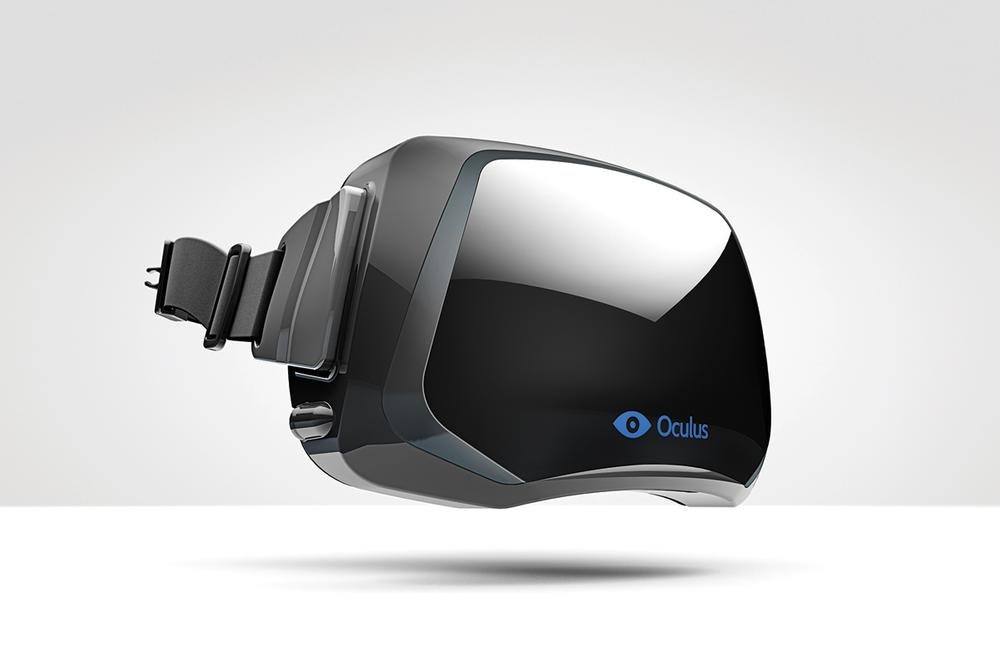
Where the web search world has Glass, the computer games industry has the Oculus Rift, a device that’s worn over the eyes and is fully immersive. It tracks movement and direction and displays a stereoscopic 3D image to the viewer while playing a computer game. No keyboard, no mouse, just natural human interactions and movement to navigate through the virtual world. This device also becomes available to consumers sometime in 2014 and is set to change the way computer games can be played and perceived, potentially opening up new areas to augment real world experiences with virtual reality computer games. The trials of this technology have really had an impact on the games development community and it’s expected to be a massive consumer hit.
This technology is set to challenge many conventions from social interactions to privacy and security. Putting that to one side, it seems likely that the technology will become both pervasive and potentially ubiquitous. Almost everyone visiting an attraction has an online computer on them on which they can search the web, leave feedback about their visit on sites such as TripAdvisor and use the device as a ticket and even as a payment method. So how could this new breed of consumer AR devices impact the leisure and attractions market?
Cool factor
Well, firstly, while the technology’s rated as cool, producers and storytellers are bound to try weaving it into their offer, as a new way of delivering experience and encountering the attraction. This, like all technology-based experiences, is likely to be ephemeral and a passing fad.
More important is the longer-term impact of these devices to leverage a new kind of visitor-driven interaction with everything from the food and beverage offer to the ride, exhibit, show and everything in between. They could capture the whole day, navigate the park and comment in real-time about the experience. Operators should start thinking about what they want to offer via this medium, beyond themed programme content.
The trick’s going to be ensuring that the physical attraction is available as a 3D digital map like Streetview, and to post and deliver information in physical space that can trigger virtual information. Imagine a specials board in the restaurant that has nothing written on it, just a graphical symbol. When you look at it, the specials of the day with all the associated information is delivered directly to the user. To leverage this future technology to engage the visitor and provide information to aid navigation, reduce wasted time and potentially increase spend, then another important factor will be to have a good network infrastructure, including a well designed geo-location supporting WiFi network.
The trend is coming and young brains will harness it, so how will your attraction leverage it? The place to start is to study the technology, engage with it and begin to grasp the enormous range of possibilities it represents.
|
|
|