Perceived developments among Thai spa customers, industry standards, trends in treatments and the impact of the pan-Asian unified market (AEC) due in 2015 were among the criteria analysed in Thailand’s 2013 Spa Industry Research which was revealed in September at the World Spa & Well-being Convention (WSWC).
Carried out by Stenden Rangsit University, in collaboration with the Thai Spa Association, the research profiled existing as well as potential spa consumers and explored the opinions of spa operators between April and September 2013 (see p90 for more details about the methodology used in the research).
Consumer trends
Besides confirmations of expected behaviours, such as the fact that relaxation is stated by roughly 80 per cent as the main purpose of their spa visit, the research also revealed some unexpected results. The decision-making process of a spa consumer is, for example, much less influenced by advertisements and media. Almost every third spa-goer gets information about a spa via word-of-mouth, meaning that the recommendation by a friend is of very high importance when choosing a spa. Thus, trust plays an integral role for spa consumers. In addition, 23 per cent of respondents described the attitude of staff as the most important factor when visiting a spa, the third most important following the expected factors of hygiene, quality of treatments and atmosphere. Almost half of the potential spa consumers cited “not having enough time” as the primary reason for currently not visiting a spa.
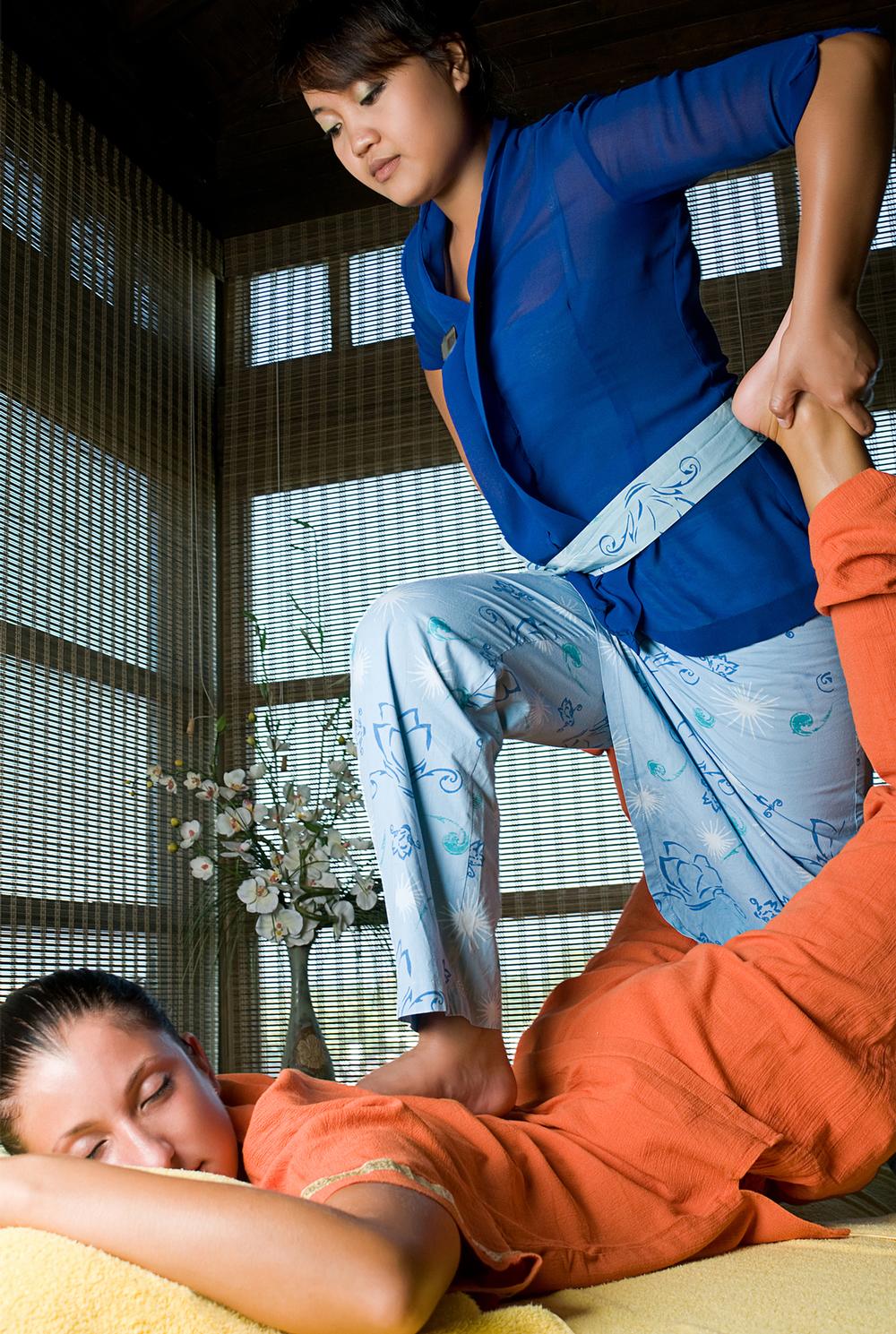
The consensus among spa operators is that the number of male spa consumers has increased over the past few years, although there hasn’t been a significant change in the male/female ratio. Nonetheless, the spa industry expects more male customers in the near future, as male-specific products and treatments evolve. Currently, men mostly prefer massages – the top three favourites were Thai massage (56 per cent), aromatherapy massage (31 per cent) and foot massage (26 per cent) .
The research further revealed that individualised packages – programmes tailored to specific needs such as skin types, as well as authentic back-to-the-basics treatments/therapies – those which are perceived to be traditional without modern/new-age tinkering – will shape future demand in the industry. Authentic treatments/therapies are more important to men, as 50 per cent of all male respondents (compared to 23 per cent of females) stated back-to-basics as their primary future expectation in a spa.
Female spa consumers, on the other hand, prioritise individualised packages (33 per cent) and price discounts (28 per cent) when deciding on future spa visits. The discrepancy in price sensitivity between men and women is further underlined by a slightly higher average spending per treatment by male spa goers – categorical data collection shows men spend approximately THB1,372 (US$43, €33, £27); and women spend around THB1,000 (US$32, €24, £20).
In terms of spa products, female customers tend to try spa-owned products more often than male visitors who prefer well-known professional spa brands. The survey also shows that 80 per cent of female and 68 per cent of male spa consumers claim to prefer organic over non-organic products.
A third trend was confirmed when investigating consumers’ preference of joint visits to spas over visits alone. With 58 per cent of males and 63 per cent of females preferring to visit spas with an accompanying person, the trend to use the spa to socialise might influence future spa design and the time spent in the spa itself. One out of three female spa consumers in Thailand visit a spa, together with a friend, while, interestingly, more male consumers visit spas with their partners (22 per cent of men and 12 per cent of women).
On the menu
In the opinion of spa operators, the quality and skills of therapists is getting as important as the treatment or the product itself. As such, they believe training has to focus on communication and behavioural skills, sales and especially on customer service.
Spa operators believe that spa menus are too extensive – although new treatments are added, previous offers are rarely omitted. The majority feel less is more and that menus should be fine-tuned, more streamlined, clearer to customers and changed regularly to highlight seasonal promotions.
Furthermore, operators report a continued merger between the medical and spa industries with the development of and demand for more medical spas. Treatments/therapies based on eastern and western healthcare philosophies are being offered side by side, as consumers take more responsibility for their overall wellness. Medical spas, however, present some unique challenges say operators. Unless proper training is provided, therapists will not have the right skills to perform medical treatments. In addition, medical spas also need to have a licence to be able to provide that training and offer the treatments.
Therapists and standards
Research results show that the top three important characteristics of therapists for both current and potential spa consumers are pleasant behaviour, responding to individual needs and ability to explain therapies and treatments.
When comparing the two opinions, pleasant behaviour is more important to potential spa consumers, whereas responding to individual needs seems to be more important to current spa consumers. This illustrates the fact that experienced spa-goers put a lot of emphasis on individualised attention, while newcomers value a comforting atmosphere created by the therapist.
From a business standpoint, managers mostly focused on the attitude and experience of therapists. The general opinion was that skills to properly execute spa treatments and therapies can be trained, but a good attitude is something that is intrinsic and difficult to teach. Hence, the study revealed a strong emphasis on attitude-based hiring in the spa industry. Training on language/communication skills and behavioural skills were also of growing importance, the operators said.
As for the role of standards in the industry, most spa operators thought an official national standard for operating a spa would be beneficial to the industry’s image. They also believe that voluntary standards lead to higher credibility, but there wasn’t a dominant opinion on whether voluntary standards attract spa consumers.
AEC 2015 impact
By 2015, countries in Southeast Asia will be transformed by an economic integration which will see the free movement of goods, services, investment, skilled labour and a freer flow of capital across the region. The development is being led by the ASEAN (the Association of Southeast Asian Nations) and is known as AEC (the ASEAN Economic Community) 2015.
Spa managers think that AEC 2015 will bring along some challenges – citing increased competition in the recruitment of skilled managers and experienced therapists, a rise in rivals, a higher need for differentiation and a greater need for language and communication skills as perceived obstacles.
That said, however, most are very positive about its impact. They feel it will bring about a range of benefits from increased investment and an improved standard of therapists to tougher spa standards and a wider diversity of treatments and differently skilled employees from other countries.
A full copy of 2013 Spa Industry Research is available from the Thai Spa Association. Details: www.thaispaasssociation.com
|
|
|