Almost 50 years after the first visitor facilities appeared at Stonehenge, and more than a decade after the site’s presentation was called ‘a national disgrace’, a new £27m visitor scheme is hoping to silence the critics. Julie Cramer finds out more
By Julie Cramer | Published in Leisure Management 2014 issue 2
The Stonehenge site has sparked much controversy in the past. How does it feel to have reached this point?
It’s been a long, challenging project but we’re thrilled with the results. Ever since English Heritage (EH) formed in 1984, it’s wanted to improve the Stonehenge visitor experience. The Public Accounts Committee once called it “a national disgrace” and I’d have to agree with them.
I first went to Stonehenge as a student in the 70s, and it was the first site I visited after joining EH in 2003. I’d been working on exciting developments in the museums sector, and couldn’t believe nothing had changed there.
I didn’t appreciate why nothing had changed, but having headed up the project for the past five years, I now know the challenges involved!
What were the key challenges for EH? The first challenge we faced was finding a location within the World Heritage Site that all the stakeholders could agree on. That took from July 2008 to January 2009. We needed to build something that was going to be a positive addition to the World Heritage Site, without it having any adverse visual or environmental impact. Our brief was always to build something that could be reversed if it needed to be. We were conscious when we started the project that we might find precious archaeological remains once building started. Actually we didn’t, but we still proceeded to build in this way.
The proximity of the roads around Stonehenge has also been a major problem hasn’t it? Yes, the A344 cut through the site. When Stonehenge and Avebury were put on World Heritage Site register in 1986, the government said it would close that road – that finally happened in June 2013.
It took so long because it was a fundamental part of all the schemes put forward since 1986 that didn’t proceed. When the Airman’s Corner scheme got planning permission we still had to apply for a Stopping Up order for the road, which went to a public inquiry. We still have the A303 running very close, but that’s had a whisper surface applied to it and it’s now noticeably quieter.
How has the project been funded? The £27m Stonehenge Environmental Improvements Programme is the largest capital project ever undertaken by English Heritage. The project has been financed almost entirely by Heritage Lottery Fund money (£10m), English Heritage commercial income and philanthropic donations including significant gifts from the Garfield Weston Foundation, the Linbury Trust and the Wolfson Foundation.
What does the centre replace? The visitor facilities at the Stone Circle dated back to 1968 and were totally inadequate for what’s expected of a visitor attraction today.
They consisted of a basic concrete building housing a shop and catering unit, and various Portakabins for staff facilities and toilets.
Although all these facilities were down in a dip, if you approached the site from the north or west they jarred against the landscape.
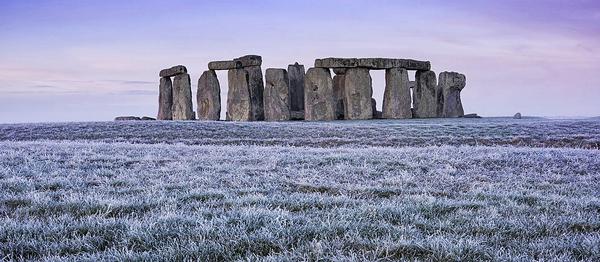
As we did an overnight switch to the new centre in December 2013, these facilities had to remain in place, but over the next six months they’ll be dismantled. By the summer, Stonehenge will once again be standing alone in its natural grassland.
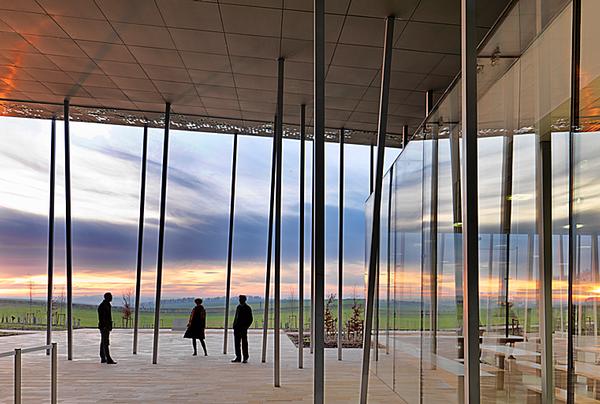
What can visitors expect from the new centre? We’ve conceived the building as literally a stopping off point on the way to the Stones, which now lie 2km away. It’s all about getting people to the Stones and vastly improving their understanding and experience of them and the surrounding landscape, which contains an extraordinary number of prehistoric monuments .
How does the centre improve visitors’ understanding of the Stones? We now have an interpretative exhibition about Stonehenge that people can visit either before or after they see the Stone Circle, or both.
We will also be displaying Stonehenge artefacts, such as some of the tools used to build the monument – on loan from nearby museums – at the site for the first time.
People visit Stonehenge with some basic questions about the Stones. How will you answer them? We’re setting out the latest knowledge in response to questions about who built the Stones and how they were built. We don’t have all the answers but there’s ongoing research about Stonehenge and we engaged a number of leading academics to help us tell the story. Some of those archaeologists are featured in the exhibition itself, talking about the various theories surrounding the ancient site.
Do you expect dwell times to increase? Visitors previously spent around 45 minutes to an hour at the site, and we expect that to increase to around two hours. That time could even be extended further when the weather is good, as visitors now have the option to either walk all the way to the Stones, or to start from a National Trust viewing point and walk the final kilometre to them, passing other key ancient monuments on the way.
Do you expect numbers to increase? It’s never been an objective to increase visitor numbers, due to the sensitivity of the site. Plus we’ve been limited with the size of the new car park we’ve been able to build. Stonehenge has been attracting around one million visitors per year, on a 70/30 international-domestic split. We expect that to rise to around 1.25 million and we’ll manage that on a timed ticketing system, so people will now have to book in advance to be sure of entry.
The visitor centre was the first phase of the development. What comes next? The new centre was the main phase, and we’re now concentrating on restoring the natural landscape, as well as building a new exhibit of Neolithic houses in our external gallery space.
We advertised nationally for volunteers to build them and got a great response. Visitors will be able to watch them being constructed, and when finished they can go inside – there’ll be fires lit and replicas of the furniture and implements used at that time.
Will your role as director change now the site has opened? When all the phases of the development are complete, this role will come to an end. I’ve been working on this project since 2008 and it’s been the biggest challenge of my career to date.
Stonehenge was a national disgrace, and finally we’ve had the opportunity to put things right.
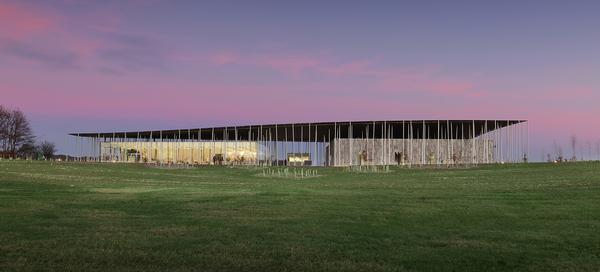
Greener fields The building is sensitively designed to sit lightly in its surroundings and could, if necessary, be removed leaving relatively little permanent impact on the landscape.
This was achieved by constructing it on a concrete raft, which in turn sits on an area of ‘fill’ with minimal cutting into the soil. The construction used slender steel columns, lightweight framed walls and semi-external spaces – allowing the foundation depths to be minimised.
The building has a high BREEAM rating (the industry standard assessment system for sustainable building design and construction), and is designed to maximise energy efficiency, minimise carbon emissions and pollution, and reduce water consumption.
Features include: An open loop ground source heating system; mixed-mode ventilation – the building will be naturally ventilated if external conditions allow; and ‘grey water’ will be used for the bulk of water required at the visitor centre.
The building is sensitively designed
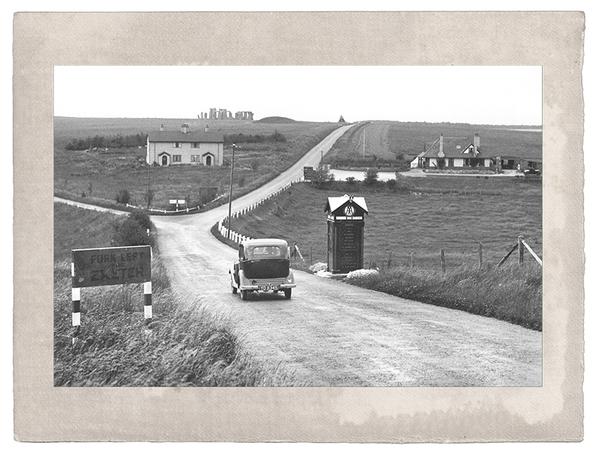
TIMELINE: The long road to a ‘new’ Stonehenge 1930 The photograph (above) shows the approach along the A303 (with the A344 to the right) in about 1930
1968 First facilities, car park and pedestrian underpass built
1979 Dept of Environment sets up Stonehenge working party to look into future management of the site
1984 English Heritage (EH) established – chair Lord Montagu pledges to “find and implement a permanent solution”
1986 Stonehenge and Avebury put on UNESCO’s World Heritage Site List. Includes commitment by UK government to close the A344
1991 EH submits outline planning application for a visitor centre at Larkhill, which is refused
1992 EH launches design competition for a new visitor centre, and submits a planning application of a design by Ted Cullinan. Later withdrawn.
1993 Presentation of Stonehenge described as “a national disgrace” by the National Audit Office and Public Accounts Committee
1996 EH submits bid to Millennium Commission for a Stonehenge Millennium Park, but bid is turned down
1998 EH chair, Sir Jocelyn Stevens, makes another EH attempt at launching a Stonehenge Master Plan, including plans for a 2km cut-and-cover tunnel for the A303 and visitor centre at Countess East
2000 – 2003 Under chair Sir Neil Cossons, EH pushes forward a scheme at Countess East and improvements to the A303 involving a bored tunnel.
2004 After a public inquiry, Dept of Transport announces A303 tunnel will be adopted
2004 Planning application submitted for a new, semi-subterranean visitor centre at Countess. Planning permission granted in March 2007
Dec 2007 Government announces cancellation of A303 tunnel scheme meaning visitor centre scheme must also be abandoned
Jan 2008 Government asks EH to draw up a new scheme
Oct 2009 EH submits planning application for a visitor centre at Airman’s Corner. Permission granted in June 2010
Jan 2012 All road orders to close the A344 granted
July 2012 Work on the new visitor centre begins
June 2013 Work to decommission the A344 starts
Dec 2013 New visitor centre opens
Jan 2014 Existing car park and facilities start to be removed
June 2014 Landscape near Stonehenge will be restored; project completed
TIMELINE: The long road to a ‘new’ Stonehenge
TIMELINE: The long road to a ‘new’ Stonehenge
Visitor Centre Designers
Alisdair Hinshelwood
Alisdair HinshelwoodDirectorHaley Sharpe Design
How did Haley Sharpe Design come to be involved in the Stonehenge project? Through a competitive tender issued by English Heritage (EH) in 2009.
What was your brief? To work with EH to find ways to express the importance of Stonehenge in its wider historical, cultural and landscape context, and to create a step-change in the way in which visitors experience this significant World Heritage Site.
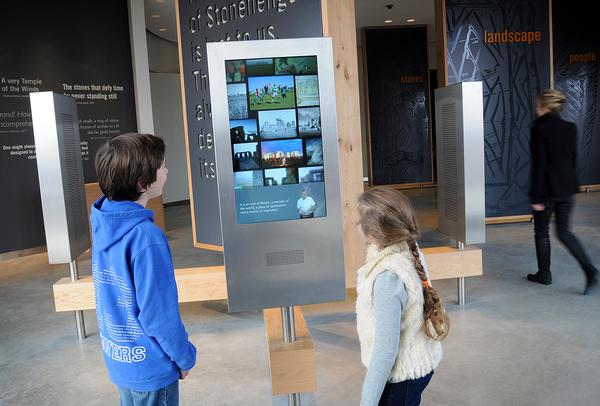
How have you told the Stonehenge story? We’ve recreated past landscapes through virtual technology, presented differing perspectives on the meaning of the Stones, and brought real archaeological objects back to the site that express human presence during the prehistoric period, when Stonehenge was of most importance to our ancestors.
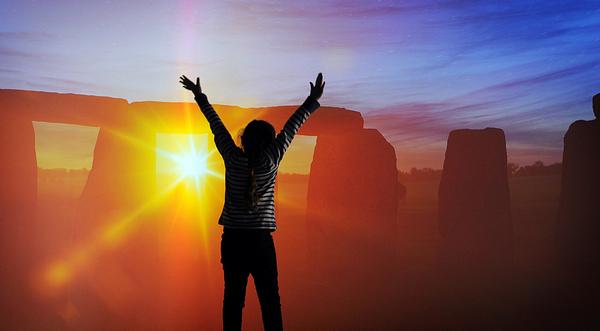
What are the most striking features of the centre? One of its most compelling features is the 360-degree interactive theatre. Everybody wants to stand in the middle of the Stones, but clearly because of the problems with erosion, it’s never been possible for all visitors. Through technology, visitors are now able to do this realistically in the digital theatre.
EH commissioned a digital scan of the Stones some years ago – showing them in minute detail – so we had a valuable, ready-made asset when we appointed the software company Centre Screen to develop AV for the theatre. Visitors can now travel back in time to experience three key periods of human activity at Stonehenge.
How long does the experience take? It’s been designed so that visitors don’t have to go through the centre at all – they can choose to go directly to the Stones.
Once they’re at the centre, our brief was to create a space where the key messages of Stonehenge could be distilled into a 15-minute experience – simply to manage the volume of people who visit each year. So we had to simplify messages and make them high impact.
What were the main challenges? Dealing with the conditioning requirements in a BREEAM-rated building and planning a narrative that delivered the key messages within the context of the visitor profile and numbers.
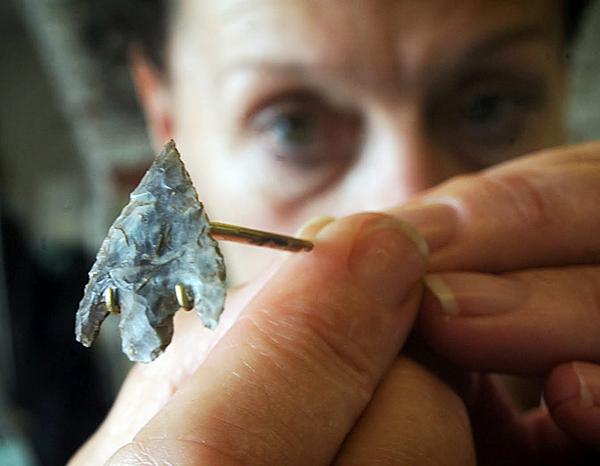
Will visitors see any ‘firsts’? It’s the first time that prehistoric objects from Stonehenge and the surrounding landscape have been displayed in the World Heritage Site.
There’s a huge amount of satisfaction in bringing these items (on loan from museums in Salisbury and Wiltshire) back to where they were left thousands of years ago.
Greener Fields The new construction at Airman’s Corner comprises the visitor building designed by Denton Corker Marshall, an ancillary building, coach and car parks, and shuttle embarkation point.
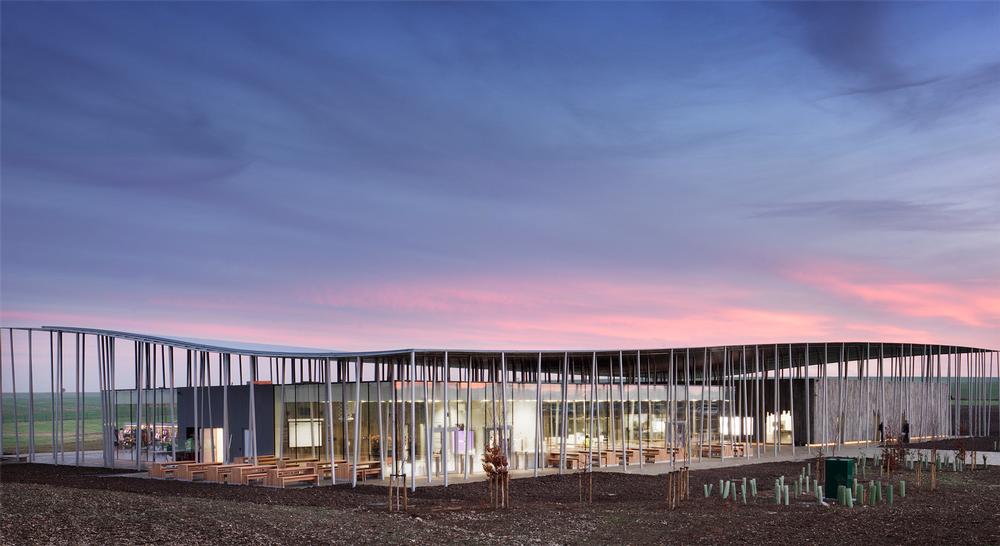
The galleries, café, shop and toilets are housed in a pair of single-storey ‘pods’ beneath an undulating canopy roof that reflects the rolling hills of Salisbury Plain. Local materials have been used wherever possible.
The building is linked to the Stones by a low-key visitor shuttle system running along the existing road surface of the A344 (now closed to public traffic). By early May, a cluster of Neolithic houses will open as an external exhibition, recreated using rare evidence of domestic buildings from prehistoric England recently unearthed near Stonehenge.
During the first half of 2014, the existing car park, visitor buildings, road and fencing close to the monument will be demolished and grassed over.
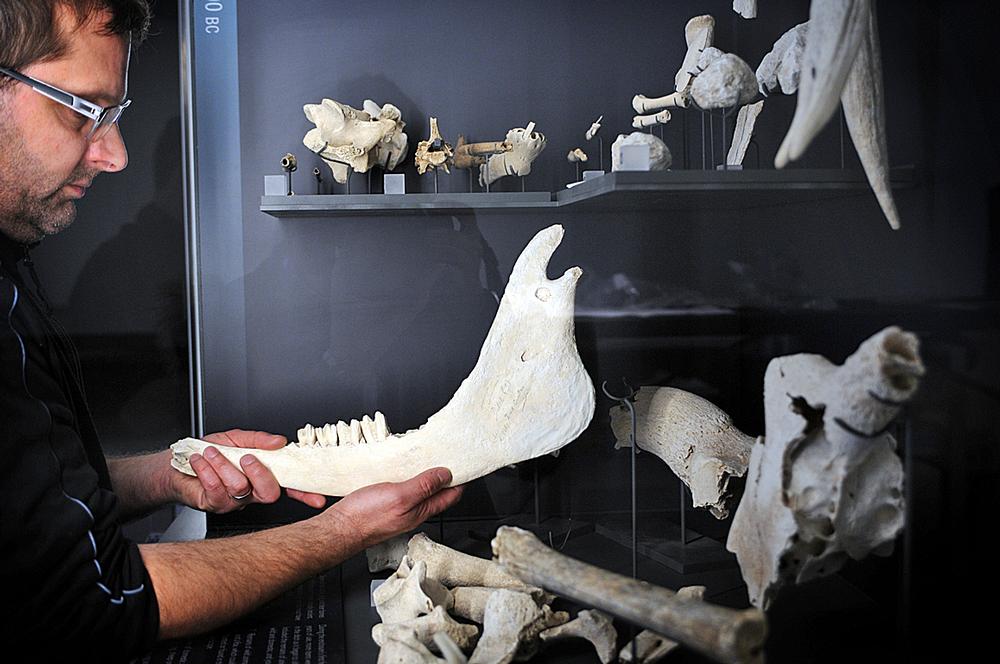
A 360-degree virtual, immersive experience will let visitors ‘stand in the stones’ before they enter a gallery presenting facts and theories surrounding the monument through various displays and nearly 300 prehistoric artefacts. Archaeological finds on display are on loan from the Salisbury and South Wiltshire Museum, the Wiltshire Museum, and the Duckworth Collection, University of Cambridge. All were found inside the World Heritage Site and many are on public display for the first time.
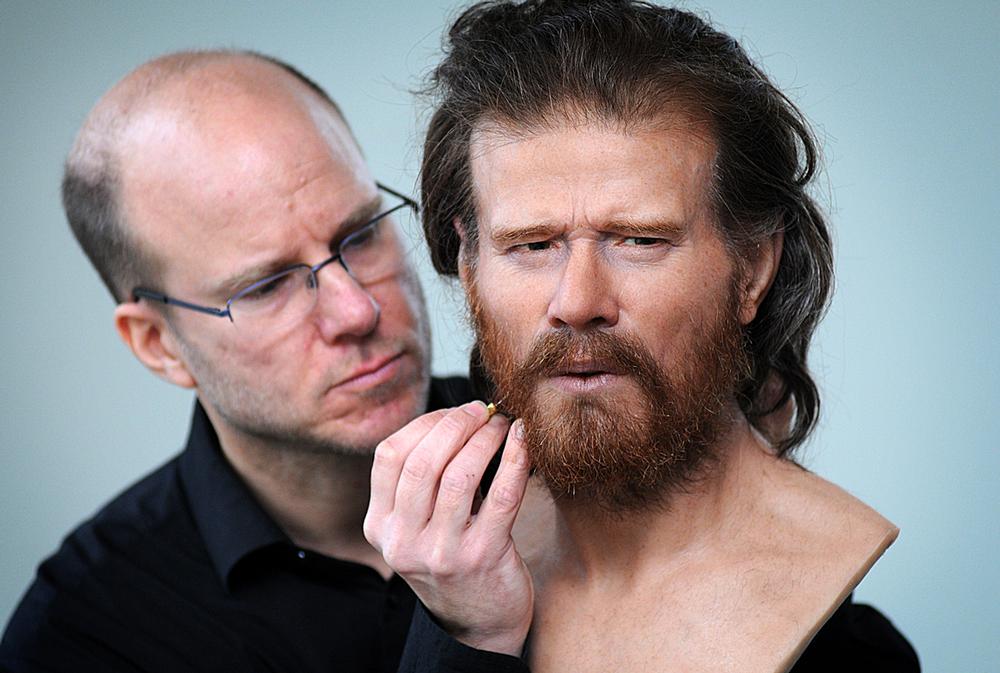
One of the highlights is a forensic reconstruction of an early Neolithic man, based on a 5,500-year-old skeleton from a burial site near Stonehenge. Also on display will be two rare 14th century manuscripts, Roman coins and jewellery, and early surveying equipment.
‘Set in Stone? How our ancestors saw Stonehenge’, is the first temporary exhibition, charting centuries of debate – from 12th-century legends to radiocarbon dating in the 1950s. l
This feature first appeared in Attractions Management, Q1 2014
Visitors can experience a virtual sunrise in the new facility
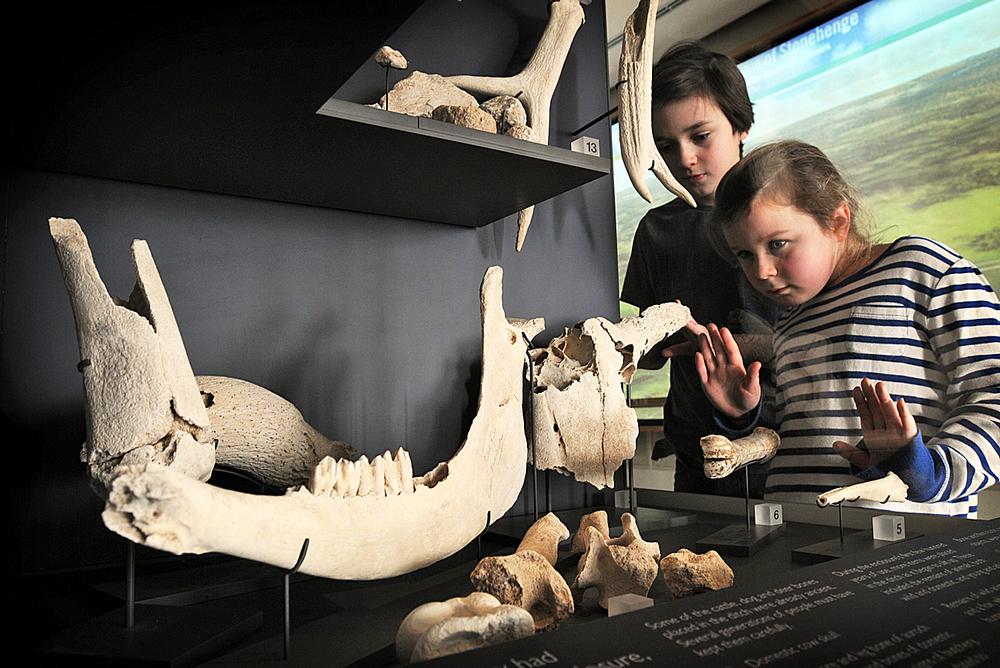
Precious objects linked to Stonehenge are on show for the first time
Interactive displays help bring the story of Stonehenge to life for visitors
Loraine Knowles
Director of Stonehenge
The centre sets out to offer the latest knowledge on Stonehenge: what it is, why it’s there, who built it
Some of the artefacts on display at the centre have been loaned to English Heritage by other museums
Forensic artist Oscar Nilsson has recreated the face of an early Neolithic man
Global Wellness Day (GWD) will mark its 15th anniversary on Saturday 13 June 2026, with the
theme: #JoyMagenta – a celebration of the healing qualities of simple gestures and activities
that spark joy.
Global luxury hospitality brand, Six Senses, has partnered with longevity healthcare provider,
HUM2N, to launch a clinic at Six Senses London, at The Whiteley.
As part of its first hotel partnership, Mayrlife – the medical health resort company known for its
site in Altaussee, Austria – has launched a day clinic at the Rosewood Vienna.
Premium London health club, KX Chelsea, will imminently unveil its most significant
redevelopment since its launch in 2002 to create an integrated wellness model combining
training, recovery and relaxation.
Rosewood Le Guanahani St Barth, on the northeast coast of Saint Barthélemy in the French
West Indies, is offering a programme of ocean-inspired yoga classes between 8-14 June to
celebrate Global Wellness Day (GWD).
Hotel de France, located on the British Isle of Jersey, has created a wellness retreat package
that includes a hot yoga session that will take place in Jersey Zoo’s butterfly sanctuary.
The Ritz-Carlton, Langkawi, in Malaysia, has revealed a schedule for Global Wellness Day
(GWD) that includes guided rainforest walks, mindful movement and guided coastal meditation
experiences.
Longevitix, a clinical platform for preventive and longevity medicine, has launched its AI-
powered intelligence system to help physicians deliver continuous, personalised longevity-
focused care at scale.
Atmantan Wellness Centre, an integrative wellness destination in Mulshi, near Pune in India, is
expanding its portfolio by adding a new centre in Hyderabad that will launch between 2028 and
2029.
A recent survey by the UK Spa Association (UKSA) into the industry’s approach to cancer care
has revealed that almost half of participating respondents (46 per cent) are unaware that
cancer is a disability and guests with a cancer diagnosis must be given
+ More news
COMPANY PROFILES
Knesko Skin Known for their unique approach to wellness and beauty, Knesko’s products combine ancient healing tr [more...]