As the world’s largest country by area, Russia boasts a diverse landscape and with it comes copious natural resources, ranging from thermal water in the highlands through to abundant muds, salt, herbs and gases suitable for holistic treatments.
As with the other BRIC economies, Russia’s middle class is growing rapidly – jumping from 30 to 60 per cent of the total population from 2001-2010, according to data from the Russian Longitudinal Monitoring Survey. This burgeoning demographic makes up a significant proportion of customers for the spa market which is dominated by domestic tourism. In addition to growing disposable incomes, Russia’s 143.5 million citizens have considerable time to spend at leisure, with state employees receiving 24 days vacation each year, plus 10 public holidays.
International tourism is also growing, with inbound visitor numbers jumping 13.4 per cent (United Nations World Tourism Organisation) to 25.7 million in 2012, although the country still suffers from an image problem. Despite this, major events like this year’s Winter Olympics in Sochi and the 2018 football World Cup are expected to boost interest.
One of the main weaknesses of the Russian spa industry is its lack of infrastructure and organisation. The last major analysis of the sector – Overview of the Current State of the Russian Spa Industry – by consultant Nina Tsymbal (see p72) was conducted in 2008 and statistics are hard to come by. The Spa and Wellness International Council, a Russian spa body (see p70), estimates that there are 1,500 spas in the country, with only one third corresponding to international standards.
In addition, there are around 2,000 traditional medical-focused health resorts, or sanatoriums, which are often located on mineral springs or the coastline. Today, a resurgence of these dilapidated sanatoriums is underway and international players are circling to develop them into spa hotels, particularly in the Sochi area.
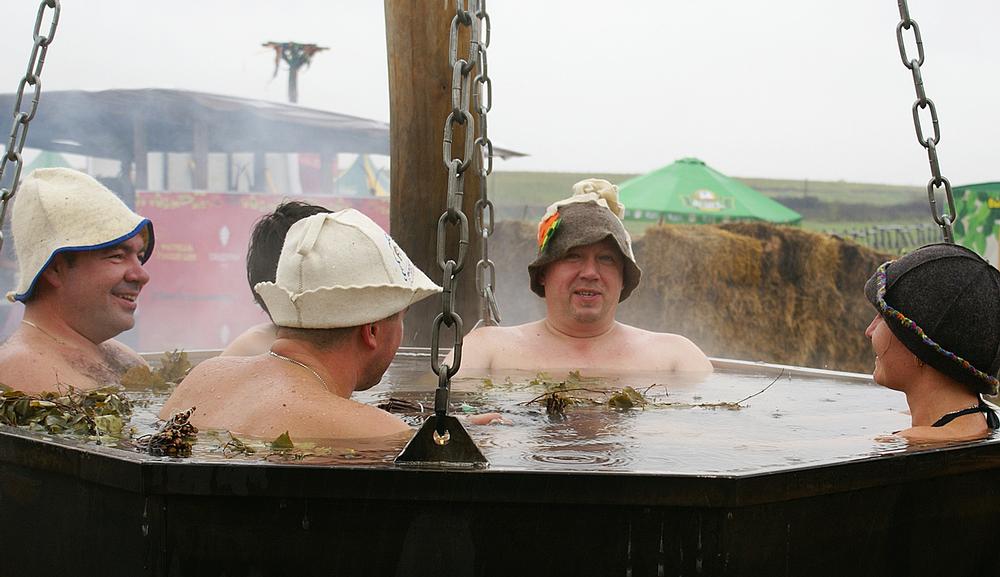
Banya, the famous sauna culture in Russia dating back 1,000 years, is also ripe for development (see SB14/2 p50). Public bathhouses like Sanduny in Moscow are located across the country while modern facilities such as Fox Lodge – a lakeside retreat north of the capital – are including them as part of a conventional spa offer.
What might scupper the growth of the spa industry in Russia, however, is economic instability and, from an overseas tourism and investment perspective, international relations following the annexation of Crimea. If the oft-discussed visa agreement with the EU comes into play, this could offer a solution to these barriers but this is contingent on whether the currently frayed diplomatic relations can ever become close-knit.
Here, we ask operators and consultants in Russia about the state of the country’s spa industry, the cultural and economic factors affecting it and what trends, opportunities and obstacles they’re seeing.
Special thanks to Galiya Abaydulina, the brand manager for Thalion in Russia, for her help with the research of this feature.
Details: www.thalion.com; +7 495 792 58 95
|
|
|