Exploration architects have built a global reputation for their work in biomimicry. Founder Michael Pawlyn tells Rhianon Howells why biology and architecture make great bedfellows
By Rhianon Howells | Published in CLADmag 2015 issue 1
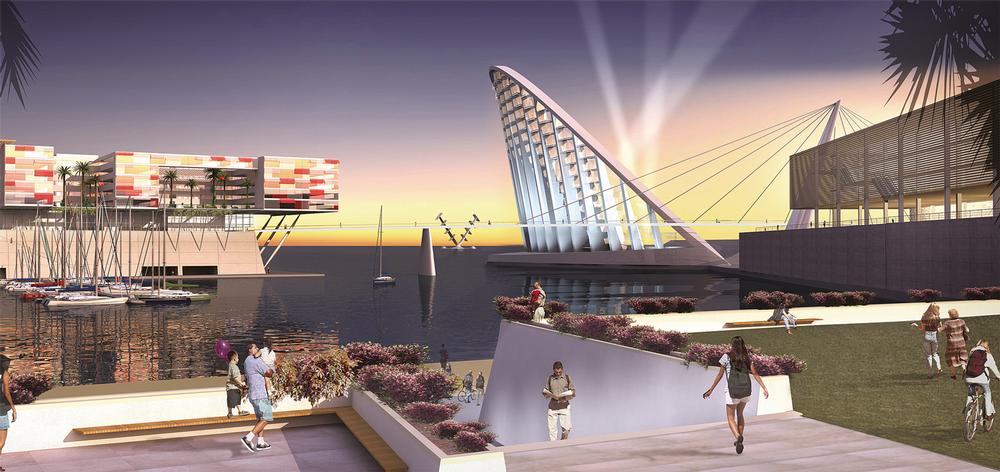
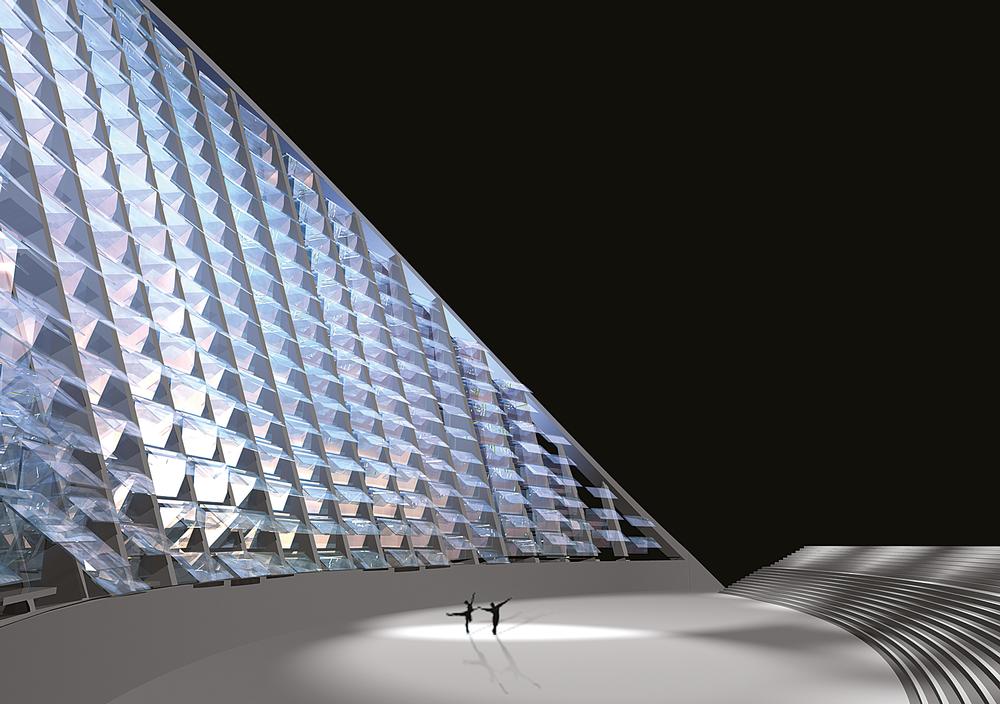
The Las Palmas Water Theatre – a desalination plant that takes the form of an outdoor amphitheatre – was inspired by the Namibian fog-basking beetle
As one of the world’s leading biomimetic architects, Michael Pawlyn has always been as passionate about the natural environment as he is about the built. But it wasn’t until he joined Grimshaw Architects in 1997 that he realised he could combine both loves in his work.
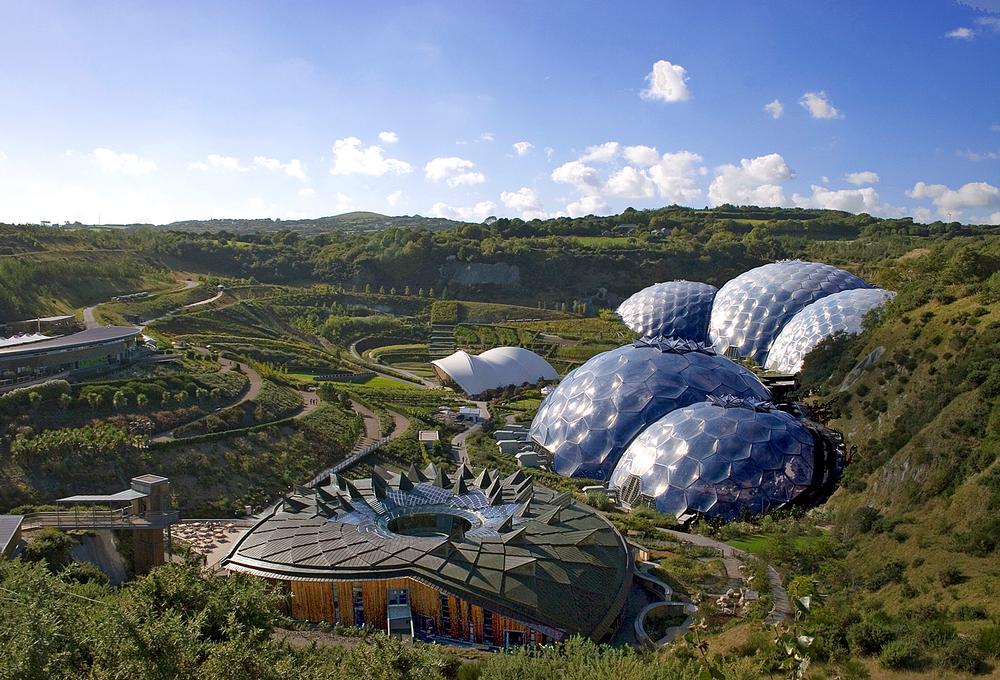
Pawlyn was part of the core team responsible for the Eden Project in Cornwall, UK; he led the design of warm temperate and humid tropics biomes, helping to radically reinvent the principles of horticultural architecture and creating a groundbreaking, world-class visitor attraction in the process.
In 2007, he left Grimshaw to set up his own firm, Exploration, a group of architects, designers and researchers who specialise in design innovation and strategy which is specifically focused on biomimicry.
Pawlyn and his team are casting their net wide, in the belief that this kind of design has the potential to benefit all areas of life. Projects range from studies for a biomimetic office building to the Sahara Forest Project – a pioneering attempt to grow vegetation and create green jobs in desert regions – that’s already proven successful in a pilot in Qatar. Looking ahead, Pawlyn believes there’s great potential to apply the principles of biomimicry to leisure architecture, particularly in the area of mixed-use schemes.
What sets your work apart? There aren’t many architectural practices doing what we do, although I’m sure that’ll change. There are a few architects in colleges doing work on biomimicry, but the practices tend to focus more on biomorphic architecture.
Biomimicry is about engaging with the way functions are delivered in biology and translating that into solutions that meet human needs, whereas biomorphism is more about looking to nature as a source of original forms. Some of Frank Lloyd Wright’s buildings or the TWA terminal by Eero Saarinen are good examples, and they can be very enjoyable buildings. It’s worth making the distinction, though, because I feel strongly that what we need over the next few decades is a functional revolution.
How does biomimicry in architecture differ from other sustainable approaches? The sustainability paradigm has often been about mitigation – how to make things less bad. In their book Cradle to Cradle, William McDonough and Michael Braungart argue that we need to get beyond that: it’s not enough to produce solutions that are less bad, we need models that are 100 per cent good.
In the case of biomimicry, I think it’s possible to move to a new paradigm, which is about restorative design. So while conventional human-made systems are generally extractive, linear, disconnected, wasteful and reliant on fossil fuels, biomimicry is about creating densely interconnected, zero-waste systems that rely on solar energy in a way that is actually restorative to the environment.
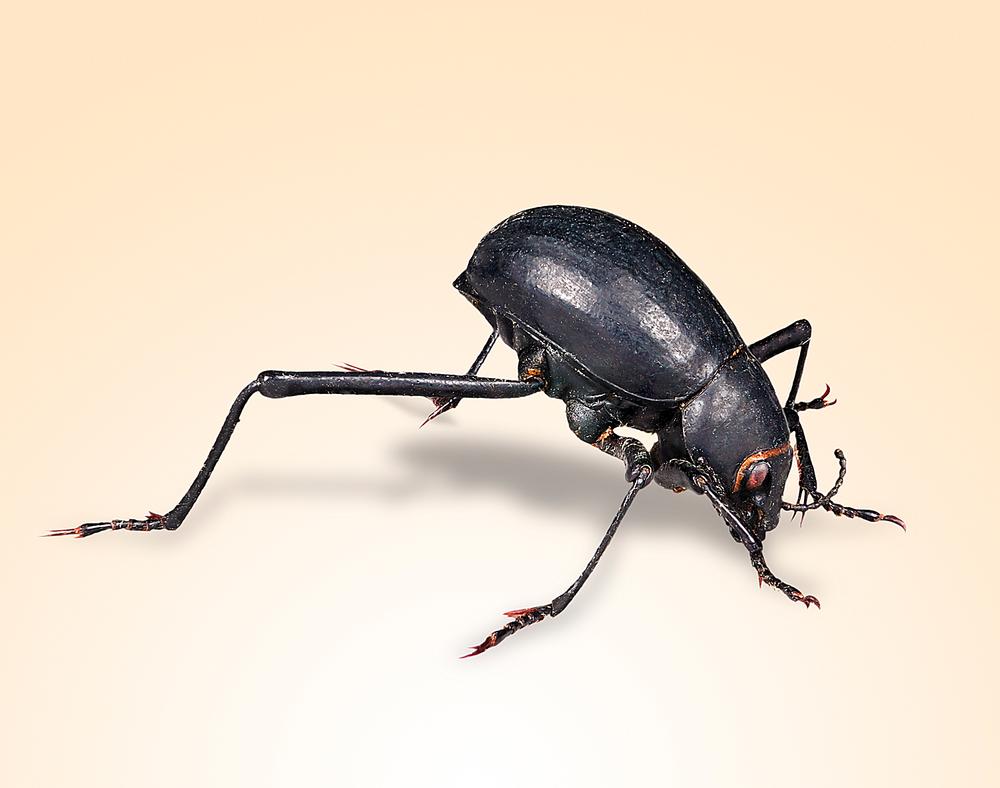
How much potential is there to apply the principles of biomimicry to leisure buildings? The potential definitely exists to use biomimicry to solve functional challenges but at the same time to deliver secondary benefits. A good example is the Las Palmas Water Theatre in the Canary Islands, which I worked on at Grimshaw and which is actually a desalination plant. The key biomimicry idea came from the Namibian fog-basking beetle: you’ve got a cool surface, humid air passes over it and condensation forms. We tried to maximise that effect using the sunny conditions, steady wind direction and cold seawater that are abundant in the Canaries. That drove the form of the building, but the evaporators and condensers were arranged in such a way that they created a backdrop for the creation of an outdoor amphitheatre.
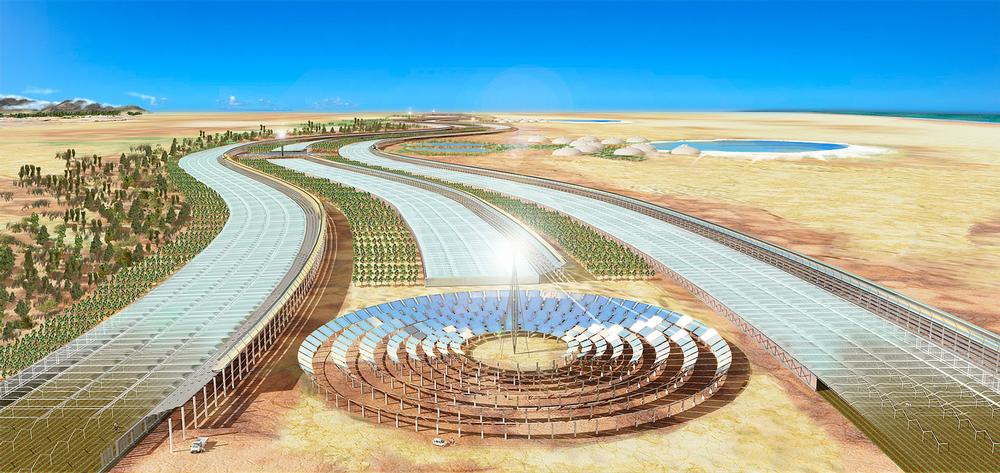
The Sahara Forest Project [a scheme that combines solar power technology and desert revegetation techniques with seawater-cooled greenhouses which are also inspired by the Namibian fog-basking beetle] also has the potential to work very well as part of a mixed-use leisure resort.
Resorts have normal infrastructural demands in terms of energy, water, food and waste, so if we’re going to create sustainable destinations we have to find ways of meeting those needs in the most sustainable way. If we had a Sahara Forest Project near a leisure scheme, we could deliver zero-carbon food and potentially create all the energy and water needed, at the same time as turning a barren environment into a more bio-diverse and micro-climatically cooler environment.
Are you working on any leisure-related projects at the moment? We’ve done a seed proposal for a sustainable scheme in the Amazon. If it goes forward, it will be a boutique hotel. It’s completely off-grid, so we’ll have to propose ways in which it can be self-sufficient in water and energy and completely closed-loop in terms of its waste processes. And as far as possible the buildings will be made of locally available materials.
What role did biomimicry play in the Eden Project? It was used at pretty much every stage of the design process. One of the challenges was that the site was still being quarried and we didn’t have predictable final ground levels. So we conceived of the building as being composed of bubbles; we studied their geometry and developed a bubble model that fitted into that 3D terrain. The next stage was thinking about how those spherical surfaces could be structured most efficiently. For that, we looked at examples in biology such as pollen grains, radiolaria and carbon molecules, which demonstrated that the most efficient way of structuring a spherical surface was with pentagons or hexagons.
We then wanted to maximise the size of those hexagons, to save steel and to maximise light, which meant finding an alternative to glass. In nature, there are some very efficient forms made out of pressurised membranes and that led us to ETFE, which is a high-strength polymer that’s put together in three layers then inflated to give it rigidity. We pushed the material further than ever before, and eventually we were able to produce inflated ‘pillows’ of up to 75sq m in size.
With safety glass you’re limited to 10sq m; not only were some of these hexagons seven times that size, but they were also 1 per cent of the weight of double-glazing. That delivered a huge advantage in terms of steel use.
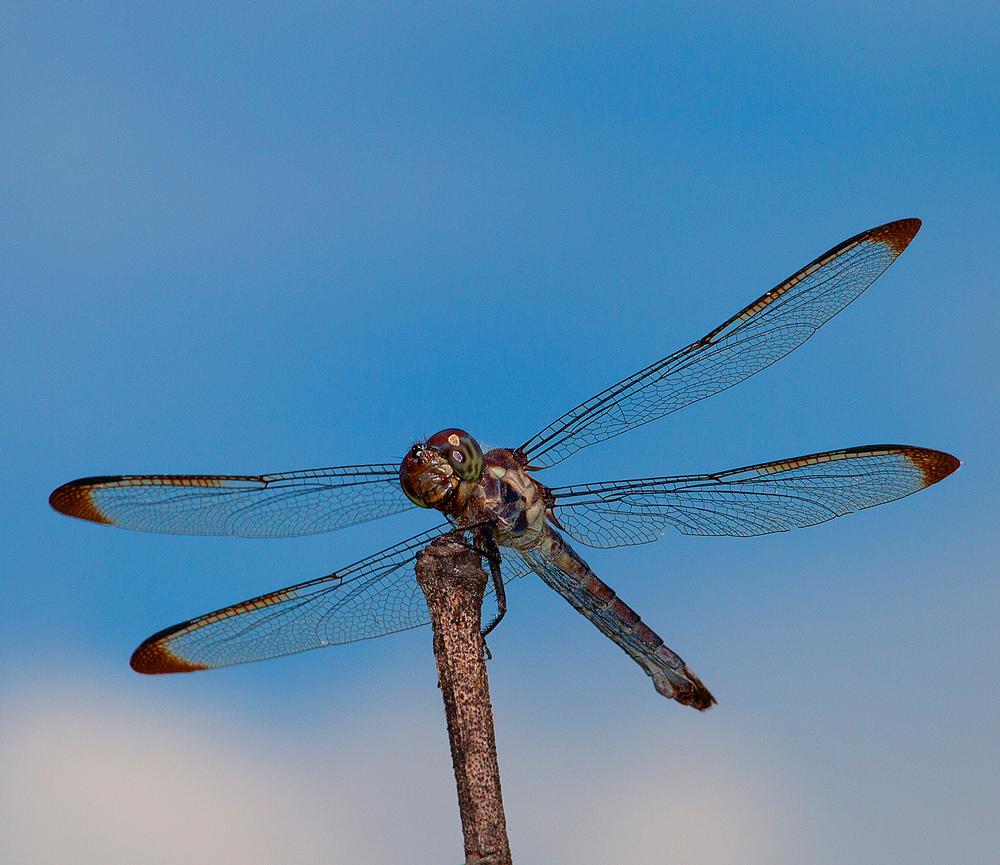
When designing the dome intersections posed a challenge, we resolved it by looking at the structure of dragonfly wings.
Why is it important the buildings we spend our leisure time in are well designed? When people are in leisure mode, they’re often very receptive to new ideas, and there’s a real chance if someone sees something innovative when they’re on holiday, they will think about how to apply that when they go back to their work environment.
I also think it’s really important to find ways to reconnect with nature and help people to understand just how much we depend on nature for our future quality of life: our materials, medicines and foods. And that’s something that you can often do on a leisure scheme that you wouldn’t be able to do on, say, a dense urban site.
What single opportunity or experience has most defined your career? Working on the Eden Project was a great break for me. It made me realise the three things I was passionate about as a teenager – design, biology and the environment – could be brought together in the congruent pursuit of sustainable architecture inspired by biology, and I hadn’t realised that before. Also it showed me how you can take a fairly wild idea and, by following a thorough process, managing innovation and getting the right people together, turn it into something real.
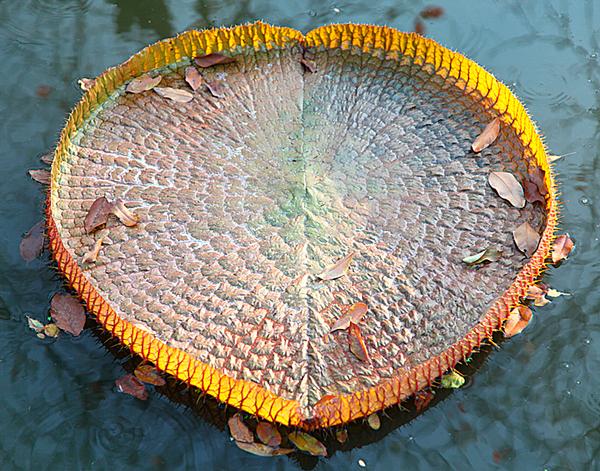
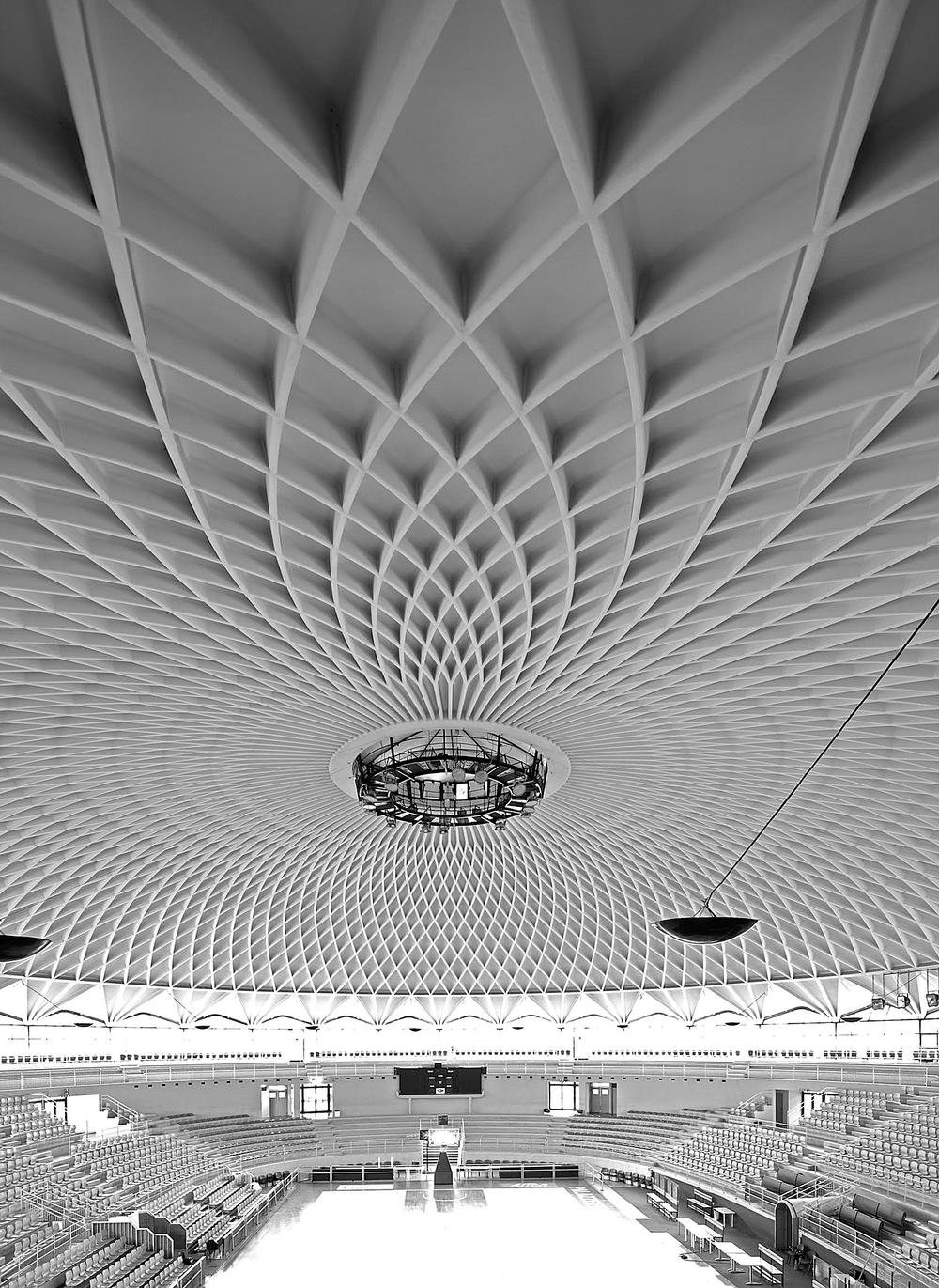
What’s your favourite leisure building? A real hero of mine is the Swiss-Italian engineer Pier Luigi Nervi, who worked on some really stunning buildings, including a small sports stadium called the Palazzetto Dello Sport, which was built for the summer Olympic Games in Rome in 1960 and designed by architect Annibale Vitellozzi. The structure is based pretty closely on giant Amazon water lilies and there’s a nice parallel between the way Nervi works and the process of evolution, in that he won many of his projects in competition by being lighter and more efficient, and therefore cheaper, than his competitors.
Are there any leisure buildings that you dislike? I’d be critical of the Bird’s Nest Stadium in Beijing by Herzog and de Meuron. In some ways it’s stunning, it looks awesome, but it’s incredibly resource-intensive. Although on a certain level it claims to be inspired by birds’ nests, it actually takes none of their ingenious aspects. You could have used those examples to create a highly resource-efficient structure, but it isn’t resource-efficient at all.
What are the biggest threats facing your discipline? The fossil fuel industries. They’ve driven us towards the brink of the abyss and now they’re putting their foot on the accelerator. And it makes me angry, because there are so many solutions that architects such as myself and others have proposed over the last 20 years, but they don’t get adopted simply because of the skewed way we look at energy. Fossil fuel energy is way too cheap because it externalises all the main damage costs and treats the atmosphere as a dump. If we were to internalise the full costs of fossil fuels and many other materials, it would really make the economic case for the kind of solutions we’re proposing.
What would you like to be remembered for? Building schemes that made a positive difference to people’s lives and the environment.
Author
Rhianon Howells is a business journalist with more than 15 years’ industry experience
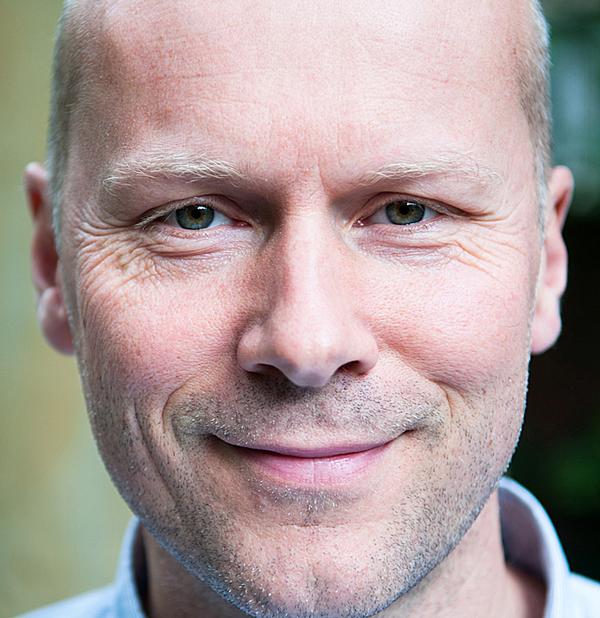
Michael Pawlyn
The Las Palmas Water Theatre – a desalination plant that takes the form of an outdoor amphitheatre – was inspired by the Namibian fog-basking beetle / LAS PALMAS WATER THEATRE IMAGES: Grimshaw
The Namibian fog-basking beetle creates its own fresh water in the desert
The Sahara Forest Project aims to create revegetation and green jobs through the production of food, water, clean electricity and biomass in deserts / IMAGE: Copyright Sahara Forest
By developing a model based on bubbles, the team at Grimshaw solved the challenge of unpredictable ground levels for the Eden Project biomes / PHOTO: Grimshaw
Studying dragonfly wings helped with the design of the Eden Project’s dome intersections / www.shutterstock.com
The design of the 1960 Palazzetto Dello Sport in Rome was inspired by giant Amazon water lilies / www.shutterstock.com
Pawlyn cites the Palazetto Dello Sport as one of his favourite buildings / PHOTO courtesy of the Architectural Review
A recent survey by the UK Spa Association (UKSA) into the industry’s approach to cancer care
has revealed that almost half of participating respondents (46 per cent) are unaware that
cancer is a disability and guests with a cancer diagnosis must be given
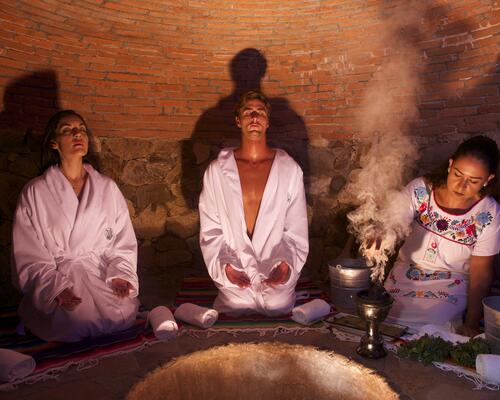
Mexican operator, Solmar Hotels and Resorts, is hosting a series of events in celebration of
Global Wellness Day, including a Temazcal ceremony at its Playa Grande Resort and Spa in Los
Cabos.
Mandarin Oriental has announced a standalone residence brand, Mansions, which will debut at
Emirates Palace, Mandarin Oriental Mansions, Abu Dhabi, in 2029.
Four Seasons Resort The Nam Hai in Hoi An, Vietnam, has put together a Global Wellness Day
(GWD) agenda with activations rooted in nature and shaped by four pillars of Joy – in
alignment with the day’s theme #JoyMagenta.
The Global Wellness Summit (GWS) will celebrate its 20th anniversary at the 2026 event in
Phuket, Thailand, later this year with the theme: The Science, Art and Soul of Wellness.
Auko, an all-inclusive development, is opening in Phong Nha in Vietnam in Q3 2026, with a
series of 30 tented eco-lodges and wellness hospitality operations by Lumina Wellbeing.
Therme Manchester’s 28-acre development, which will include interconnected glass pavilions
that measure 65,000sq m, will be the largest bathing and wellbeing attraction in the world once
complete, according to prof David Russell, CEO of Therme UK.
Naples Beach Club, a Four Seasons Resort, has opened a 2,800sq m spa called The Sanctuary,
with the design and concept inspired by the Native American people that populated Florida’s
Southwest coast – the Calusa.
Swire Hotels’ luxury hospitality brand Upper House has revealed it will roll out its two-day
House of Healing retreats at its three hotels in Hong Kong, Chengdu and Shanghai.
+ More news
COMPANY PROFILES
Voya Organic Beauty Voya Organic Beauty, founded in 2006 in Ireland by Mark Walton and Kira Guckian Walton, is a private [more...]