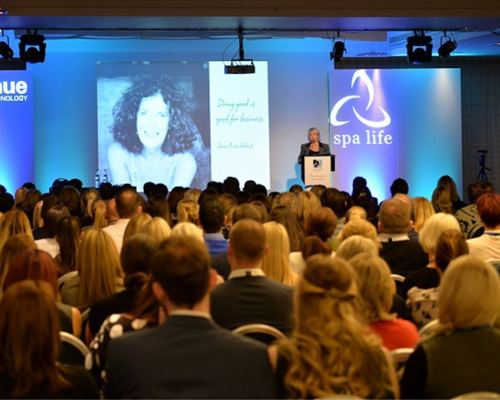
The Spa Life UK Convention returns from 21–23 June 2026 at Whittlebury Park Hotel, Spa &
Golf Resort, bringing together spa managers, directors and owners for two days of focused
education, meaningful connection and commercial insight. ... more
I was interested to read your recent news coverage on mental health in the workplace, which reported that over one-third (38 per cent) of employees in the UK think their working environment is having a negative effect on their state of mind.
It prompted me to let you know about Unum’s latest project, focusing on mental health in the workplace, as I thought it would be of interest to you.
Given how many people are affected by mental health issues every year, we felt it was time to shed some light on this widespread issue – one that many people find difficult to discuss. We’ve created a short animated video which looks not only at how work can contribute to mental illness, but also what signs to look out for and what steps businesses can take to help staff and colleagues if they notice them struggling under pressure.
These steps include encouraging employees to leave work in the office when the day is over; monitoring the workload of those who appear to be struggling; and training line managers to recognise when this is happening, encouraging people to get away from their desks to go for a walk or to do some mindful exercises.
Other options include setting up support or peer networks – mental health first aid-trained champions – and of course promoting the open discussion of mental health issues, ridding the subject of any associated taboos.
To view Unum’s animated video, please go to: www.healthclubmanagement.co.uk/mentalhealth
PHOTO: SHUTTERSTOCK.COM
Good mental health requires work-life balance
Technology vs the human touch in personal training
Joe Oliver
Joe OliverFounderYour Personal Training
Your recent article (HCM May 16, p76), which summarised the IHRSA 2016 keynote by Randi Zuckerberg, sister of Facebook founder Mark Zuckerberg, was something that resonated with me. She said technology can enrich our lives – but that there’s also a need to take a digital detox from time to time.
I take a very balanced approach to technology and encourage the PTs I work with to do the same.
Technology is now woven into the fitness industry, with digital innovations entering the sector at pace, including on-demand PT apps such as TruBe and Fitmo (see HCM May 16, p62). It’s important that PTs embrace these advancements, learn about them and use the tools and platforms available. Staying up-to-date with digital trends will strengthen their offering, retain business and help them keep their clients well informed.
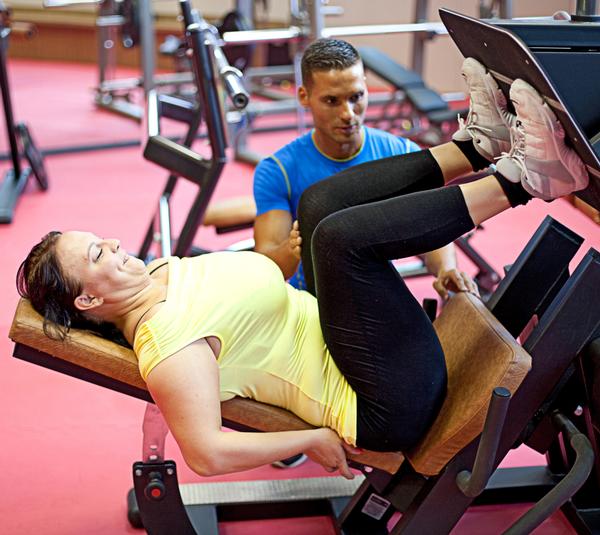
However, PTs need to find a way of working which ensures their vital soft skills aren’t sacrificed at the cost of being digitally-driven. Engaging with clients face-to-face is a vital part of being a PT and basic delivery services should not suffer.
Technology will never be able to connect with clients on both an emotional and a human level, and it’s important that personal trainers always keep this in mind.
I’m very aware of the pressures being put on PTs, and I’m certainly not saying the ideal balance when it comes to technology is easy to find. However, those who manage it will be well positioned to stand out in what’s becoming an increasingly crowded PT marketplace.
PHOTO: SHUTTERSTOCK.COM
Technology cannot replace a face-to-face relationship
Self-powered equipment: Operator & user benefits
Rich Baker
Rich BakerCommercial & sales directorWattbike
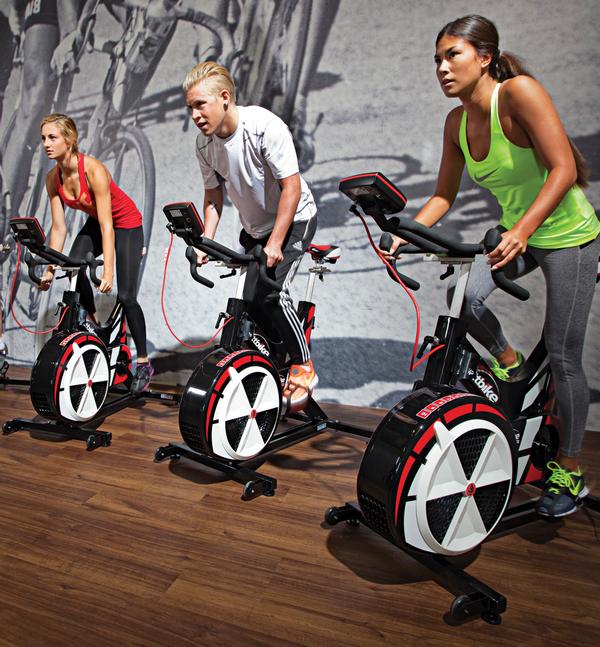
Your ‘People Power’ feature (see HCM May 16, p72) on the trend for self-powered equipment made for a very interesting read.
There’s often a belief that ‘self-powered’ means ‘basic’, but in fact it often means that certain key features are thought through in an innovative way to provide a really great user experience.
Rather than a powered machine controlling the speed, incline and ‘feel’, the individual must power the machine. This not only gives a real feel – replicating actual conditions and providing freedom of movement – but also gives the most accurate feedback of what your body is generating itself.
Also, with many clubs now purchasing less kit and creating more space, self-powered equipment – which can be moved around much more easily – allows for more freedom in gym floor layouts. The equipment can be moved into a performance zone one day, and a circuit or small group training area the next.
Due to the nature of self-powered equipment, manufacturers can’t incorporate all the latest technological features – but we believe a lot of these aren’t required anyway. Not including them keeps the cost down for operators, not only on the product purchase but also on the ongoing running cost.
It also means the manufacturers have had to really research what the user needs and wants in order to drive the purchase decision, rather than creating needless functions just as a way to add to the feature list.
Self-powered kit is more easily moved around the gym
The value of data in accessing funding
Stuart Stokes
Stuart StokesCommercial directorReferAll
The data mining feature in the June issue of Health Club Management was an insightful read, and it was encouraging to see the support that software providers can offer health and fitness operators in terms of reporting on, understanding and using their data to make business decisions.
For me, one key area of reporting that’s massively valuable to operators is the ability to use data to assist in accessing grant funding. Providing accurate, consistent and meaningful data – including reporting on outcomes and other indicators – usually forms a key element of any public health contract.
The arena is becoming more and more competitive, with many operators seeking work outside of their natural geographic areas of delivery. Those that use data to prove previous successes, and that are able to demonstrate the future availability of data for any new contract, are the ones that succeed.
The work of our software development team is driven by our customers’ data requests. Our database now holds more than 100,000 referrals, with correlating data that not only includes measures like height, weight, BMI and blood pressure, but also information on goal setting, attainment and results, uptake and completion. This gives service providers the data they need to inform commissioners of their ability to interact with, and have a positive impact on, the wider community.
The long-term impact of these interventions should ultimately be a reduced need for acute NHS services – and our customers, coupled with strong data, are increasingly able to show how they can achieve this.
Gyms hold valuable data on people’s fitness and goals
Four Seasons Resort The Nam Hai in Hoi An, Vietnam, has put together a Global Wellness Day
(GWD) agenda with activations rooted in nature and shaped by four pillars of Joy – in
alignment with the day’s theme #JoyMagenta.
The Global Wellness Summit (GWS) will celebrate its 20th anniversary at the 2026 event in
Phuket, Thailand, later this year with the theme: The Science, Art and Soul of Wellness.
Auko, an all-inclusive development, is opening in Phong Nha in Vietnam in Q3 2026, with a
series of 30 tented eco-lodges and wellness hospitality operations by Lumina Wellbeing.
Therme Manchester’s 28-acre development, which will include interconnected glass pavilions
that measure 65,000sq m, will be the largest bathing and wellbeing attraction in the world once
complete, according to prof David Russell, CEO of Therme UK.
Naples Beach Club, a Four Seasons Resort, has opened a 2,800sq m spa called The Sanctuary,
with the design and concept inspired by the Native American people that populated Florida’s
Southwest coast – the Calusa.
Swire Hotels’ luxury hospitality brand Upper House has revealed it will roll out its two-day
House of Healing retreats at its three hotels in Hong Kong, Chengdu and Shanghai.
LVMH-owned beauty house Guerlain will launch up to five spas with partners a year as part of
its plan to expand globally, according to the brand’s international spa and wellness director,
Diane Davody.
A new global study by Kevin Kelly and Peter Yesawich, called WELLSurvey 2.0, has revealed
more than half of consumers in the UK, US and Germany would not choose numerous high-
profile wellness resort brands for a future trip.