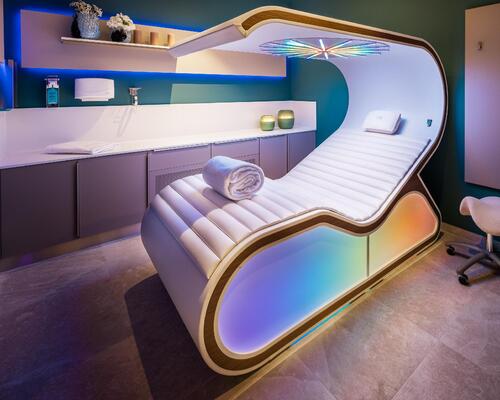
In a world where imbalance often accumulates quietly, Wildsmith unveils its newest
wellbeing innovation: Silent Loads, an approach designed to meet the needs of modern spa
guests with precision and depth. ... more
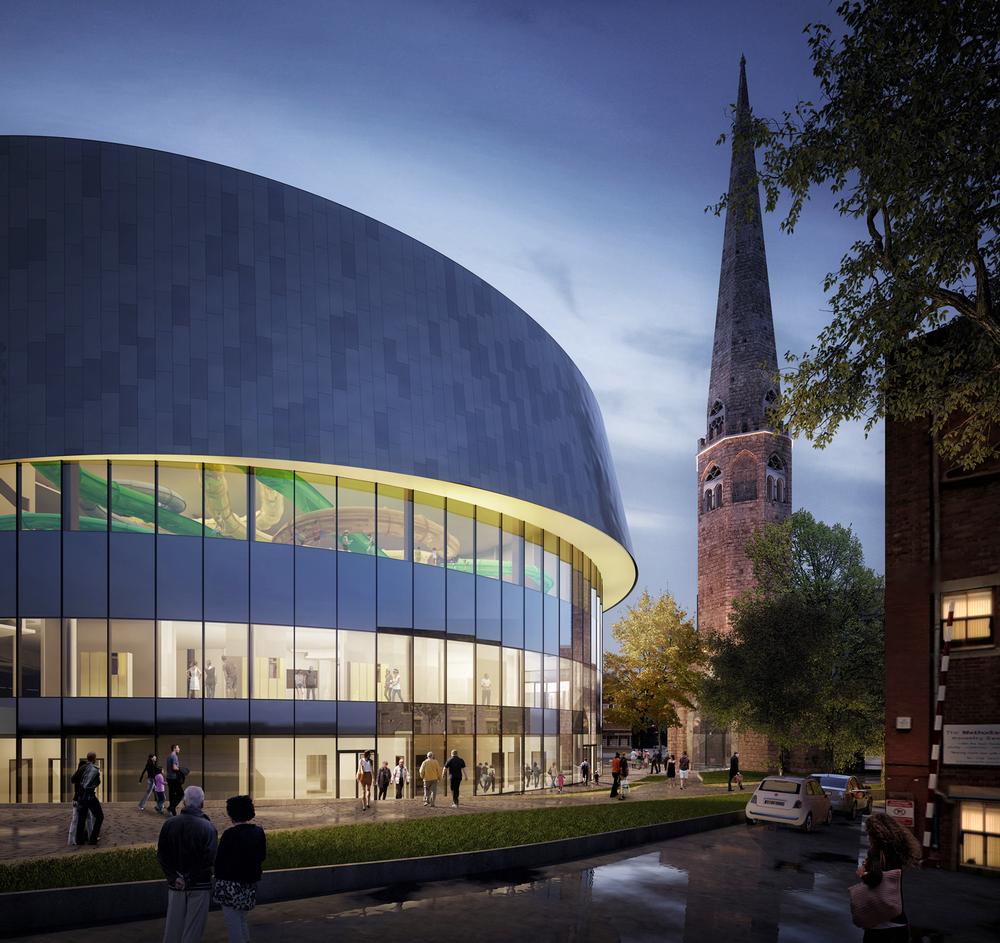
FaulknerBrowns recently submitted plans for an exciting new, high octane waterpark for the city of Coventry. During the process, I couldn’t help but reflect on the parallels between this bold move by the local council and the debate surrounding the remit of the BBC as a public broadcaster in contrast to competing providers in the private sector.
Of the few waterparks built in the UK in the last few years almost all have been investments by the private sector, with holiday destinations such as Center Parcs dominating the landscape. This has raised the question of why a publicly funded local authority would invest in a city centre waterpark and – like the BBC – how will it be able to demonstrate value for money.
Public Benefits Firstly, it’s important to consider the wider regeneration benefits that a destination leisure facility can bring to a city centre. We know that through increased footfall and inspirational placemaking, similar schemes have acted as catalysts for private sector investment, bringing a welcome boost to the economy.
For the last 20 years, much sporting policy and funding in aquatics facilities has been driven by lane swimming, but the reality is that participation covers a wide spectrum of activity, ranging from supervised play through to developing water confidence, swimming for recreation and fitness and competition swimming. The ideal aquatics centre would contain facilities to provide for all these activities.
As well as the characteristic flume rides, the Coventry waterpark proposals contain toddler areas, leisure water to a range of depths and also lane swimming.
From both a social perspective and – in particular – a health standpoint, it’s interesting to examine the concept behind this new waterpark through the viewpoint of changing government policy, because the Sporting Futures strategy places much greater emphasis on a wider, more holistic health and leisure offer which is in tune with this type of facility development.
Health Benefits There’s also a strong argument to suggest that significant ‘incidental’ (non-swimming related) health benefits arise from the leisure water experience, both in terms of the physical movement up and down the levels of the facility and also from the associated feel-good factor.
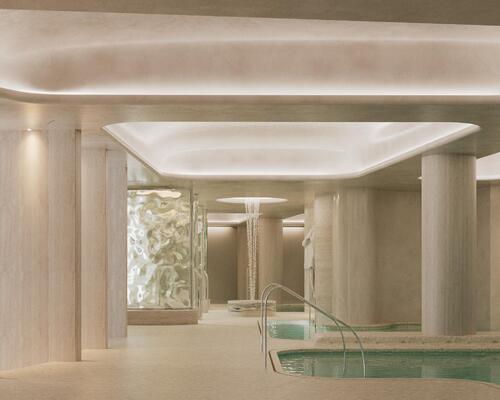
In our Coventry proposal this vertical movement up through the building is exaggerated by the tight city centre site, which has led us to stack the facilities on top of each other: the main pools and the ride hall are stacked three stories above the 25m pool, the wet changing and the spa, with access provided by a generous spiral ramp up through the building.
Strong Public Sector Role Like the BBC, there is a strong role that the public sector can play, alongside the private sector, in providing high quality entertainment. In this case the added public value is provided through strong health and wellbeing benefits, in much the same way the BBC focuses on providing an educational offer.
In the post-Olympic landscape, schemes to promote health and wellbeing need to be conceived and delivered through innovative delivery mechanisms. As in the case of the BBC, change is needed, but the public sector is capable of championing innovative thinking.
See more on sport in Coventry on page 34
Read about the ASA’s initiative to prove the health benefits of swimming on page 8
Premium London health club, KX Chelsea, will imminently unveil its most significant
redevelopment since its launch in 2002 to create an integrated wellness model combining
training, recovery and relaxation.
Rosewood Le Guanahani St Barth, on the northeast coast of Saint Barthélemy in the French
West Indies, is offering a programme of ocean-inspired yoga classes between 8-14 June to
celebrate Global Wellness Day (GWD).
Hotel de France, located on the British Isle of Jersey, has created a wellness retreat package
that includes a hot yoga session that will take place in Jersey Zoo’s butterfly sanctuary.
The Ritz-Carlton, Langkawi, in Malaysia, has revealed a schedule for Global Wellness Day
(GWD) that includes guided rainforest walks, mindful movement and guided coastal meditation
experiences.
Longevitix, a clinical platform for preventive and longevity medicine, has launched its AI-
powered intelligence system to help physicians deliver continuous, personalised longevity-
focused care at scale.
Atmantan Wellness Centre, an integrative wellness destination in Mulshi, near Pune in India, is
expanding its portfolio by adding a new centre in Hyderabad that will launch between 2028 and
2029.
A recent survey by the UK Spa Association (UKSA) into the industry’s approach to cancer care
has revealed that almost half of participating respondents (46 per cent) are unaware that
cancer is a disability and guests with a cancer diagnosis must be given
Mexican operator, Solmar Hotels and Resorts, is hosting a series of events in celebration of
Global Wellness Day, including a Temazcal ceremony at its Playa Grande Resort and Spa in Los
Cabos.
Mandarin Oriental has announced a standalone residence brand, Mansions, which will debut at
Emirates Palace, Mandarin Oriental Mansions, Abu Dhabi, in 2029.