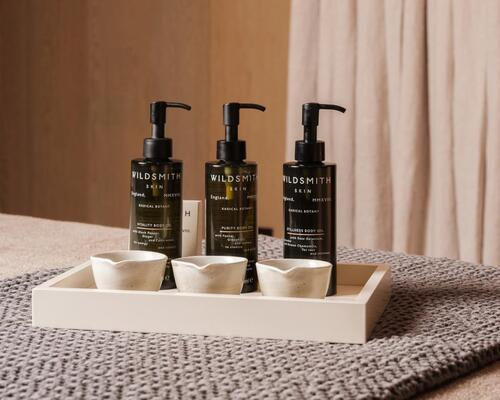
In a world where imbalance often accumulates quietly, Wildsmith unveils its newest
wellbeing innovation: Silent Loads, an approach designed to meet the needs of modern spa
guests with precision and depth. ... more
Although the UK government’s new childhood obesity strategy has been widely criticised – experts are calling it “embarrassing”, “weak” and “underwhelming” – there are some clear wins and exciting opportunities for the activity sector
By Kate Cracknell | Published in Health Club Management 2016 issue 9
Engage to Compete: School staff run lunchtime activities
Back in February, health secretary Jeremy Hunt described the rise in childhood obesity as a “national emergency” and promised a “gamechanging” response from the government. In the end, those promises have fallen flat; campaigners are particularly dismayed by the lack of restrictions on junk food promotions and advertising targeted at kids, as well as the fact that the much vaunted sugar tax – originally announced in March – will rely on voluntary action by the food and drink industry.
Yet once again, what’s happened is that diet and nutrition have dominated the headlines and skewed people’s perceptions of how good, or otherwise, the strategy is. If you look at the other side of the obesity equation – calories out rather than calories in – there are some exciting opportunities.
The big win for the ‘calories out’ sector lies in the strategy’s recommendation that children should be active for at least 60 minutes a day, of which 30 minutes should be during school hours. Funds raised by the sugar tax will be allocated to schools to help deliver this.
There will also be a voluntary, Ofsted-monitored healthy rating scheme for primary schools – recognising schools where children eat better and move more – while the County Sports Partnerships are tasked with working with sporting NGBs, the Youth Sport Trust and other national and local providers to ensure every primary school in England has access to high-quality sport and physical activity.
In addition, the strategy says every public sector building, from leisure centres to hospitals, should have a food environment designed so the easy choices are also the healthy ones – a topic we analyse in depth on page 68, and which could be a quick win in our facilities.
So although the national media has seized on the negatives for its headlines, there’s plenty for the activity sector to be getting its teeth into. The main problem is that – as Conservative MP Dan Poulter said when the strategy was launched – “there’s a worrying lack of practical measures about how we can turn warm words into reality”.
But we needn’t wait for this to be spelled out by government. ukactive released its own kids strategy in July, championing the need for 60 minutes’ activity a day and offering inspiration on how to turn “words into reality”. Suggestions include creating a ‘whole day’ approach to physical activity; encouraging daily walks to school; using external providers to create activity opportunities in schools; and ensuring there are plenty of out-of-school activities on offer.
Opportunities abound here for the fitness sector. Some are more obvious, such as going into schools to facilitate Daily Mile walks (see HCM July 16, p46) and lunchtime activities – Fit for Sport’s Engage to Compete programme, which trains school staff to offer lunchtime activity sessions, is an excellent model.
Others are more imaginative, but not impossible with funding. On page 60, we look at the benefits of outdoor schools, where classes take place exclusively outside. That might not be replicable everywhere, but imagine if we could build active classrooms around the UK where kids could be taught while being active – all in co-operation with fitness providers. What better way of making activity a ‘whole day’ affair?
Meanwhile, ukactive is lobbying for sugar tax funding to be made available for out-of-school, as well as in-school, activities. The tax may fall short of generating the predicted £520m – this is based on the status quo being maintained, but in practice any food and drink manufacturers who cut the sugar content of their products by 20 per cent will escape the tax – but there will still be a significant pot of money to go after. If ukactive succeeds in its mission, programmes such as MEND – which tackles childhood obesity at its roots via a full family approach (see p75) – should be looking to fund a broad roll-out.
A recent survey by the UK Spa Association (UKSA) into the industry’s approach to cancer care
has revealed that almost half of participating respondents (46 per cent) are unaware that
cancer is a disability and guests with a cancer diagnosis must be given
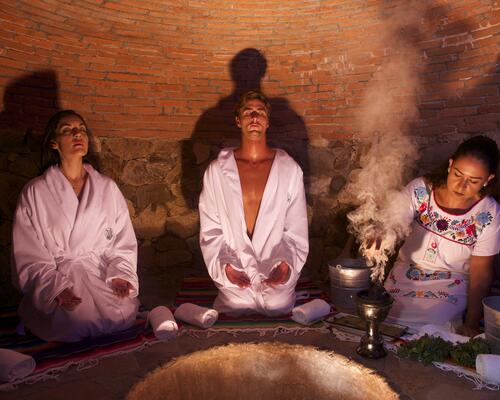
Mexican operator, Solmar Hotels and Resorts, is hosting a series of events in celebration of
Global Wellness Day, including a Temazcal ceremony at its Playa Grande Resort and Spa in Los
Cabos.
Mandarin Oriental has announced a standalone residence brand, Mansions, which will debut at
Emirates Palace, Mandarin Oriental Mansions, Abu Dhabi, in 2029.
Four Seasons Resort The Nam Hai in Hoi An, Vietnam, has put together a Global Wellness Day
(GWD) agenda with activations rooted in nature and shaped by four pillars of Joy – in
alignment with the day’s theme #JoyMagenta.
The Global Wellness Summit (GWS) will celebrate its 20th anniversary at the 2026 event in
Phuket, Thailand, later this year with the theme: The Science, Art and Soul of Wellness.
Auko, an all-inclusive development, is opening in Phong Nha in Vietnam in Q3 2026, with a
series of 30 tented eco-lodges and wellness hospitality operations by Lumina Wellbeing.
Therme Manchester’s 28-acre development, which will include interconnected glass pavilions
that measure 65,000sq m, will be the largest bathing and wellbeing attraction in the world once
complete, according to prof David Russell, CEO of Therme UK.
Naples Beach Club, a Four Seasons Resort, has opened a 2,800sq m spa called The Sanctuary,
with the design and concept inspired by the Native American people that populated Florida’s
Southwest coast – the Calusa.
Swire Hotels’ luxury hospitality brand Upper House has revealed it will roll out its two-day
House of Healing retreats at its three hotels in Hong Kong, Chengdu and Shanghai.