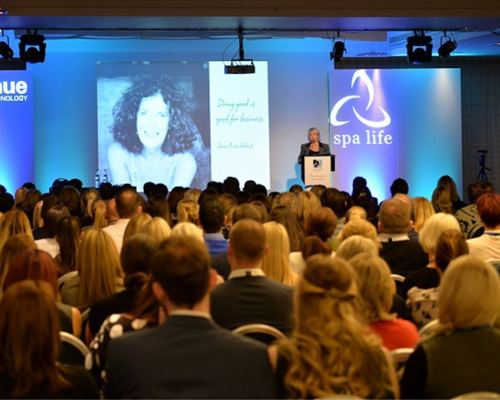
The Spa Life UK Convention returns from 21–23 June 2026 at Whittlebury Park Hotel, Spa &
Golf Resort, bringing together spa managers, directors and owners for two days of focused
education, meaningful connection and commercial insight. ... more
The continued rise of the trampoline park means software providers are starting to provide bespoke solutions that cater to the nuances
of this sector. Josephine Timmins reports
By Josephine Timmins | Published in Health Club Management 2017 issue 2
The UK’s first dedicated trampoline park might only have opened two years ago – when Gravity Force opened a 27,000sq ft park in Camberley, Surrey – but trampoline parks are by no means a new phenomenon at a global level. In the US, there has been significant momentum behind this sector for over 10 years, and this has been mirrored around the world.
The International Association of Trampoline Parks (IATP) estimates indicate that by the end of 2015 there were over 550 indoor trampoline parks around the world.
The UK market is now experiencing rapid growth, with the number of parks having increased from six in England and Wales at the end of 2014, to nearly 100 in 2016. That means the sector is large enough to demand solutions that match the nuances of its operational requirements – not least in the area of software.
We talk to a selection of software providers and trampoline park operators to understand some of the new software features and functionality being brought out to support operational efficiency, customer experience and revenue generation in the booming trampoline sector.
David StalkerCEOOxygen Freejumping
David Stalker
There are two major considerations that together define quite different software requirements for the trampoline park model: ‘pay and play’ and safety/authentication.
The ‘pay and play’ concept really underpins how the majority of our customers engage with us, and we aim to have most of those booking online. It’s hugely important to make this process easy and efficient, so having a seamless connection between our website and our CRM system is of real significance.
However, one of the risks associated with this lies in customer identification and indemnities. The system needs to be able to identify the individual, so that when they come into the park we’re able to make sure they are indeed the right person; that they’ve signed the relevant disclaimers; and that they’ve been through the safety briefing. In addition, in the case of children, the system needs to enable a guardian or parent to authenticate and agree to the safety briefing.
The trampoline park model also means the software has to cope with a much greater volume of bookings, and help operators to manage this workflow and customer density much more effectively.
Currently, there isn’t really a system available that I feel is consistently and sufficiently reliable in terms of digitising and automating this process – from online booking to customer identification and authentication – so we often have to run a paper-based disclaimer system in parallel, which is crazy in today’s world.
We need far greater sophistication in the system – within the CRM in particular – to ensure the highest levels of health and safety, while at the same time making the customer booking and check-in process efficient, and making it possible to target your marketing as efficiently as possible.
"There isn’t really a reliable system for digitising and automating the process, so we often have to run a paper-based disclaimer system in parallel " – David Stalker
Phil MossGeneral managerBrightLime
Phil Moss
It’s incumbent on the software provider to understand how the trampoline park model differs, and to provide solutions that promote and encourage customer self-administration. That means streamlined online pre-booking, with automated waiver processes for multiple jumpers which are easily accessible, editable and meet legal parameters.
In addition, the software must support enhanced front-of-house processes with quick check-in, easily acquirable merchandise (i.e. trampolining socks) and rapid payment processing.
From a reporting perspective, the software needs to reflect the fact that the booker may not be the jumper. Can the software differentiate between the two and make this clear to anyone reading the reports? Operators also need to understand which sessions are working and which aren’t, when the difference between 10 per cent and 100 per cent attendance for one session can be as much as £1,000.
Finally, British Gymnastics, ROSPA and 11 other organisations urged trampoline parks to sign up to and abide by a set of safety rules in November 2016. Software providers therefore need to look at how they can support the essential role of facility maintenance through responsive solutions that can flag operational failure, highlight recurring issues and automate responses for calls to action.
There are now almost 100 trampoline parks in England and Wales, up from just six in 2014
Shez NamooyaBusiness development managerEZ-Runner
Shez Namooya
Trampoline parks have a very different relationship with the customer compared to more traditional health clubs. Whereas traditional clubs typically have a one-to-one relationship, trampoline parks will – in the majority of cases – have a one-to-many relationship where people are trying to book families, friends and groups of people on to a single session.
The software needs to be able to cater for this essential booking requirement, while also coping with the fact that a typical trampoline park might get the same number of bookings in a day as a traditional health club might get in a month.
Moreover, the system has to manage significant peaks or spikes in this booking volume – evenings, weekends and holidays, for example.
The other main consideration is that we need to prevent queues at the front desk. We’re currently looking at enabling barcode mobile sign-in to help address this challenge.
We’re also adding core functionality around social media and gamification to encourage repeat bookings, drive customer loyalty and support our clients’ moves towards more of a membership system.
"One key consideration is to prevent queues at the front desk. We’re looking at enabling barcode mobile sign-in to help address this" – Shez Namooya
Global Wellness Day (GWD) will mark its 15th anniversary on Saturday 13 June 2026, with the
theme: #JoyMagenta – a celebration of the healing qualities of simple gestures and activities
that spark joy.
Global luxury hospitality brand, Six Senses, has partnered with longevity healthcare provider,
HUM2N, to launch a clinic at Six Senses London, at The Whiteley.
As part of its first hotel partnership, Mayrlife – the medical health resort company known for its
site in Altaussee, Austria – has launched a day clinic at the Rosewood Vienna.
Premium London health club, KX Chelsea, will imminently unveil its most significant
redevelopment since its launch in 2002 to create an integrated wellness model combining
training, recovery and relaxation.
Rosewood Le Guanahani St Barth, on the northeast coast of Saint Barthélemy in the French
West Indies, is offering a programme of ocean-inspired yoga classes between 8-14 June to
celebrate Global Wellness Day (GWD).
Hotel de France, located on the British Isle of Jersey, has created a wellness retreat package
that includes a hot yoga session that will take place in Jersey Zoo’s butterfly sanctuary.
The Ritz-Carlton, Langkawi, in Malaysia, has revealed a schedule for Global Wellness Day
(GWD) that includes guided rainforest walks, mindful movement and guided coastal meditation
experiences.
Longevitix, a clinical platform for preventive and longevity medicine, has launched its AI-
powered intelligence system to help physicians deliver continuous, personalised longevity-
focused care at scale.
Atmantan Wellness Centre, an integrative wellness destination in Mulshi, near Pune in India, is
expanding its portfolio by adding a new centre in Hyderabad that will launch between 2028 and
2029.
A recent survey by the UK Spa Association (UKSA) into the industry’s approach to cancer care
has revealed that almost half of participating respondents (46 per cent) are unaware that
cancer is a disability and guests with a cancer diagnosis must be given