Last year, a new Code for Sports Governance was published jointly by Sport England and UK Sport. Tom Walker examines what the mandatory code will mean for the sector
By Tom Walker | Published in Sports Management Mar Apr 2017 issue 130
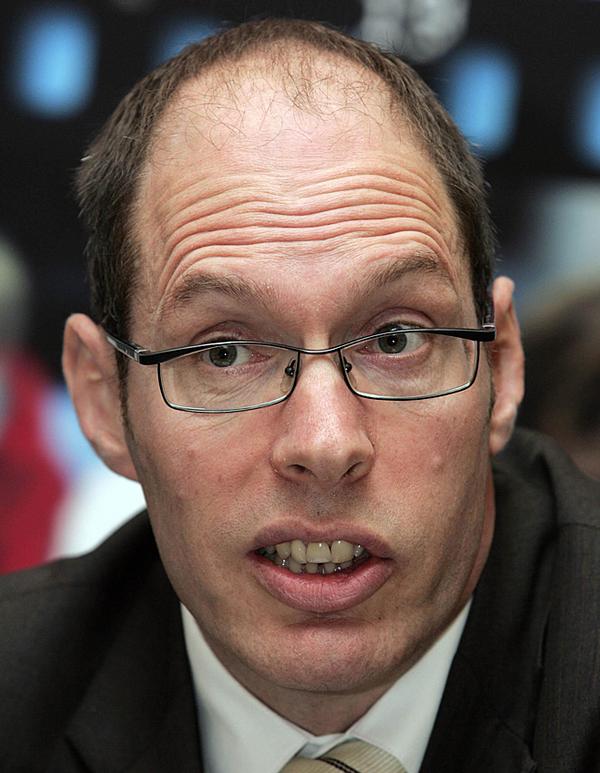
UK Athletics CEO Niels de Vos (right) with performance director Neil Black / David Jones / press associations
Published in October 2016, A Code for Sports Governance sets out the levels of transparency, accountability and financial integrity required from sports organisations which receive public funding. Produced jointly by Sport England and UK Sport, the code comes into effect in April 2017 and will apply to all organisations regardless of size – from national governing bodies to local authorities, charities and clubs.
Unlike existing voluntary governance codes, adherence to the code will become compulsory, as outlined by the government in its Sporting Future strategy, published in 2015. The code covers five principles of good governance – standards and conduct; policies and processes; structure; people; and communication.
Under each of the five categories, the code sets out a number of requirements that sports organisations will have to meet to apply for and receive public funding. The requirements have been designed to provide greater transparency on organisational structures and strategies, as well as give clarity on financial matters. One of the headline requirements concerns equality – any sporting organisation wishing to receive public funding must, from April 2017, ensure it sets a target of at least 30 per cent of board members being female and takes meaningful steps towards achieving that target.
Staying flexible While some of the requirements – such as the 30 per cent gender diversity target – might pose challenges for organisations in the short-term, there is a large amount of flexibility built into the code. On the code’s opening pages, UK Sport and Sport England state that they “do not wish the code to deter organisations, particularly small ones, from applying for funding – nor burden them with unnecessary bureaucracy”.
An example of the flexible approach is the way the requirements, and the time allowed for implementing them, can be tailored for individual organisations. There is no doubt this will be welcomed by smaller national governing bodies of sport, which might need more time to plan for and introduce the required changes.
Rod Carr, outgoing chair of UK Sport, says that each organisation will be offered help in identifying the challenges they might face in fulfilling the requirements. “Some organisations are further ahead than others, and many requirements will stretch organisations beyond where they are now,” he says. “We’re committed to giving them the assistance and support they need to make our sector’s governance standards among the best in the world.”
Tiered approach The code is based on a tiered approach. Each organisation will be classed in one of three tiers, based on the type and size of the funding it receives. The larger the amount of funding, the higher the tier and the level of compliance expected.
The code states: “The tiers have different levels of governance requirements. Each investment will be placed into the tier considered most appropriate, taking into account the circumstances of the investment and the organisation.”
Tier 1 represents the minimum level of mandatory governance. Tier 1 requirements, such as having a written constitution and a regularly changing committee, are designed to ensure the protection of even the smallest amount of public funding through good governance processes – while avoiding “disproportionate administrative burdens”. An investment will generally be categorised Tier 1 if it is granted on a one-off basis – such as a specific project running for a limited time – and if the total amount of funding doesn’t exceed £250,000.
Investments falling into Tier 2 are likely to be between £250,000 and £1m. Tier 2 organisations are expected to fulfill all Tier 1 requirements, as well as some of the requirements from Tier 3, which will be decided on a case by case basis.
At the top sits Tier 3, for those who receive the largest chunks of public investment, such as NGBs. Requirements at Tier 3 include regular, external evaluations of the board; limits on how long directors can serve on boards; and the need for annual accounts to be published online. UK Sport and Sport England will generally categorise an investment as Tier 3 if the funding is intended to be granted over a period of years, the funding is granted for a continuing activity rather than a one-off project and if the total amount of funding is greater than £1m.
There are substantial differences between the requirements of each tier. While there are only seven mandatory requirements at Tier 1, organisations at Tier 3 have 58 specific requirements across the five areas of governance.
Favourable responses The tiered approach has been welcomed by the sector. Mark Lawrie, deputy CEO of StreetGames – one of the organisations that is likely to benefit from Sport England’s new strategy of funding non-NGB organisations in order to get people active – says the sheer diversity in the size and scale of organisations would make a one-size-fits-all code hard to enforce.
“During the consultation period for the code, one of the things we stressed was that it needs to be proportionate,” Lawrie says. “There are a number of very small sports organisations which may only have one or two members of staff – and some that are run entirely by volunteers. It’s important that those organisations aren’t burdened with huge amounts of bureaucracy, which would prevent them from thriving. I’m pleased to see that the code has recognised this.”
As well as avoiding unnecessary red tape, the tiered system is designed to assist in the enforcement of the code. Joanna Adams, CEO of England Netball, is one of those hoping the code will help to create a level playing field following Sport England’s decision to broaden the range of organisations it will fund.
“I’m pleased it’s been made a compulsory code and hope the tiered system ensures it’s enforced on all organisations, including the smaller ones,” she says.
“We’re all funded by public money and the whole point of the code is to make sure there’s added accountability. Just because you receive less funding than NGBs shouldn’t mean you are less answerable – it’s still public money. The three tiers means that every organisation should find their own level and fit in.”
How will things change? Apart from the issues around gender equality on boards, many of the bigger NGBs are already largely compliant with the code and will only need to undertake some fine tuning in order to fulfill all requirements. “At the moment, we’re probably around 80 per cent compliant,” says Niels de Vos, CEO of UK Athletics – one of the few NGBs that already meets the 30 per cent gender target (it has three women on its 10-strong board).
“The aspects of the code we aren’t compliant with will be easy to put right. In most cases they are things we simply haven’t done before. For example, the code calls for a governance statement to be added to annual reports and for the salaries of all directors to be disclosed. Those are things we haven’t done before, but they’ll be very easy for us to introduce.”
According to Tom Bruce, who leads the sports governance practice at specialist law firm Farrer & Co, work has already began among NGBs to ensure they comply.
“Most governing bodies will be quietly and carefully working through the mandatory requirements,” Bruce says. “They’ll be applying them to their existing structures ahead of consultation meetings with Sport England and/or UK Sport, when they will hope to learn what requirements and timescales for compliance will be set for them in 2017 and beyond.”
A BAME game The code has been widely welcomed by the sector and none of the requirements set out within it have attracted criticism for being too stringent. In fact, the only criticism is that it might not have gone far enough. Some in the industry fear there are no clear plans for enforcement, while others have expressed disappointment at the lack of measures to help increase the number of people from black, Asian and minority ethnic (BAME) backgrounds being appointed to leadership positions.
“There’s barely any detail on enforcement,” says Bruce. “Sport England and UK Sport have made it clear that, at the highest level, they require formal commitments from governing bodies within set timescales and intend to supplement the code with further resources to assist with compliance.
“It is unclear, however, if and how quickly funding will disappear if governing bodies fail or are slow to comply.”
It is no secret that there is a dearth of ethnic minority board members and executives in the industry. A study by equality body Sporting Equals, conducted last year, revealed that of the 68 leading NGBs, 61 had no BAME senior leaders – meaning that 90 per cent were exclusively white. Of the 601 board positions, only 26 came from a BAME background.
Many have questioned the decision to implement a 30 per cent gender balance target, but no target for the number of BAME or disabled candidates. “There is no mandatory requirement around BAME diversity and this may need to be revisited as sport lags behind society,” says Nigel Wood, chief executive of the RFL.
UK Athletics’ de Vos agrees. “I do think there’s one aspect in which the code might be slightly deficient and that’s the BAME representation on boards,” he says.
“I think it’s a really critical thing. Particularly if you look at the people who play sport. Many sports have a very high percentage of BAME participants, so for there to still be this great gap between representation at board level and at grassroots level is, I think, wrong.”
Each organisation that receives public funding from Sport England and/or UK Sport will find themselves classed in one of three tiers, depending on the nature of the funding. The higher the tier, the more requirements the organisation will need to fulfil.
Tier 1: One-off, smaller projects of a value less than £250,000
Tier 2: One-off projects – such as hosting major championships – which receive between £250,000 and £1m
Tier 3: Investments of more than £1m or those made over a continuous period, such as to NBGs
CODE IN A NUTSHELL
1. Structure Organisations shall have a clear and appropriate governance structure, led by a board which is collectively responsible for the long-term success of the organisation and exclusively vested with the power to lead it. The board shall be properly constituted, and shall operate effectively.
2. People Organisations shall recruit and engage people with appropriate diversity, independence, skills, experience and knowledge to take effective decisions that further the organisation’s goals.
3. Communication Organisations shall be transparent and accountable, engaging effectively with stakeholders and nurturing internal democracy.
4. Standards and conduct Organisations shall uphold high standards of integrity, and engage in regular and effective evaluation to drive continuous improvement.
5. Policies and processes Organisations shall comply with all applicable laws and regulations, undertake responsible financial strategic planning, and have appropriate controls and risk management procedures.
Niels de Vos, CEO of UK Athletics – one of the few NGBs to already comply with the 30 per cent gender target / Neil Tingle / press associations
Parkrun is able to offer free running events due to public funding
The StreetGames board of trustees already meets gender requirements / Barrington Coombs / press associations
The StreetGames board of trustees already meets gender requirements / Barrington Coombs / press associations
StreetGames programmes receive Sport England funding / Barrington Coombs / press association
parkrun holds nearly 80,000 weekly events around the country
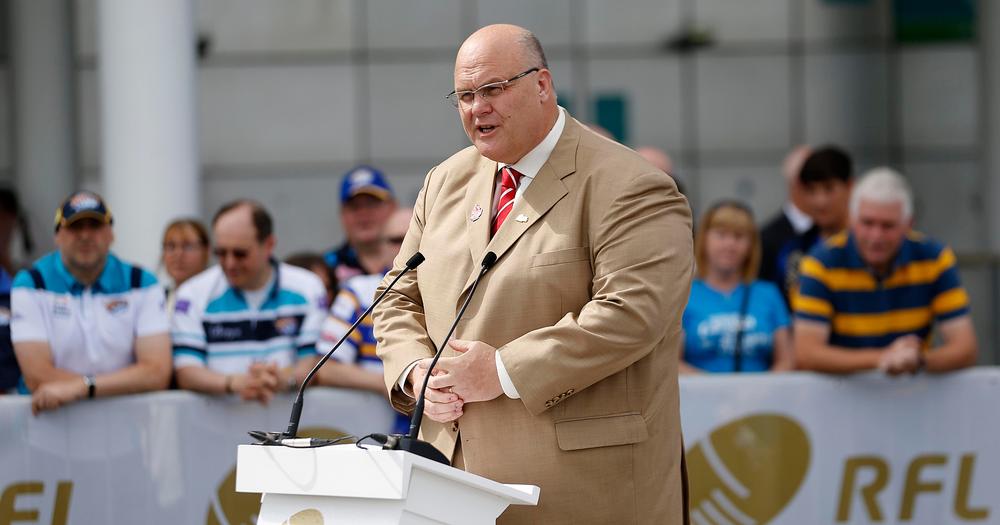
RFL chief executive Nigel Wood says a BAME requirement is needed / paul harding / press association
Mandarin Oriental has announced a standalone residence brand, Mansions, which will debut at
Emirates Palace, Mandarin Oriental Mansions, Abu Dhabi, in 2029.
Four Seasons Resort The Nam Hai in Hoi An, Vietnam, has put together a Global Wellness Day
(GWD) agenda with activations rooted in nature and shaped by four pillars of Joy – in
alignment with the day’s theme #JoyMagenta.
The Global Wellness Summit (GWS) will celebrate its 20th anniversary at the 2026 event in
Phuket, Thailand, later this year with the theme: The Science, Art and Soul of Wellness.
Auko, an all-inclusive development, is opening in Phong Nha in Vietnam in Q3 2026, with a
series of 30 tented eco-lodges and wellness hospitality operations by Lumina Wellbeing.
Therme Manchester’s 28-acre development, which will include interconnected glass pavilions
that measure 65,000sq m, will be the largest bathing and wellbeing attraction in the world once
complete, according to prof David Russell, CEO of Therme UK.
Naples Beach Club, a Four Seasons Resort, has opened a 2,800sq m spa called The Sanctuary,
with the design and concept inspired by the Native American people that populated Florida’s
Southwest coast – the Calusa.
Swire Hotels’ luxury hospitality brand Upper House has revealed it will roll out its two-day
House of Healing retreats at its three hotels in Hong Kong, Chengdu and Shanghai.
LVMH-owned beauty house Guerlain will launch up to five spas with partners a year as part of
its plan to expand globally, according to the brand’s international spa and wellness director,
Diane Davody.
A new global study by Kevin Kelly and Peter Yesawich, called WELLSurvey 2.0, has revealed
more than half of consumers in the UK, US and Germany would not choose numerous high-
profile wellness resort brands for a future trip.
+ More news
COMPANY PROFILES
Knesko Skin Known for their unique approach to wellness and beauty, Knesko’s products combine ancient healing tr [more...]