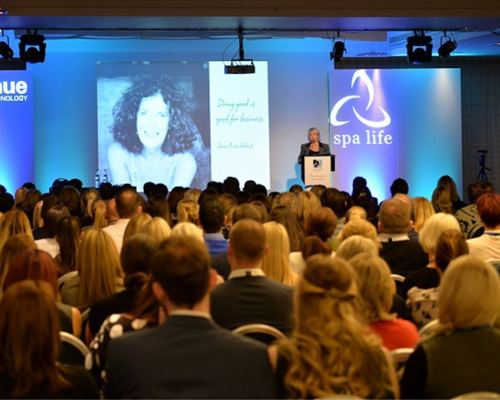
The Spa Life UK Convention returns from 21–23 June 2026 at Whittlebury Park Hotel, Spa &
Golf Resort, bringing together spa managers, directors and owners for two days of focused
education, meaningful connection and commercial insight. ... more
A new study has found that inactivity puts older people at a higher risk of dementia, on a par with those who have a genetic predisposition to the condition
By Steph Eaves | Published in Health Club Management 2017 issue 5
People who exercised regularly were half as likely to develop dementia as those who were sedentary / photo: shutterstock.com
We all know exercise is good for us, but generally we think of the ways it benefits our muscles and lungs, rather than our brain. Still, it should come as no surprise that exercise – wonder drug that it is – has a positive effect on this too.
A recent study from McMaster University in Ontario, Canada has found a strong link between a sedentary lifestyle and dementia. The study followed 1,646 adults over the age of 65, none of whom had any cognitive impairment when the study began.
At the beginning of the study, all participants had their blood tested for the presence of apolipoprotein E allele, the genetic marker most strongly associated with dementia. Five years later, the team went back to see who had been diagnosed with dementia. They also surveyed the participants about their exercise habits.
During the five years, 331 individuals had been diagnosed with some form of dementia. By comparing the initial blood test results with the dementia diagnoses and survey responses, the team was able to see the interactions between these factors.
Exercise some control They found that those who had tested positive for the apolipoprotein E allele were twice as likely to have developed dementia during the past five years as those who did not have the allele. This confirmed the serious risk that a genetic predisposition poses.
In those without the allele, exercise was key. Individuals who reported a mostly sedentary lifestyle, with little or no exercise, were found to be twice as likely to have developed dementia as those who reported that they exercised regularly. In other words, a lack of exercise conferred the same level of dementia risk as a genetic predisposition.
The obvious difference is that one of these factors is out of our control, while the other is very much within it.
“The important message here is that being inactive may completely negate the protective effects of a healthy set of genes,” said co-author of the study Jennifer Heisz, assistant professor in the Department of Kinesiology at McMaster University.
Get walking The researchers followed up with those who had said they exercised regularly, to find out what kind of exercise they did and how often they did it. Walking was the most popular form of exercise among these participants, with most doing it approximately three times a week.
Although further studies are needed to determine the causative factors, the body of research linking physical activity to lower dementia risk provides a convincing reason for people to get moving.
“Given that most individuals are not at genetic risk, physical exercise may be an effective prevention strategy,” said Heisz.
The next step is to discover which types of exercise provide the greatest protection against dementia. Researchers at McMasters University are currently involved in an ongoing study comparing the benefits of high-intensity interval training (HIIT) versus moderate continuous training in older adults. ?
*Fenesi, B et al. Physical exercise moderates the relationship of apolipoprotein E (APOE) genotype and dementia risk: a population-based study. Journal of Alzheimer’s Disease. November 2016.
Global Wellness Day (GWD) will mark its 15th anniversary on Saturday 13 June 2026, with the
theme: #JoyMagenta – a celebration of the healing qualities of simple gestures and activities
that spark joy.
Global luxury hospitality brand, Six Senses, has partnered with longevity healthcare provider,
HUM2N, to launch a clinic at Six Senses London, at The Whiteley.
As part of its first hotel partnership, Mayrlife – the medical health resort company known for its
site in Altaussee, Austria – has launched a day clinic at the Rosewood Vienna.
Premium London health club, KX Chelsea, will imminently unveil its most significant
redevelopment since its launch in 2002 to create an integrated wellness model combining
training, recovery and relaxation.
Rosewood Le Guanahani St Barth, on the northeast coast of Saint Barthélemy in the French
West Indies, is offering a programme of ocean-inspired yoga classes between 8-14 June to
celebrate Global Wellness Day (GWD).
Hotel de France, located on the British Isle of Jersey, has created a wellness retreat package
that includes a hot yoga session that will take place in Jersey Zoo’s butterfly sanctuary.
The Ritz-Carlton, Langkawi, in Malaysia, has revealed a schedule for Global Wellness Day
(GWD) that includes guided rainforest walks, mindful movement and guided coastal meditation
experiences.
Longevitix, a clinical platform for preventive and longevity medicine, has launched its AI-
powered intelligence system to help physicians deliver continuous, personalised longevity-
focused care at scale.
Atmantan Wellness Centre, an integrative wellness destination in Mulshi, near Pune in India, is
expanding its portfolio by adding a new centre in Hyderabad that will launch between 2028 and
2029.
A recent survey by the UK Spa Association (UKSA) into the industry’s approach to cancer care
has revealed that almost half of participating respondents (46 per cent) are unaware that
cancer is a disability and guests with a cancer diagnosis must be given