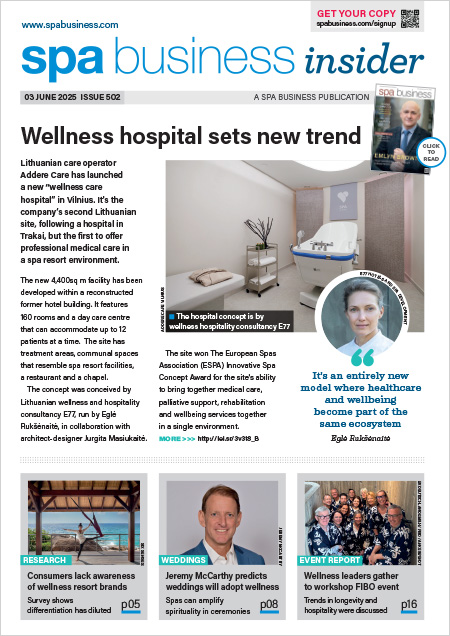
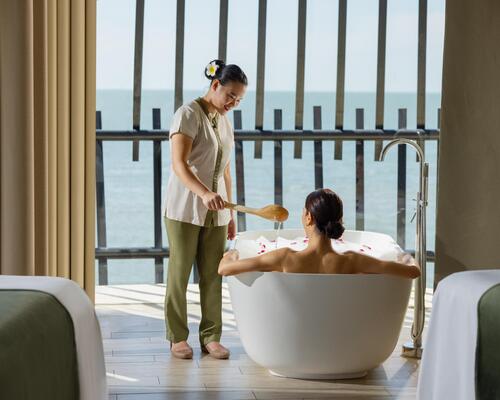
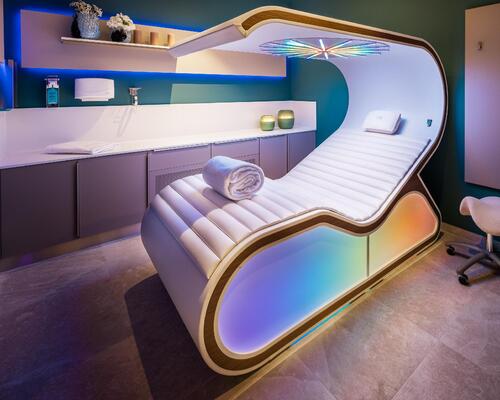
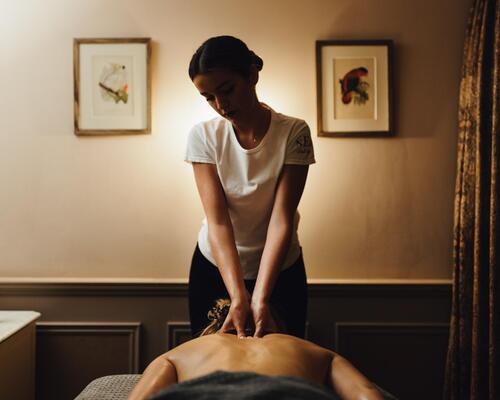
In a world where imbalance often accumulates quietly, Wildsmith unveils its newest
wellbeing innovation: Silent Loads, an approach designed to meet the needs of modern spa
guests with precision and depth. ... more
Low-cost gyms continue to drive the industry
Image courtesy of The Gym Group
The number of gyms and members, the market value of the sector and penetration rates for memberships are key metrics detailed in the 2017 State of the UK Fitness Industry Report published by LeisureDB – and they all show the UK fitness industry to be in rude health.
There are now more than 9.7 million fitness members (a rise of 5.1 per cent from 2016), which has boosted the penetration rate to an all-time high of 14.9 per cent, compared with 14.3 per cent 12 months earlier. The market value has continued to grow and is estimated to be £4.7bn; a 6.3 per cent rise. Now, in the UK, one in seven people is a gym member – the most ever.
Budget success The low cost market has continued to be the main driving force of the industry. With more than 500 sites, it now accounts for 15 per cent of the market value and an impressive 35 per cent of membership across the private sector.
Some trusts, management contractors and in-house operators across the public sector are also operating low cost gyms and many of the low cost brands have discovered that the strength of the market in some areas enables them to raise and move into the mid-market.
Fitness brands, with transparency of pricing and offering, are continuing to grow – and by utilising good social media practices and constantly listening and responding to their customers, they are meeting and exceeding their needs.
Investment However, they are not alone in pushing the boundaries and experimenting with innovation. Both the private mid-market operators and many public sector sites are also investing and expanding their market. Franchise brands have also had their best year to date and some top end brands are quoted as having more members now than ever before.
For the first time in five years, the public sector saw a small decline in membership numbers after closing more sites than it opened for the second year running. With almost 50 per cent of public sites still to go out to tender, the trusts and contract management companies have an opportunity to turn this decline back to growth in 2018 and beyond.
The trend data shows how the industry has grown over the last five years and the industry now offers the widest possible choice of fitness options. New technology and innovation feeds into the existing industry at all levels and could in-part be responsible for helping expand the market.
Diversification Location search, live timetables and deeper booking integration will be commonplace very shortly through search engines, social media platforms and apps. Online class bookings, currently available across 41 per cent of the private sector and 61 per cent of the public sector, show good levels of adoption, even if some of the interfaces are still clunky to use for the more tech-savvy consumers.
Also, new fitness experiences, via travel companies, community groups and highly curated events, are often reliant on the consumer having a higher level of fitness to take part. Boutiques and the growing fitness-for-free sector are anecdotally helping expand the market, and opportunities at activewear shops, park gyms and meet-ups via apps seem to feed into the core fitness industry.
The consumer brings greater expectation for a better and more connected experience, and despite the current political and fiscal uncertainties, the report remains very positive about the future. It may be a little premature to call the period between 2017 and 2020 the “golden age of fitness” but the industry is likely to reach some key milestones in 2018, including the number of fitness sites surpassing 7,000 for the first time, total membership exceeding 10 million, market value totalling £5bn and the penetration rate easily surpassing 15 per cent of the total population. Obviously, the devil is in the detail and the detail is exactly what is contained in this industry report.
A recent survey by the UK Spa Association (UKSA) into the industry’s approach to cancer care
has revealed that almost half of participating respondents (46 per cent) are unaware that
cancer is a disability and guests with a cancer diagnosis must be given
Mexican operator, Solmar Hotels and Resorts, is hosting a series of events in celebration of
Global Wellness Day, including a Temazcal ceremony at its Playa Grande Resort and Spa in Los
Cabos.
Mandarin Oriental has announced a standalone residence brand, Mansions, which will debut at
Emirates Palace, Mandarin Oriental Mansions, Abu Dhabi, in 2029.
Four Seasons Resort The Nam Hai in Hoi An, Vietnam, has put together a Global Wellness Day
(GWD) agenda with activations rooted in nature and shaped by four pillars of Joy – in
alignment with the day’s theme #JoyMagenta.
The Global Wellness Summit (GWS) will celebrate its 20th anniversary at the 2026 event in
Phuket, Thailand, later this year with the theme: The Science, Art and Soul of Wellness.
Auko, an all-inclusive development, is opening in Phong Nha in Vietnam in Q3 2026, with a
series of 30 tented eco-lodges and wellness hospitality operations by Lumina Wellbeing.
Therme Manchester’s 28-acre development, which will include interconnected glass pavilions
that measure 65,000sq m, will be the largest bathing and wellbeing attraction in the world once
complete, according to prof David Russell, CEO of Therme UK.
Naples Beach Club, a Four Seasons Resort, has opened a 2,800sq m spa called The Sanctuary,
with the design and concept inspired by the Native American people that populated Florida’s
Southwest coast – the Calusa.
Swire Hotels’ luxury hospitality brand Upper House has revealed it will roll out its two-day
House of Healing retreats at its three hotels in Hong Kong, Chengdu and Shanghai.
+ More news
COMPANY PROFILES
Maison d'Asa Maison d'Asa, founded in 2013 by Asma El Mernissi in Casablanca, is the world's first spa concept ho [more...]