Joseph worked to enable Sport England to influence consumers
You were the architect of This Girl Can. How the campaign come about? When I joined Sport England in 2012, the organisation didn’t have a communications relationship with the people it was trying to influence – the consumers.
I was keen we should have a relationship with real people – the people who matter for us. The organisation is judged entirely on how successful it is at getting people active, but it was relying on its investment partners, and there was a general feeling that we needed to change that.
I was struck by the fact there’s a huge gender imbalance in sports participation, which, at its worst, meant 2 million fewer women than men were doing sport or being active at least once a week. This Girl Can was born of a desire to change this.
What barriers did you identify? Sport England had been collecting data for a really long time, so we had the last Active People survey and evaluation reports from a whole host of previous interventions. One of the most powerful pieces of data was 70 per cent of women saying they were interested in doing sport. So, one of things we really wanted to know was what’s stopping them?
When we looked closely what women had been telling us, we found a host of reasons. Most were the kind of things you’d expect, like not having time, not liking their body, not knowing the rules, not wanting it to be too competitive, etc.
We looked at this and realised, overall, women are exhibiting a fear of judgement, of what other people will think about them, and they’re also judging themselves. That was the lightbulb moment for us.
What were the key strategies used to change the behaviours of such a large population? To start with, we developed a manifesto that said that women come in all shapes, sizes and levels of ability, and it doesn’t matter if you’re expert or rubbish, the point is simply to do something. We wanted to do a really non-judgemental campaign that says to women: “you’re not alone in feeling all of these things, and here are some examples of women who have found ways of overcoming that fear of judgement”.
I was clear from the start we shouldn’t feature athletes or celebrities, because frankly, although we love our athletes and we want them to do well, they’re so far from our everyday experiences. And that’s their job – to be extraordinary.
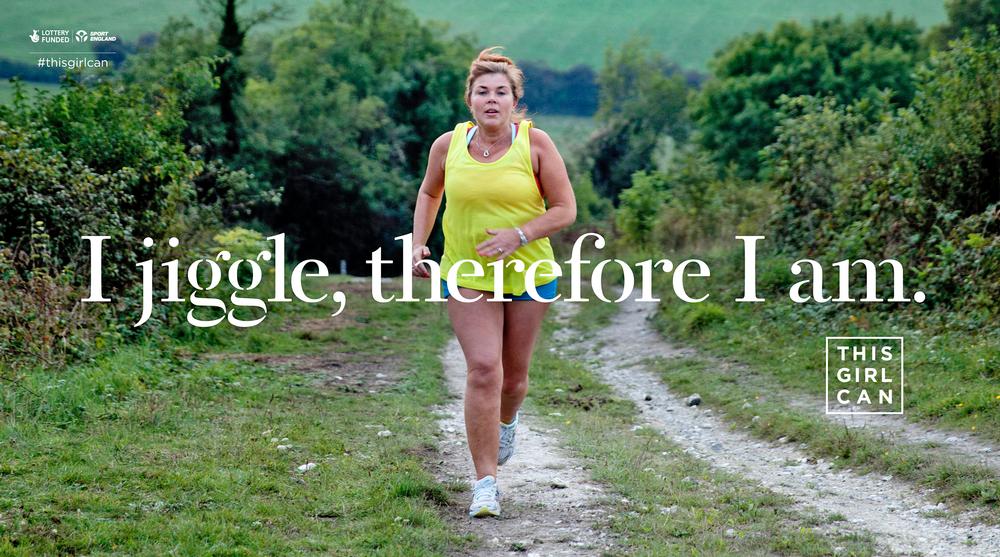
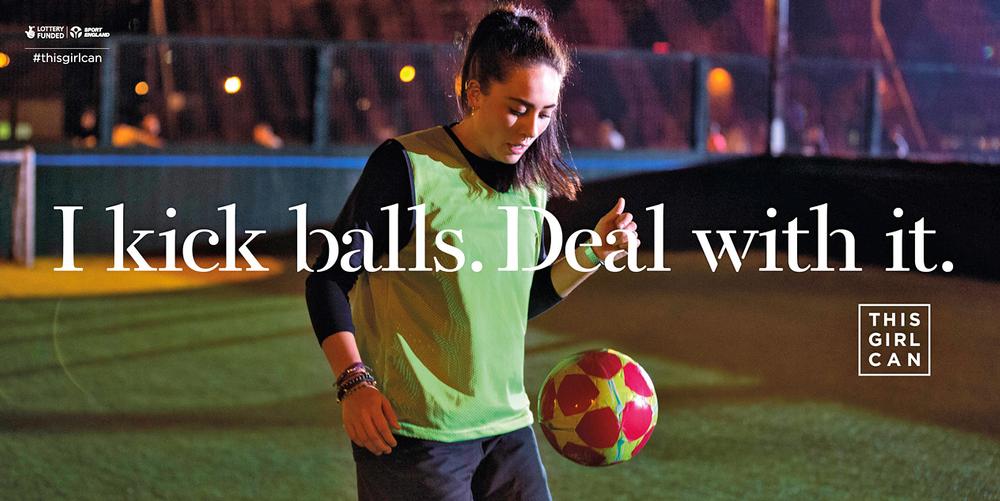
We wanted to showcase normal women and tell their stories, and use a tone of voice that would resonate with women – fun and sassy and a bit tongue-in-cheek.
Were you surprised by the success? It was extraordinary. We started with a very soft launch. We just did social media – we put a couple of videos up and didn’t promote them at all to start with. Within a month we had around 2,000 Twitter followers and I was really happy with that. Then we launched the above the line campaign starting with a 90 second TV ad during Coronation Street. And we went from having 2,000 Twitter followers to 20,000 in a matter of hours. Since then the community has just grown and grown.
One of the things we decided right from the start was that we wanted this to be a campaign that is owned by women and that they want to share. This has really driven it. Our social audience has grown month on month, even when we’ve been off-air. And we’ve been talked about on social media every day since the campaign launched, which is quite extraordinary when you think how small our media buy was compared to other campaigns.
In the first phase of the campaign, which is the phase I was responsible for, we were only above the line for about 10 weeks over two years. The rest was social.
Was there a change in behaviour and how did you measure this? There was rigorous monitoring and evaluation of the campaign, over and above Active People. We did qualitative and quantitative surveys and saw quickly that the campaign was having an impact. In its first year, it inspired 2.8 million women to do more sport, of whom 1.6 million hadn’t done sport since they left school. In terms of the return on investment, it’s the most successful intervention that Sport England has ever done. It’s very gratifying and I’m incredibly proud of it.
Will the campaign produce long-lasting behaviour change? Like all things, it needs to evolve, that’s the way to sustain behaviour change. And there’ll be new generations of girls who will need to keep hearing these messages.
It’s like discouraging smoking or drink driving, you can’t just have a single intervention, you need to keep going.
Yes, we might have raised awareness among a particular group of women and got really good penetration, but we have to keep asking – what else can we to do to raise awareness and to make people feel as though it’s worth having a go?
We also need to realise that some women will inevitably drop out. It’s important to make it clear that it’s normal to have a break – it doesn’t matter if they didn’t run yesterday or last month or the month before, or if they’re not sure that they’ll run tomorrow, women should celebrate the fact they’re running today.
How can the sport sector help? So many people in the sector think if you paint it pink women will come along. But organisations need to learn from This Girl Can, and think about what they can offer the type of woman to whom the campaign appeals – who isn’t yet committed.
Whether you’re a leisure centre or an NGB, you need to think about womens’ experiences from the moment they contact you – when they’re looking at your website, or being greeted at the door. How can you ensure the promise of This Girl Can is delivered in the experience they get?
In its first year, the campaign encouraged 2.8 million women to do more sport
The tone of This Girl Can was designed to be fun, sassy and a bit tongue in cheek
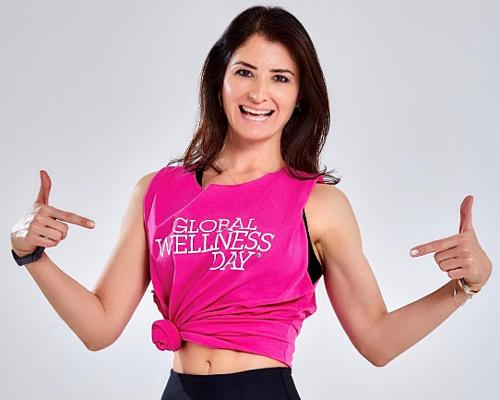
Four Seasons Resort The Nam Hai in Hoi An, Vietnam, has put together a Global Wellness Day
(GWD) agenda with activations rooted in nature and shaped by four pillars of Joy – in
alignment with the day’s theme #JoyMagenta.
The Global Wellness Summit (GWS) will celebrate its 20th anniversary at the 2026 event in
Phuket, Thailand, later this year with the theme: The Science, Art and Soul of Wellness.
Auko, an all-inclusive development, is opening in Phong Nha in Vietnam in Q3 2026, with a
series of 30 tented eco-lodges and wellness hospitality operations by Lumina Wellbeing.
Therme Manchester’s 28-acre development, which will include interconnected glass pavilions
that measure 65,000sq m, will be the largest bathing and wellbeing attraction in the world once
complete, according to prof David Russell, CEO of Therme UK.
Naples Beach Club, a Four Seasons Resort, has opened a 2,800sq m spa called The Sanctuary,
with the design and concept inspired by the Native American people that populated Florida’s
Southwest coast – the Calusa.
Swire Hotels’ luxury hospitality brand Upper House has revealed it will roll out its two-day
House of Healing retreats at its three hotels in Hong Kong, Chengdu and Shanghai.
LVMH-owned beauty house Guerlain will launch up to five spas with partners a year as part of
its plan to expand globally, according to the brand’s international spa and wellness director,
Diane Davody.
A new global study by Kevin Kelly and Peter Yesawich, called WELLSurvey 2.0, has revealed
more than half of consumers in the UK, US and Germany would not choose numerous high-
profile wellness resort brands for a future trip.