The Leisure Media Company Ltd
 
EMPLOYERS: POST A JOB
Free ezines & magazines
News Video Training Products Magazines Spa Business spa-kit Handbook What's on Advertise Subscribe
Catalogue gallery
More catalogues
Diary dates
Powered by leisurediary.com
09-11 Jun 2026
Savutuvan Apaja, Haapaniemi, Finland
09-12 Jun 2026
Hotel Cascais Miragem Health & Spa, Portugal
21-23 Jun 2026
Midlands (Venue TBA), Liphook, United Kingdom
22-22 Jun 2026
Worldwide,
03-05 Jul 2026
Copenhagen, Copenhagen, Denmark
19-21 Jul 2026
The Global Ambassador , Phoenix, United States
22-25 Jul 2026
The Global Ambassador , Phoenix, United States
23-26 Aug 2026
The Riviera Maya Edition Kanai, Playa del Carmen, Mexico
Exclusive: Richard Meier on the Getty Center, Miami's new Surf Club and 'the biggest mistake made by architects today'
By Magali Robathan 15 Feb 2017
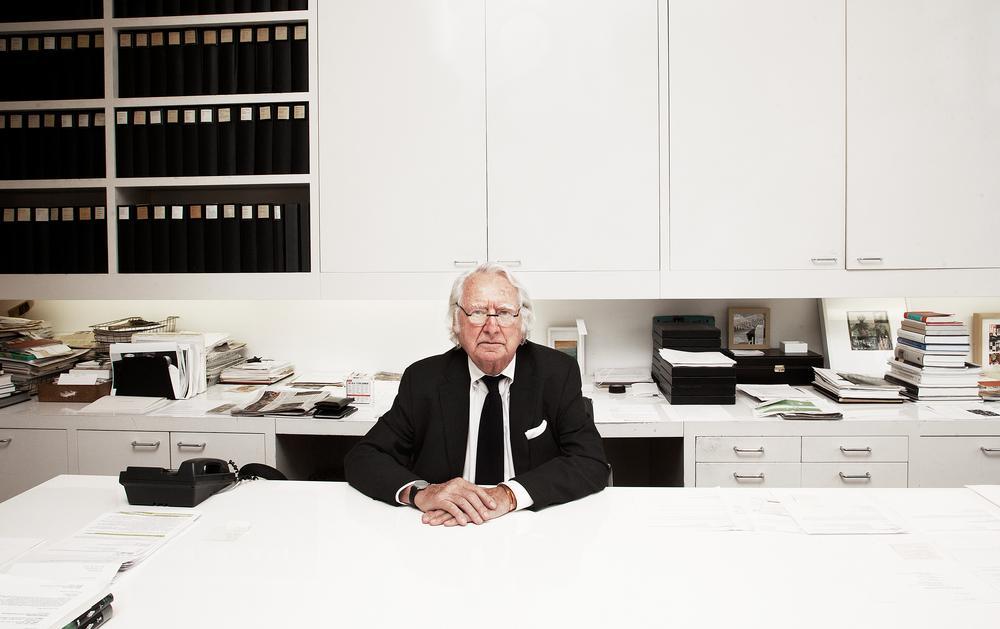
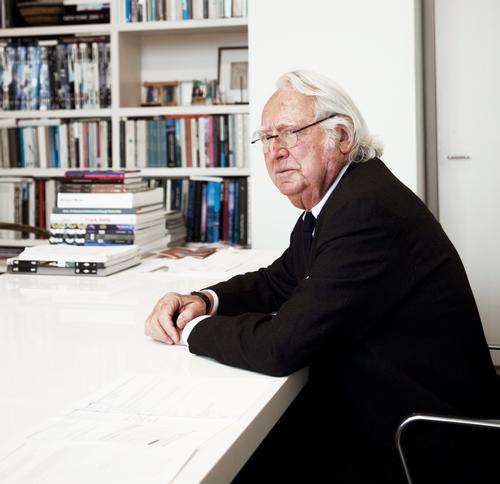
Richard’s Meier’s practice has offices in New York and Los Angeles, and is led by Meier and five partners Credit: Silja Magg
Failing to consider the context in which they're working is "the biggest mistake" made by architects today, argues Richard Meier in an exclusive interview with CLAD.

The renowned Pritzker Prize winner states that “just because you can build 100 stories high, doesn’t mean you should,” and bemoans the number of new city buildings that are out of place in their environment.

The full feature interview – in which Meier also touches on his influences, his famous work on the Getty Center and his love of the colour white – can be read in full below.

The new issue of CLADmag – our quarterly magazine – is available to read now online and on digital turning pages.


CLAD editor Magali Robathan meets Richard Meier

I speak to Richard Meier from his New York office. The view from his window, he says, illustrates the most common mistake made by architects today.

“There are some buildings here in New York that just seem out of scale,” he tells me. “From my window, I can see the Empire State Building, and then I can see other buildings that make it look small. Some of these buildings are out of place. Just because you can build 100 stories high, doesn’t mean you should.

“The biggest mistake made by architects today has to be not thinking about the context in which they’re working,” he adds.

This is not a mistake made by Meier. The Pritzker Prize-winning architect has a body of work that spans more than 50 years and takes in private residences, skyscrapers, civic buildings, offices, hotels – including the W Hotels and the recently opened Seamarq Hotel in South Korea – and a range of public buildings that include Rome’s Jubilee Church, the Barcelona Museum of Contemporary Art and his most famous building of all, the Getty Center in Los Angeles.

What unites them is the way they respond to their settings, celebrating materials and natural light in spaces that are open and transparent. The scale and context of his buildings is something Meier thinks about very carefully at every stage of the process.

In the case of his most recent project, The Surf Club Four Seasons Hotel & Residences in Miami, the context is the ocean, and as with all of his buildings, he used the setting as a starting point for the design.

“This project means a lot to me,” he says. “It’s a terrific site. The context is nature and you try to make the buildings so you can appreciate nature and the water by which they are situated.”

The project sees the historic Surf Club transformed into a Four Seasons hotel and residences. The Surf Club, which was designed by Russell Pancoast and opened in 1930, was once frequented by people such as Elizabeth Taylor, Winston Churchill and Frank Sinatra.
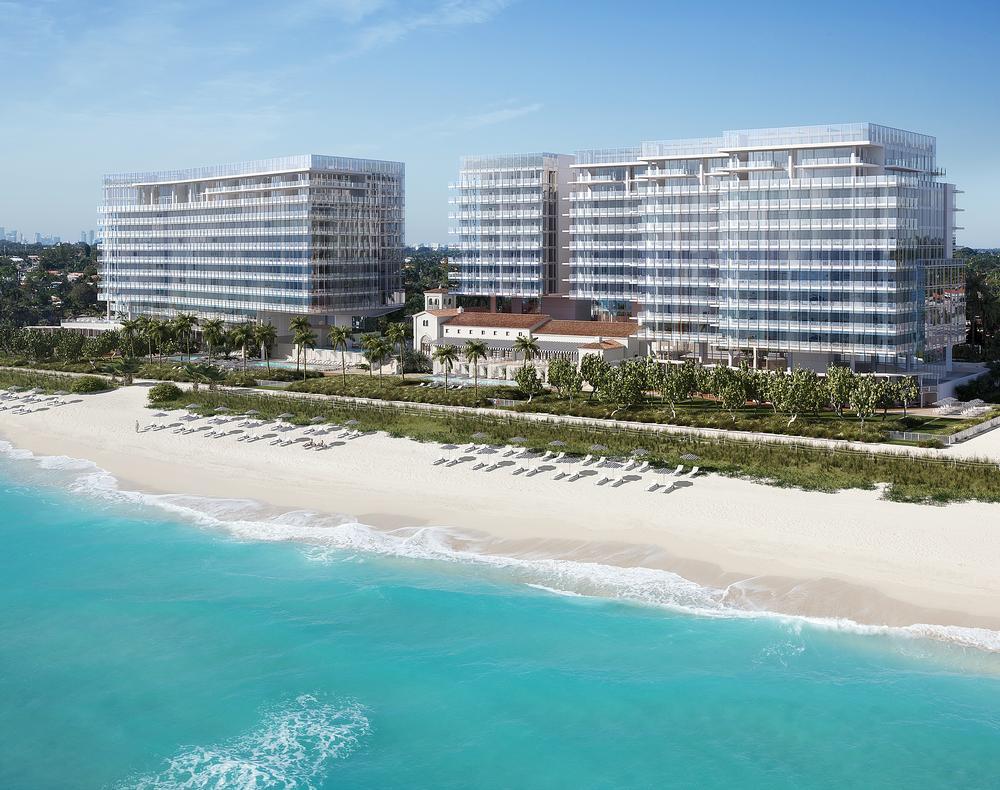
Surf Club

Meier’s transformation sees the original club restored and used as a lobby and entrance for the complex. Behind it stand two transparent 12 storey residential towers, and an 80 room Four Seasons hotel. The complex will also feature a private members’ club, two restaurants, four swimming pools, a spa and fitness center, as well as 40 beach cabanas, a park and oceanside gardens. The hotel is due to open in spring 2017, with the residences opening in the summer.

I ask how much of a challenge it was, harmonising the new building with the original building. “I wouldn’t say the modern building is in harmony with it; it’s sort of a counterpoint to it,” says Meier. “It’s nice to have a bit of the old with the new. We were obviously influenced by the original Surf Club, which was a nice building and was in very good condition, even though it hadn’t been used for a while.”

The buildings are open and airy, in keeping with Meier’s style. He sums up his approach as being about “the quality of the spaces, the relationship to the context, transparency, lightness, the way the buildings respond to nature and the changing colours of nature. All of these things are a part of my architecture.”

The other thing that runs through Meier’s work, of course, is the use of white. When Meier won the Pritzker Prize in 1984, he devoted a large part of his acceptance speech to his appreciation of it, saying: “White is wonderful, because within it you can see all of the colours of the rainbow. The whiteness of white is never just white; it is almost always transformed by light and that which is constantly changing; the sky, the clouds, the sun and the moon.”

Speaking to me, he adds: “White expresses the architecture in the clearest way. It expresses the difference between things like the opacity and transparency, between linear elements and opaque elements, it expresses the space and it reflects and refracts light so you see the changes of colour in nature through the whiteness of the building.”
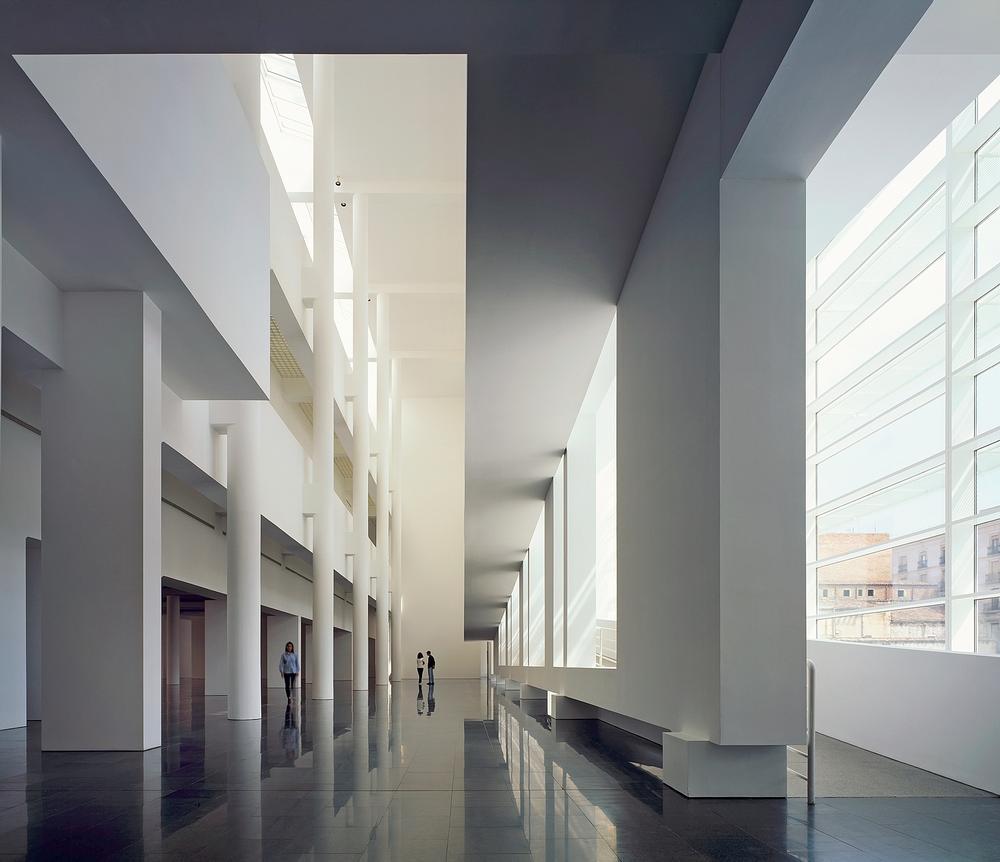
The Barcelona Museum of Contemporary Art

STARTING OUT

Richard Meier studied architecture at Cornell University, and worked for several years with Marcel Breuer and Skidmore, Owings and Merrill, before setting up his own practice in New York City in 1963. He rose to prominence designing private residences, and in 1972 he was identified as one of the New York Five – a group of influential New York modernist architects that also included Michael Graves, Charles Gwathmey, John Hejduk and Peter Eisenman.

In 1984, Meier achieved mainstream success when he was awarded the Pritzker Prize, and won the competition to design the $1bn Getty Center in LA – described at the time as ‘the commission of the century’. Opened in 1997, the Getty Center complex occupies a hilltop site in the Santa Monica Mountains overlooking Los Angeles and the Pacific Ocean beyond. It’s a stunning cluster of buildings housing the museum, the Getty Research Institute, the Getty Conservation Institute, the Getty Foundation and the J. Paul Getty Trust, as well as a series of courtyards and gardens.

Although the Getty Center opened almost two decades ago, Meier admits it will probably always be the project that he’s best known for, and his pride in the complex is obvious when he discusses it.

“That project was very special to me,” he says. “Right after it opened, they had something like 5,000 people a day visiting. Still, after 20 years, they have about 5,000 people a day visiting. Because of its location, people don’t just go for an hour; they go and spend the whole day there; walk around, enjoy the art collections and the gardens, have lunch, enjoy the views. It’s up there by itself; a destination, as it were.”

The project was inextricably linked with the growing up of Meier’s children, he says (he has a son and a daughter), and it became central to their lives. “It took 12 years, and I went there every two weeks, so whenever my children were on vacation we went to LA and stayed in a small house adjacent to the site and took daily walks through the construction. Seeing it evolve was very important to me.”
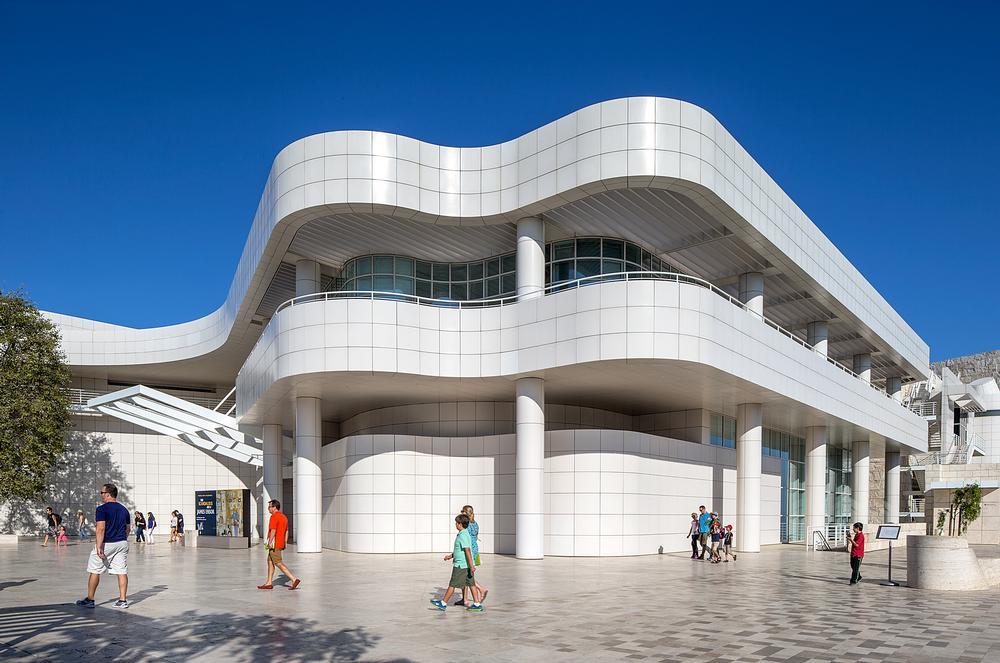
Getty Center

PUBLIC SPACE

Although Meier’s work is primarily about designing buildings, it’s the public spaces created by these buildings – that often become used in unexpected ways – that really get him going.

Meier gives the example of the Barcelona Museum of Contemporary Art, which opened in 1995, as a building that has resulted in a highly successful public space. “The museum is very popular,” he says, “but so is the plaza in front of the building where every kid growing up in Barcelona brings his skateboard and skates there. It’s a very active and well used public space.”

One of the first buildings to really have an impact on Meier, he tells me, was Frank Lloyd Wright’s Guggenheim. “When you think of the Guggenheim, you think of the great rotunda where people come together. They walk around, see the art, then meet their friends there. It’s a place of coming together.

“The problem today, is that developers really have no incentive to create public space,” he continues. “It’s rare that a developer is going to give up space within their project for the public, which is very unfortunate, because what we need in our cities is more public space and more open space.”

The answer, says Meier, has to be creating incentives at government level for developers to include provision for quality public space in their buildings.

LOOKING FORWARDS

As well as The Surf Club Four Seasons, Richard Meier is currently working on residential buildings in New York including 685 First Avenue – a 42 storey housing tower, clad in aluminium and black glass, in a radical departure from Meier’s usual colour palette. He is also working on the Ward Village Gateways Towers residential project in Honolulu, Hawaii and a two tower residential development in Bogotá, Columbia. “It’s an exciting time for the practice,” he says.

Meier is not one for looking back too much, he explains; the most exciting period of his career is “hopefully whatever the next building is,” but he does stop to acknowledge what he’s achieved from time to time, and he does enjoy visiting his old buildings.

“It makes me happy to see works that were done 20, 30 or 40 years ago,” he says.

“It’s like the buildings are your children and you sort of take care of them when they’re young, but at a certain point, they’re on their own. They’re no longer something you’re involved with, but it’s wonderful to visit them and see that they’re well.”


The Barcelona Museum of Contemporary Art features white, light-filled open spaces
Meier won the commission to design the Getty Center in 1984 and it opened in Los Angeles in 1997
Meier's new towers rise up behind the original Russell Pancoast-designed Surf Club building
News
1 to 12 of 9470 news stories
10 Jun 2026
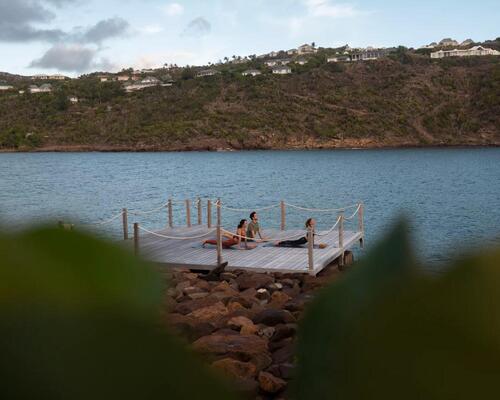
Rosewood Le Guanahani St Barth, on the northeast coast of Saint Barthélemy in the French West Indies, is offering a programme of ocean-inspired yoga classes between 8-14 June to celebrate Global Wellness Day (GWD). GWD ... More
09 Jun 2026
The Ritz-Carlton, Langkawi, in Malaysia, has revealed a schedule for Global Wellness Day (GWD) that includes guided rainforest walks, mindful movement and guided coastal meditation experiences. Founded in 2012 by Belgin Aksoy in Turkey, GWD ... More
05 Jun 2026
Mexican operator, Solmar Hotels and Resorts, is hosting a series of events in celebration of Global Wellness Day, including a Temazcal ceremony at its Playa Grande Resort and Spa in Los Cabos. The not-for-profit movement, ... More
12 Jun 2026
Global Wellness Day (GWD) will mark its 15th anniversary on Saturday 13 June 2026, with the theme: #JoyMagenta – a celebration of the healing qualities of simple gestures and activities that spark joy. Founded in ... More
03 Jun 2026
Four Seasons Resort The Nam Hai in Hoi An, Vietnam, has put together a Global Wellness Day (GWD) agenda with activations rooted in nature and shaped by four pillars of Joy – in alignment with ... More
01 Jun 2026
Rainer Maelzer, an experiential entertainment innovator, has been appointed chief entertainment officer by Therme Group.  With decades of experience in immersive water-based attractions, Maelzer will lead the development and global delivery of the company’s recreational ... More
03 Jun 2026
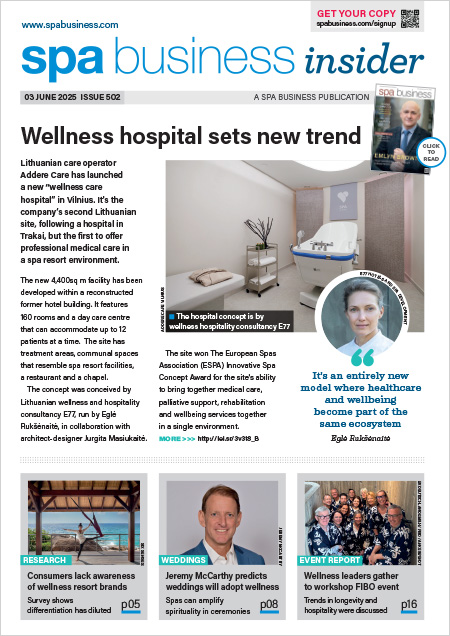
Lithuanian care operator Addere Care has launched a “wellness care hospital” in Vilnius. It's the company’s second Lithuanian site, following a hospital in Trakai, but the first to offer professional medical care in a spa ... More
28 May 2026
Auko, an all-inclusive development, is opening in Phong Nha in Vietnam in Q3 2026, with a series of 30 tented eco-lodges and wellness hospitality operations by Lumina Wellbeing. Van Phu Real Estate Development JSC owns ... More
05 Jun 2026
A recent survey by the UK Spa Association (UKSA) into the industry’s approach to cancer care has revealed that almost half of participating respondents (46 per cent) are unaware that cancer is a disability and ... More
26 May 2026
Wellness and hospitality thought leaders gathered recently for a workshop at Yasuragi, the Japanese spa and conference hotel near Stockholm. The purpose was to shape the FIBO Longevity and Hospitality Summit, which will happen in ... More
27 May 2026
LVMH-owned beauty house Guerlain will launch up to five spas with partners a year as part of its plan to expand globally, according to the brand’s international spa and wellness director, Diane Davody. In an ... More
27 May 2026
A new global study by Kevin Kelly and Peter Yesawich, called WELLSurvey 2.0, has revealed more than half of consumers in the UK, US and Germany would not choose numerous high-profile wellness resort brands  for ... More
     
International SPA Association - iSPA
Spa Life International
Company Profile
Pearl Tree
Pearl Tree was established in 2014 by Soraya and Sarry Jouzy with a mission to champion personal [more]
 
MORE PROFILES
Featured Supplier
Why future-ready in-house laundry is the new luxury spa essential
In today’s premium spa environment, every detail shapes the guest experience – right down to the softness of towels and the freshness of linens. ... more
International SPA Association - iSPA
Product news
Voya launches Resurge Hair and Scalp Elixir and spa treatments
Nilo Spa Design introduces Marea dry flotation bed
Esse Skincare upgrades Probiotic Serum with fourth live probiotic species
Sweet Bee Organics enters spa market at The Ned London with magnesium-infused treatment
Templespa releases brightening Glass Act eye serum
OSKIA unveils Midnight Eye Q cream for nocturnal repair
Directory

 
JOBS
NEWS
VIDEO
TRAINING
PRODUCTS
MAGAZINE
 
SPA BUSINESS
SPA-KIT.NET
SPA BUSINESS HANDBOOK
SUBSCRIBE
ADVERTISE
FREE DIGITAL SUBSCRIPTIONS
CONTACT US

Leisure Media
Tel: +44 (0)1462 431385

©Cybertrek 2026


The Leisure Media Company Ltd
News   Products   Magazine
NEWS
Exclusive: Richard Meier on the Getty Center, Miami's new Surf Club and 'the biggest mistake made by architects today'
POSTED 15 Feb 2017 . BY Magali Robathan
Richard’s Meier’s practice has offices in New York and Los Angeles, and is led by Meier and five partners Credit: Silja Magg
What we need in our cities is more public space and more open space.
– Richard Meier
Failing to consider the context in which they're working is "the biggest mistake" made by architects today, argues Richard Meier in an exclusive interview with CLAD.

The renowned Pritzker Prize winner states that “just because you can build 100 stories high, doesn’t mean you should,” and bemoans the number of new city buildings that are out of place in their environment.

The full feature interview – in which Meier also touches on his influences, his famous work on the Getty Center and his love of the colour white – can be read in full below.

The new issue of CLADmag – our quarterly magazine – is available to read now online and on digital turning pages.


CLAD editor Magali Robathan meets Richard Meier

I speak to Richard Meier from his New York office. The view from his window, he says, illustrates the most common mistake made by architects today.

“There are some buildings here in New York that just seem out of scale,” he tells me. “From my window, I can see the Empire State Building, and then I can see other buildings that make it look small. Some of these buildings are out of place. Just because you can build 100 stories high, doesn’t mean you should.

“The biggest mistake made by architects today has to be not thinking about the context in which they’re working,” he adds.

This is not a mistake made by Meier. The Pritzker Prize-winning architect has a body of work that spans more than 50 years and takes in private residences, skyscrapers, civic buildings, offices, hotels – including the W Hotels and the recently opened Seamarq Hotel in South Korea – and a range of public buildings that include Rome’s Jubilee Church, the Barcelona Museum of Contemporary Art and his most famous building of all, the Getty Center in Los Angeles.

What unites them is the way they respond to their settings, celebrating materials and natural light in spaces that are open and transparent. The scale and context of his buildings is something Meier thinks about very carefully at every stage of the process.

In the case of his most recent project, The Surf Club Four Seasons Hotel & Residences in Miami, the context is the ocean, and as with all of his buildings, he used the setting as a starting point for the design.

“This project means a lot to me,” he says. “It’s a terrific site. The context is nature and you try to make the buildings so you can appreciate nature and the water by which they are situated.”

The project sees the historic Surf Club transformed into a Four Seasons hotel and residences. The Surf Club, which was designed by Russell Pancoast and opened in 1930, was once frequented by people such as Elizabeth Taylor, Winston Churchill and Frank Sinatra.

Surf Club

Meier’s transformation sees the original club restored and used as a lobby and entrance for the complex. Behind it stand two transparent 12 storey residential towers, and an 80 room Four Seasons hotel. The complex will also feature a private members’ club, two restaurants, four swimming pools, a spa and fitness center, as well as 40 beach cabanas, a park and oceanside gardens. The hotel is due to open in spring 2017, with the residences opening in the summer.

I ask how much of a challenge it was, harmonising the new building with the original building. “I wouldn’t say the modern building is in harmony with it; it’s sort of a counterpoint to it,” says Meier. “It’s nice to have a bit of the old with the new. We were obviously influenced by the original Surf Club, which was a nice building and was in very good condition, even though it hadn’t been used for a while.”

The buildings are open and airy, in keeping with Meier’s style. He sums up his approach as being about “the quality of the spaces, the relationship to the context, transparency, lightness, the way the buildings respond to nature and the changing colours of nature. All of these things are a part of my architecture.”

The other thing that runs through Meier’s work, of course, is the use of white. When Meier won the Pritzker Prize in 1984, he devoted a large part of his acceptance speech to his appreciation of it, saying: “White is wonderful, because within it you can see all of the colours of the rainbow. The whiteness of white is never just white; it is almost always transformed by light and that which is constantly changing; the sky, the clouds, the sun and the moon.”

Speaking to me, he adds: “White expresses the architecture in the clearest way. It expresses the difference between things like the opacity and transparency, between linear elements and opaque elements, it expresses the space and it reflects and refracts light so you see the changes of colour in nature through the whiteness of the building.”

The Barcelona Museum of Contemporary Art

STARTING OUT

Richard Meier studied architecture at Cornell University, and worked for several years with Marcel Breuer and Skidmore, Owings and Merrill, before setting up his own practice in New York City in 1963. He rose to prominence designing private residences, and in 1972 he was identified as one of the New York Five – a group of influential New York modernist architects that also included Michael Graves, Charles Gwathmey, John Hejduk and Peter Eisenman.

In 1984, Meier achieved mainstream success when he was awarded the Pritzker Prize, and won the competition to design the $1bn Getty Center in LA – described at the time as ‘the commission of the century’. Opened in 1997, the Getty Center complex occupies a hilltop site in the Santa Monica Mountains overlooking Los Angeles and the Pacific Ocean beyond. It’s a stunning cluster of buildings housing the museum, the Getty Research Institute, the Getty Conservation Institute, the Getty Foundation and the J. Paul Getty Trust, as well as a series of courtyards and gardens.

Although the Getty Center opened almost two decades ago, Meier admits it will probably always be the project that he’s best known for, and his pride in the complex is obvious when he discusses it.

“That project was very special to me,” he says. “Right after it opened, they had something like 5,000 people a day visiting. Still, after 20 years, they have about 5,000 people a day visiting. Because of its location, people don’t just go for an hour; they go and spend the whole day there; walk around, enjoy the art collections and the gardens, have lunch, enjoy the views. It’s up there by itself; a destination, as it were.”

The project was inextricably linked with the growing up of Meier’s children, he says (he has a son and a daughter), and it became central to their lives. “It took 12 years, and I went there every two weeks, so whenever my children were on vacation we went to LA and stayed in a small house adjacent to the site and took daily walks through the construction. Seeing it evolve was very important to me.”

Getty Center

PUBLIC SPACE

Although Meier’s work is primarily about designing buildings, it’s the public spaces created by these buildings – that often become used in unexpected ways – that really get him going.

Meier gives the example of the Barcelona Museum of Contemporary Art, which opened in 1995, as a building that has resulted in a highly successful public space. “The museum is very popular,” he says, “but so is the plaza in front of the building where every kid growing up in Barcelona brings his skateboard and skates there. It’s a very active and well used public space.”

One of the first buildings to really have an impact on Meier, he tells me, was Frank Lloyd Wright’s Guggenheim. “When you think of the Guggenheim, you think of the great rotunda where people come together. They walk around, see the art, then meet their friends there. It’s a place of coming together.

“The problem today, is that developers really have no incentive to create public space,” he continues. “It’s rare that a developer is going to give up space within their project for the public, which is very unfortunate, because what we need in our cities is more public space and more open space.”

The answer, says Meier, has to be creating incentives at government level for developers to include provision for quality public space in their buildings.

LOOKING FORWARDS

As well as The Surf Club Four Seasons, Richard Meier is currently working on residential buildings in New York including 685 First Avenue – a 42 storey housing tower, clad in aluminium and black glass, in a radical departure from Meier’s usual colour palette. He is also working on the Ward Village Gateways Towers residential project in Honolulu, Hawaii and a two tower residential development in Bogotá, Columbia. “It’s an exciting time for the practice,” he says.

Meier is not one for looking back too much, he explains; the most exciting period of his career is “hopefully whatever the next building is,” but he does stop to acknowledge what he’s achieved from time to time, and he does enjoy visiting his old buildings.

“It makes me happy to see works that were done 20, 30 or 40 years ago,” he says.

“It’s like the buildings are your children and you sort of take care of them when they’re young, but at a certain point, they’re on their own. They’re no longer something you’re involved with, but it’s wonderful to visit them and see that they’re well.”

RELATED STORIES
FEATURE: Interview: Richard Meier


The American modernist architect on his latest project and his love of the colour white
Luxury and leisure hit the New York skyline with Richard Meier's latest glazed tower


Richard Meier & Partners have unveiled designs of their tallest tower in New York; an “East River icon” that will place leisure at its heart.
Richard Meier: Developers need incentives to create public spaces


Pritzker Prize-winning architect Richard Meier has spoken about the importance of good quality public space in cities, arguing that there should be incentives at government level for developers to incorporate public space into their projects.
Richard Meier designs 'beautiful and humanist' South Korean hotel for Winter Olympics


Richard Meier & Partners have completed their first major hotel project – the new Seamarq Hotel in South Korea.
MORE NEWS
Healing sanctuary Tulah Clinical Wellness opens in Kerala
Tulah Clinical Wellness, a holistic wellness destination, has officially opened in the hills of northern Kerala, India.
Four Seasons Resort The Nam Hai creates Global Wellness Day programme rooted in nature
Four Seasons Resort The Nam Hai in Hoi An, Vietnam, has put together a Global Wellness Day (GWD) agenda with activations rooted in nature and shaped by four pillars of Joy – in alignment with the day’s theme #JoyMagenta.
Wellness care hospital opens in Vilnius with innovative spa and hospitality concept
Lithuanian care operator Addere Care has launched a new “wellness care hospital” in Vilnius.
Rainer Maelzer joins Therme Group as chief entertainment officer
Rainer Maelzer, an experiential entertainment innovator, has been appointed chief entertainment officer by Therme Group.
Global Wellness Summit announces 2026 theme: the science, art and soul of wellness
The Global Wellness Summit (GWS) will celebrate its 20th anniversary at the 2026 event in Phuket, Thailand, later this year with the theme: The Science, Art and Soul of Wellness.
All-inclusive eco-wellness development Auko to open near Vietnam’s Son Doong caves
Auko, an all-inclusive development, is opening in Phong Nha in Vietnam in Q3 2026, with a series of 30 tented eco-lodges and wellness hospitality operations by Lumina Wellbeing.
+ More news   
 
COMPANY PROFILES
TAC | The Assistant Company

Founded in 2001, TAC is an owner-managed company with more than 110 employees and four locations: in [more...]
+ More profiles  
DIRECTORY
+ More directory  
DIARY


09-11 Jun 2026

World Sauna Forum 2026

Savutuvan Apaja, Haapaniemi, Finland
09-12 Jun 2026

W3Spa EMEA

Hotel Cascais Miragem Health & Spa, Portugal
+ More diary  


CONTACT US

Leisure Media
Tel: +44 (0)1462 431385

©Cybertrek 2026

ABOUT LEISURE MEDIA
LEISURE MEDIA MAGAZINES
LEISURE MEDIA HANDBOOKS
LEISURE MEDIA WEBSITES
LEISURE MEDIA PRODUCT SEARCH
PRINT SUBSCRIPTIONS
FREE DIGITAL SUBSCRIPTIONS