Comfort Zone
Comfort Zone
Comfort Zone
 
EMPLOYERS: POST A JOB
Free ezines & magazines
News Video Training Products Magazines Spa Business spa-kit Handbook What's on Advertise Subscribe
Catalogue gallery
More catalogues
Diary dates
Powered by leisurediary.com
21-23 Jun 2026
Midlands (Venue TBA), Liphook, United Kingdom
22-22 Jun 2026
Worldwide,
03-05 Jul 2026
Copenhagen, Copenhagen, Denmark
19-21 Jul 2026
The Global Ambassador , Phoenix, United States
22-25 Jul 2026
The Global Ambassador , Phoenix, United States
23-26 Aug 2026
The Riviera Maya Edition Kanai, Playa del Carmen, Mexico
10-12 Sep 2026
MITEC Kuala Lumpur,Malaysia, Malaysia
18-20 Sep 2026
Sheraton Norfolk Waterside, Norfolk, United States
Conran and Partners' Tina Norden on the blurring boundaries between work and leisure buildings
By Magali Robathan 22 Feb 2017
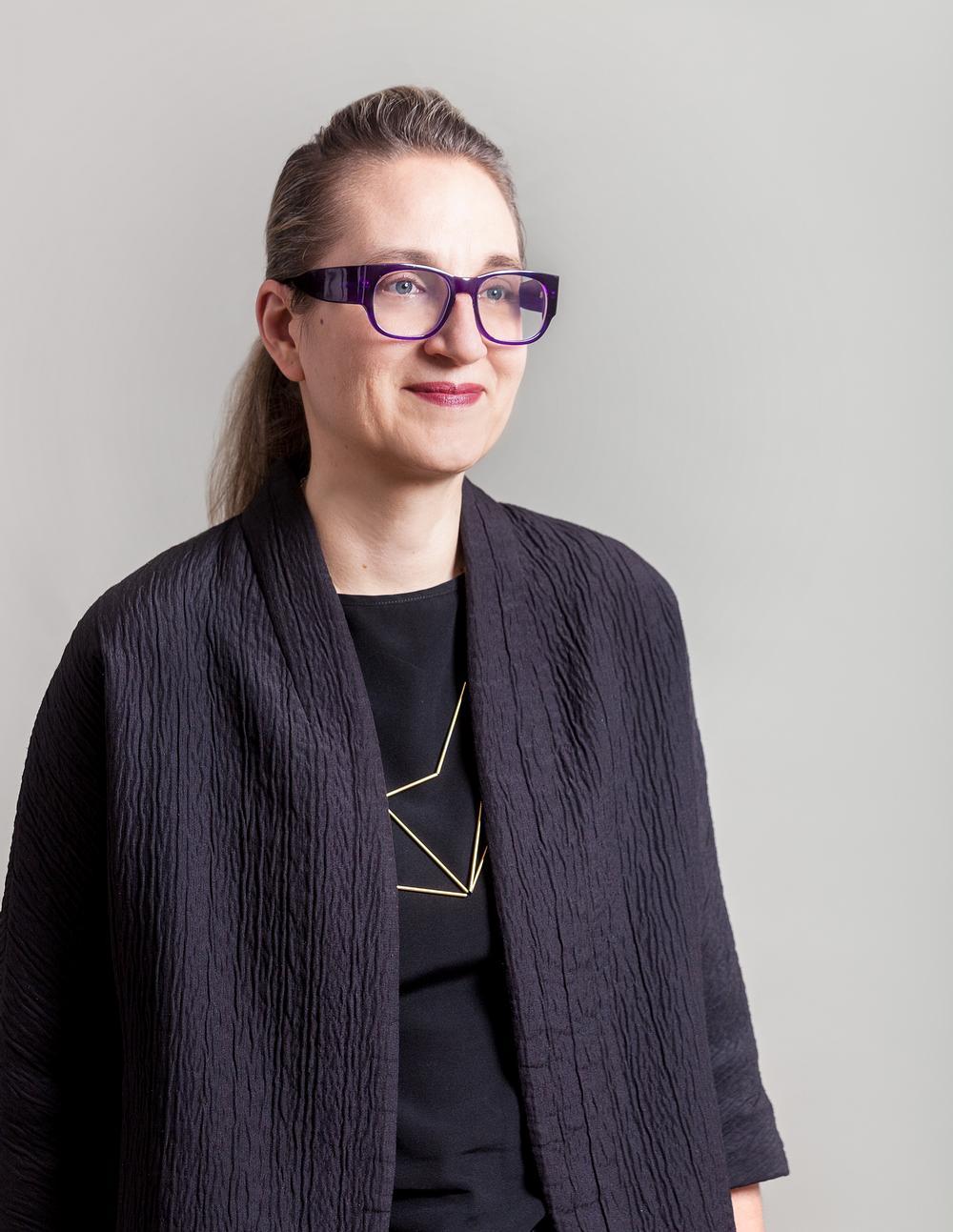
Norden studied architecture at Westminster, before joining C&P in 1997. Credit: Kit Oates
Increasing crossovers between work and leisure are creating new challenges for hospitality designers, says Conran & Partners' Tina Norden, in an interview with CLAD.

"With the boundaries to the way people live becoming more and more blurred, we're starting to explore sectors we haven't worked in for some time," says Norden.

The full interview, in which Norden tells the story behind the award-winning German Gymnasium and talks through the practice's current projects, can be found below.

The new issue of CLADmag – our quarterly magazine – is available to read now online and on digital turning pages.


What is your main focus at the moment?

Conran & Partners were founded by Sir Terence Conran more than 30 years ago and his approach to creating aspirational but accessible design remains at the heart of what we do. However, the scale and focus of the practice has shifted considerably over the years with us now delivering high profile residential and hospitality-led projects across the world… particularly in the UK and Asia.

With the boundaries to the way people live becoming more and more blurred, we’re starting to explore sectors we haven’t worked in for some time. Office developers are interested in us as a lifestyle brand (their words), to make their commercial spaces more creative, loose fit and aligned to what we are doing across residential, hotels and restaurants.

What is your strategy for trying to establish your own voice?

The only thing we can do is be ourselves, meet people and engage with them. If there’s a spark between a potential client or an investor or operator and us, then that’s the right starting point. You have to meet up, face to face, and figure out whether you can work together or not. That’s ultimately what it comes down to.

How important is the compatibility between the designer or architect and client?

The name and reputation of the practice is always going to be important, and that brings people to our door, but after that, a lot of it’s about personality – about whether there’s a synergy between you and a potential client, and about whether that person gets you.

They don’t necessarily have to like you – it’s just whether they feel that you’ve got the right personality to understand what they’re trying to achieve and engage with it in an intellectual and creative manner. Professional clients aren’t scared of having someone who’ll challenge them – I think they want that nowadays.

How would you sum up Conran & Partners’ design philosophy?

We have a very conceptual and analytical approach to design. Our approach is very narrative driven. We start off doing a lot of analysis and then we develop a strong concept. That concept is something we keep coming back to as a design team, but also for the client, it’s a story they can buy into. As human beings, we all like stories that you get on an emotional and rational level – these can then be used as a basis for the design language.

The German Gymnasium in London was a major project for Conran & Partners. How did you approach the design?

We got involved with that project at a very early stage, when D&D London were first mooted by the developer Argent [D&D London acquired the site in January 2014 and now operates the 100,000sq ft restaurant].
“German

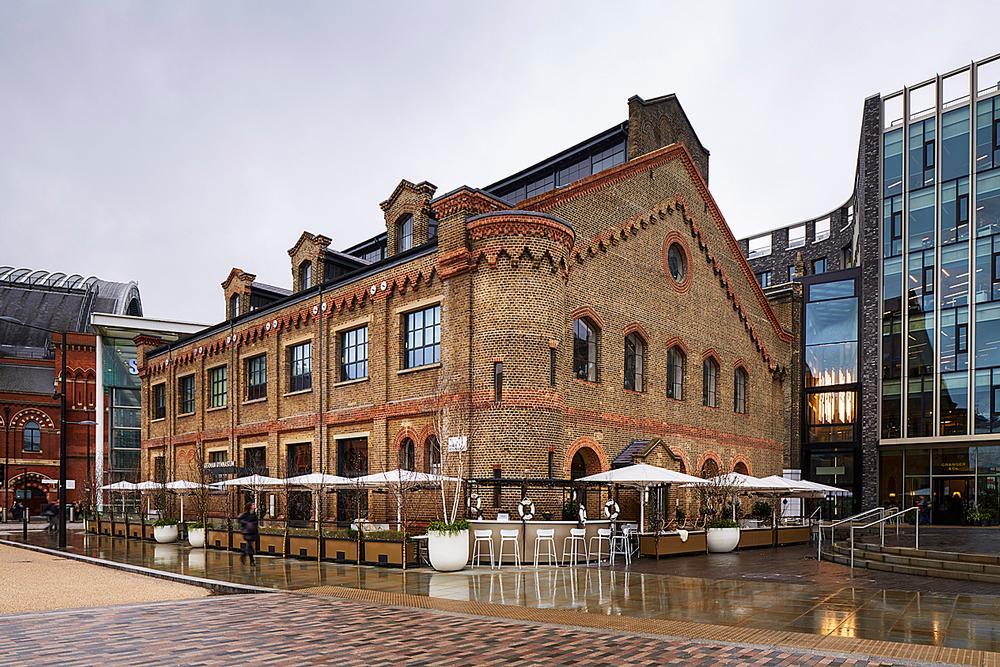
The German Gymnasium was originally built for the German Gymnastics Society and was England’s first purpose-built gymnasium when it opened in 1864. It was later used for a variety of purposes, including as offices, exhibition space and storage space, and wasn’t fit for purpose as a restaurant when we got involved. We worked very closely with the landlord and their architect, who did the base build, to turn it into something that could function as a restaurant unit.

That whole regeneration area behind Kings Cross and St Pancras stations in London is fascinating. The German Gymnasium building – because it was one of the few listed buildings on the site – was always meant to be like a little jewel. It’s always been precious to the client.

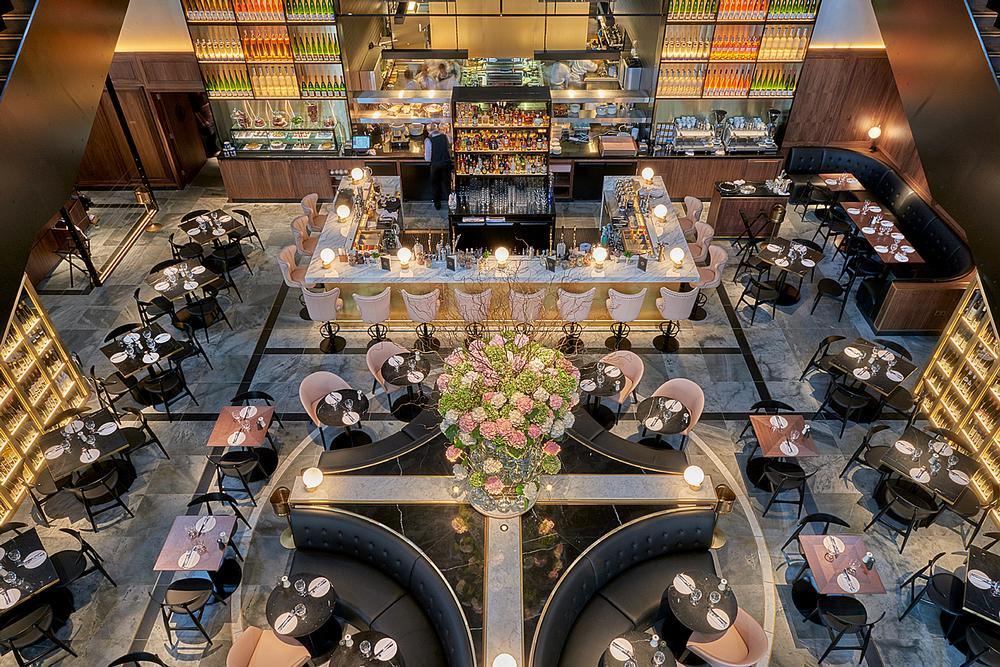
The building is such an amazing volume; it was really about bringing it to life. When it was converted into offices, the second floor was closed off. Working together with Allies and Morrison [who were appointed to restore and repair the space], we knew we had to open it back up again. When it was a gym, it had a viewing platform around the perimeter of the second floor – we brought that back so that you can look down onto the space from upstairs.

We also brought in some subtle references to the building’s sporting history. These include the paintings [Conran & Partners and D&D London worked with curators Dais Contemporary to commission artist Maria Savva to produce six artworks to illustrate German Gymnasium’s sporting past]. The balustrade around the upper floor is made from a mesh, which references fencing masks. And when you look at the marble floor from above, the inlays are inspired by the markings you get in sports halls.

We didn’t want in-your-face sporting references; just subtle things that allow you to tell a story.
“German

What were the biggest challenges of that project?

From an atmospheric point of view, it was making a very big volume feel intimate. One of the ways we did that was with the lighting, designed with Into – low level lighting is integrated in many of the furniture items, which means your eye is drawn down. So when you’re sitting down, you feel cosseted; you feel in a more private, intimate space.

Conran & Partners are responsible for the interiors at the Park Hyatt Jakarta, opening in 2017. What was the inspiration for the design?

With this project, we wanted to create a sophisticated but also quite domestic atmosphere; something that feels holistic and intimate at the same time. We were also influenced by the location and sense of place. Jakarta is a crazy, busy Asian metropolis, with skyscrapers, traffic and all of that, in contrast with the rest of Indonesia, which people tend to visit for its beautiful scenery. We wanted to bring Indonesia into the city.

We created the story of being in a rainforest with different layers, from the forest floor up to the leaves of the trees, so it’s darker and more intimate on the lower levels of the tower, and gradually gets brighter and more airy as you move up. We used a materials palette inspired by the natural resources of the country – lots of copper, because it’s harvested in Indonesia – and we brought local crafts into the scheme.

The hotel is housed in a new build tower, and it will include 227 rooms and suites, a luxury spa, a grand ballroom and several restaurants and bars.

You are also designing the interiors for the Park Hyatt Auckland. What can you say about that project?

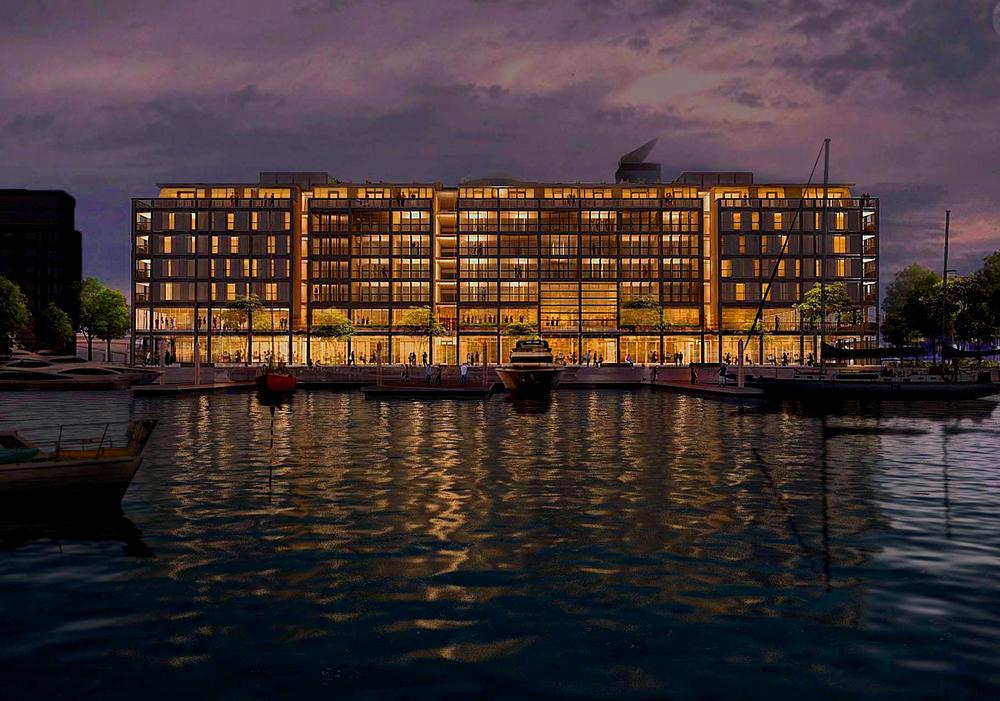
It’s a bespoke building on the harbour front, in a regeneration area next to the city centre that’s quite gutsy and urban, but that’s also going to be a very high end residential part of the city. So that was the starting point.

The project was about picking up on that bold, urban environment and its site, right next to the harbour front, as well as the history of the Maori people and of the European and Chinese settlers. We wanted to try and unite all of those different cultural influences in New Zealand into the design as a whole. We did that via the artwork – we are working with local art consultants ArtForm, who are commissioning Maori artists to design modern tukutuku panels for the spaces. There’s a strong tradition of wood carving in both Maori and Chinese culture, so we’re going to get some Chinese and Maori carvers to work together to create some pieces for the hotel. We really like that cross-cultural influence.

The seven level hotel will have 190 rooms, three restaurants, a spa and fitness centre and is due to open in 2018.
“Park

Turkish restaurant Ruya has just opened in Dubai. What were the inspirations for this project?

We’ve worked with the owner, Umut Özkanca, for years, so we know him well. This has been a dream of his for a long time. The idea was to create an upmarket platform for Anatolian cuisine; to interpret the food in a contemporary way.

Özkanca wanted to work with a non-Turkish designer, because he wanted us to interpret Turkish and Anatolian heritage in a way that was right for the international market. For us it was about looking at that incredibly rich history, about picking up on the materiality and the crafts of the region. We designed tiles that were influenced by traditional Byzantine patterns and used traditional Turkish Marmara marble.

One of the key things about Turkey is the hospitality; it’s a very welcoming country and we wanted that to be reflected in the design. We have a big oven in the centre of the restaurant for bread, and an open kitchen and open bar, so that you’re always engaging with the people making your food.

What else are you working on?

We’re working on the renovation of a small boutique hotel in Prague called Hotel Maximilian. It’s a very challenging project, very design-led, with a fantastic client, the Ploberger family. We’ve been inspired by the pastel colours of Prague’s architecture – we’re bringing in beautiful muted colours throughout the hotel. The mock up room for that project is currently in progress, and the hotel should open either the end of 2017 or start of 2018.

Do you have a favourite project you’ve worked on?

South Place Hotel in London was the first hotel project I worked on. We were involved in every single aspect of the hotel, from the design and lighting to the uniforms, table tops and artwork, so it felt like a typical German Gesamtkunstwerk. I definitely have a lot of emotional attachment to that project.

What trends or themes are you seeing in hotel design?

There are lots of debates around the integration of work and leisure in hotels at the moment. That crossover is really interesting, because so many people still work while they’re on holiday, or they are on a business trip but still want to explore the area. Many hotels ask for a residential feel, but guests still want to feel looked after, so that’s a challenge.

Which hotels do you love?

I really like Das Stue in Berlin, which was designed by Patricia Urquiola. It’s in the former Royal Danish embassy, which is a beautiful building. It feels homely and comfortable, while being very sophisticated.

I also love the Parker Palm Springs in California. It has a unique voice and you probably either love it or hate it, but it does what it does incredibly well. It’s very playful, and there are lots of things to discover there.

Which architects do you admire?

David Adjaye was my tutor at the Royal College of Art in London. I like his work and I learned a lot from him. He was always talking to us about materiality and purpose in designing and that’s stuck with me – the idea that architecture needs to speak for itself. I don’t think David Adjaye follows trends; his architecture has its own kind of language and I’ve always admired that.

I am also a huge fan of mid-century modern architecture, particularly on the US West Coast – architects like Richard Neutra, William F Cody and Albert Frey really inspire me.


News
1 to 12 of 9478 news stories
12 Jun 2026
Global luxury hospitality brand, Six Senses, has partnered with longevity healthcare provider, HUM2N, to launch a clinic at Six Senses London, at The Whiteley. This collaboration is significant as it reflects a shift by Six ... More
10 Jun 2026
Premium London health club, KX Chelsea, is gearing up to unveil its most significant redevelopment since its launch in 2002. The club has been reimagined to create an integrated wellness model combining training, recovery and ... More
09 Jun 2026
Hotel de France, located on the British Isle of Jersey, has created a wellness retreat package that includes a hot yoga session that will take place in Jersey Zoo’s butterfly sanctuary. The all-inclusive two-night Ayush ... More
08 Jun 2026
Longevitix, a clinical platform for preventive and longevity medicine, has launched its AI-powered intelligence system to help physicians deliver continuous, personalised longevity-focused care at scale. Longevitix combines years of scattered patient data into a complete ... More
07 Jun 2026
Luxury wellness resort, The Retreat Costa Rica, has introduced its Vida Mía Longevity Centre at the property’s Vida Mía Healing Centre and Spa.  The longevity centre adds physician-guided programming to the resort, which was founded ... More
08 Jun 2026
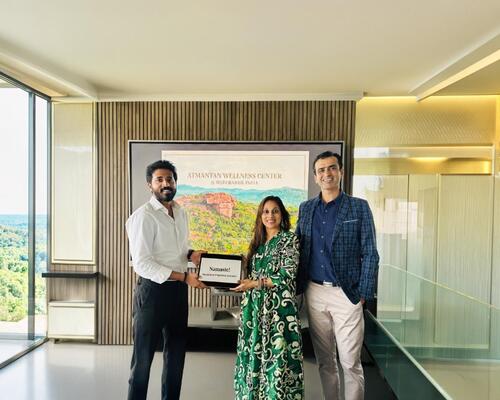
Atmantan Wellness Centre, an integrative wellness destination in Mulshi, near Pune in India, is expanding its portfolio by adding a new centre in Hyderabad that will launch between 2028 and 2029. Atmantan is a retreat ... More
11 Jun 2026
As part of its first hotel partnership, Mayrlife – the medical health resort company known for its site in Altaussee, Austria – has launched a day clinic at the Rosewood Vienna. Mayrlife offers holistic health ... More
10 Jun 2026
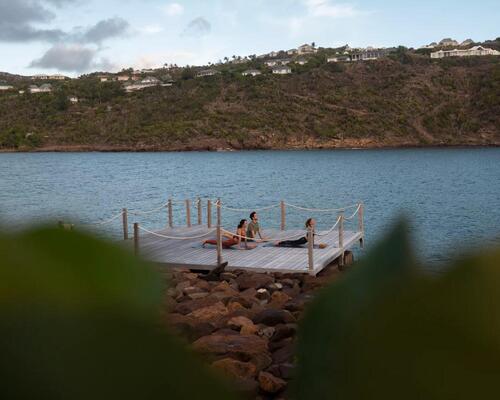
Rosewood Le Guanahani St Barth, on the northeast coast of Saint Barthélemy in the French West Indies, is offering a programme of ocean-inspired yoga classes between 8-14 June to celebrate Global Wellness Day (GWD). GWD ... More
09 Jun 2026
The Ritz-Carlton, Langkawi, in Malaysia, has revealed a schedule for Global Wellness Day (GWD) that includes guided rainforest walks, mindful movement and guided coastal meditation experiences. Founded in 2012 by Belgin Aksoy in Turkey, GWD ... More
05 Jun 2026
Mexican operator, Solmar Hotels and Resorts, is hosting a series of events in celebration of Global Wellness Day, including a Temazcal ceremony at its Playa Grande Resort and Spa in Los Cabos. The not-for-profit movement, ... More
12 Jun 2026
Global Wellness Day (GWD) will mark its 15th anniversary on Saturday 13 June 2026, with the theme: #JoyMagenta – a celebration of the healing qualities of simple gestures and activities that spark joy. Founded in ... More
03 Jun 2026
Four Seasons Resort The Nam Hai in Hoi An, Vietnam, has put together a Global Wellness Day (GWD) agenda with activations rooted in nature and shaped by four pillars of Joy – in alignment with ... More
     
International SPA Association - iSPA
Company Profile
Wellness & Spa Solutions
Wellness & Spa Solutions, act as a strategic partner for luxury hotels, international resorts, and [more]
 
MORE PROFILES
Featured Supplier
Introducing Silent Loads: Wildsmith’s newest advancement in personalised wellbeing
In a world where imbalance often accumulates quietly, Wildsmith unveils its newest wellbeing innovation: Silent Loads, an approach designed to meet the needs of modern spa guests with precision and depth. ... more
Templespa Ltd
Product news
HPO Tech introduces hyperbaric chamber, Oyster
Glow beyond protection: meet Comfort Zone Hydramemory Hybrid Glow SPF 30
Rebalance Tech ramps up Impulse rollout
Manduka debuts premium P/ROX hybrid fitness mat
Voya launches Resurge Hair and Scalp Elixir and spa treatments
Nilo Spa Design introduces Marea dry flotation bed
Directory

 
JOBS
NEWS
VIDEO
TRAINING
PRODUCTS
MAGAZINE
 
SPA BUSINESS
SPA-KIT.NET
SPA BUSINESS HANDBOOK
SUBSCRIBE
ADVERTISE
FREE DIGITAL SUBSCRIPTIONS
CONTACT US

Leisure Media
Tel: +44 (0)1462 431385

©Cybertrek 2026


Comfort Zone
Comfort Zone
Comfort Zone
Comfort Zone
News   Products   Magazine
NEWS
Conran and Partners' Tina Norden on the blurring boundaries between work and leisure buildings
POSTED 22 Feb 2017 . BY Magali Robathan
Norden studied architecture at Westminster, before joining C&P in 1997. Credit: Kit Oates
Increasing crossovers between work and leisure are creating new challenges for hospitality designers, says Conran & Partners' Tina Norden, in an interview with CLAD.

"With the boundaries to the way people live becoming more and more blurred, we're starting to explore sectors we haven't worked in for some time," says Norden.

The full interview, in which Norden tells the story behind the award-winning German Gymnasium and talks through the practice's current projects, can be found below.

The new issue of CLADmag – our quarterly magazine – is available to read now online and on digital turning pages.


What is your main focus at the moment?

Conran & Partners were founded by Sir Terence Conran more than 30 years ago and his approach to creating aspirational but accessible design remains at the heart of what we do. However, the scale and focus of the practice has shifted considerably over the years with us now delivering high profile residential and hospitality-led projects across the world… particularly in the UK and Asia.

With the boundaries to the way people live becoming more and more blurred, we’re starting to explore sectors we haven’t worked in for some time. Office developers are interested in us as a lifestyle brand (their words), to make their commercial spaces more creative, loose fit and aligned to what we are doing across residential, hotels and restaurants.

What is your strategy for trying to establish your own voice?

The only thing we can do is be ourselves, meet people and engage with them. If there’s a spark between a potential client or an investor or operator and us, then that’s the right starting point. You have to meet up, face to face, and figure out whether you can work together or not. That’s ultimately what it comes down to.

How important is the compatibility between the designer or architect and client?

The name and reputation of the practice is always going to be important, and that brings people to our door, but after that, a lot of it’s about personality – about whether there’s a synergy between you and a potential client, and about whether that person gets you.

They don’t necessarily have to like you – it’s just whether they feel that you’ve got the right personality to understand what they’re trying to achieve and engage with it in an intellectual and creative manner. Professional clients aren’t scared of having someone who’ll challenge them – I think they want that nowadays.

How would you sum up Conran & Partners’ design philosophy?

We have a very conceptual and analytical approach to design. Our approach is very narrative driven. We start off doing a lot of analysis and then we develop a strong concept. That concept is something we keep coming back to as a design team, but also for the client, it’s a story they can buy into. As human beings, we all like stories that you get on an emotional and rational level – these can then be used as a basis for the design language.

The German Gymnasium in London was a major project for Conran & Partners. How did you approach the design?

We got involved with that project at a very early stage, when D&D London were first mooted by the developer Argent [D&D London acquired the site in January 2014 and now operates the 100,000sq ft restaurant].

“German

The German Gymnasium was originally built for the German Gymnastics Society and was England’s first purpose-built gymnasium when it opened in 1864. It was later used for a variety of purposes, including as offices, exhibition space and storage space, and wasn’t fit for purpose as a restaurant when we got involved. We worked very closely with the landlord and their architect, who did the base build, to turn it into something that could function as a restaurant unit.

That whole regeneration area behind Kings Cross and St Pancras stations in London is fascinating. The German Gymnasium building – because it was one of the few listed buildings on the site – was always meant to be like a little jewel. It’s always been precious to the client.

The building is such an amazing volume; it was really about bringing it to life. When it was converted into offices, the second floor was closed off. Working together with Allies and Morrison [who were appointed to restore and repair the space], we knew we had to open it back up again. When it was a gym, it had a viewing platform around the perimeter of the second floor – we brought that back so that you can look down onto the space from upstairs.

We also brought in some subtle references to the building’s sporting history. These include the paintings [Conran & Partners and D&D London worked with curators Dais Contemporary to commission artist Maria Savva to produce six artworks to illustrate German Gymnasium’s sporting past]. The balustrade around the upper floor is made from a mesh, which references fencing masks. And when you look at the marble floor from above, the inlays are inspired by the markings you get in sports halls.

We didn’t want in-your-face sporting references; just subtle things that allow you to tell a story.

“German

What were the biggest challenges of that project?

From an atmospheric point of view, it was making a very big volume feel intimate. One of the ways we did that was with the lighting, designed with Into – low level lighting is integrated in many of the furniture items, which means your eye is drawn down. So when you’re sitting down, you feel cosseted; you feel in a more private, intimate space.

Conran & Partners are responsible for the interiors at the Park Hyatt Jakarta, opening in 2017. What was the inspiration for the design?

With this project, we wanted to create a sophisticated but also quite domestic atmosphere; something that feels holistic and intimate at the same time. We were also influenced by the location and sense of place. Jakarta is a crazy, busy Asian metropolis, with skyscrapers, traffic and all of that, in contrast with the rest of Indonesia, which people tend to visit for its beautiful scenery. We wanted to bring Indonesia into the city.

We created the story of being in a rainforest with different layers, from the forest floor up to the leaves of the trees, so it’s darker and more intimate on the lower levels of the tower, and gradually gets brighter and more airy as you move up. We used a materials palette inspired by the natural resources of the country – lots of copper, because it’s harvested in Indonesia – and we brought local crafts into the scheme.

The hotel is housed in a new build tower, and it will include 227 rooms and suites, a luxury spa, a grand ballroom and several restaurants and bars.

You are also designing the interiors for the Park Hyatt Auckland. What can you say about that project?

It’s a bespoke building on the harbour front, in a regeneration area next to the city centre that’s quite gutsy and urban, but that’s also going to be a very high end residential part of the city. So that was the starting point.

The project was about picking up on that bold, urban environment and its site, right next to the harbour front, as well as the history of the Maori people and of the European and Chinese settlers. We wanted to try and unite all of those different cultural influences in New Zealand into the design as a whole. We did that via the artwork – we are working with local art consultants ArtForm, who are commissioning Maori artists to design modern tukutuku panels for the spaces. There’s a strong tradition of wood carving in both Maori and Chinese culture, so we’re going to get some Chinese and Maori carvers to work together to create some pieces for the hotel. We really like that cross-cultural influence.

The seven level hotel will have 190 rooms, three restaurants, a spa and fitness centre and is due to open in 2018.

“Park

Turkish restaurant Ruya has just opened in Dubai. What were the inspirations for this project?

We’ve worked with the owner, Umut Özkanca, for years, so we know him well. This has been a dream of his for a long time. The idea was to create an upmarket platform for Anatolian cuisine; to interpret the food in a contemporary way.

Özkanca wanted to work with a non-Turkish designer, because he wanted us to interpret Turkish and Anatolian heritage in a way that was right for the international market. For us it was about looking at that incredibly rich history, about picking up on the materiality and the crafts of the region. We designed tiles that were influenced by traditional Byzantine patterns and used traditional Turkish Marmara marble.

One of the key things about Turkey is the hospitality; it’s a very welcoming country and we wanted that to be reflected in the design. We have a big oven in the centre of the restaurant for bread, and an open kitchen and open bar, so that you’re always engaging with the people making your food.

What else are you working on?

We’re working on the renovation of a small boutique hotel in Prague called Hotel Maximilian. It’s a very challenging project, very design-led, with a fantastic client, the Ploberger family. We’ve been inspired by the pastel colours of Prague’s architecture – we’re bringing in beautiful muted colours throughout the hotel. The mock up room for that project is currently in progress, and the hotel should open either the end of 2017 or start of 2018.

Do you have a favourite project you’ve worked on?

South Place Hotel in London was the first hotel project I worked on. We were involved in every single aspect of the hotel, from the design and lighting to the uniforms, table tops and artwork, so it felt like a typical German Gesamtkunstwerk. I definitely have a lot of emotional attachment to that project.

What trends or themes are you seeing in hotel design?

There are lots of debates around the integration of work and leisure in hotels at the moment. That crossover is really interesting, because so many people still work while they’re on holiday, or they are on a business trip but still want to explore the area. Many hotels ask for a residential feel, but guests still want to feel looked after, so that’s a challenge.

Which hotels do you love?

I really like Das Stue in Berlin, which was designed by Patricia Urquiola. It’s in the former Royal Danish embassy, which is a beautiful building. It feels homely and comfortable, while being very sophisticated.

I also love the Parker Palm Springs in California. It has a unique voice and you probably either love it or hate it, but it does what it does incredibly well. It’s very playful, and there are lots of things to discover there.

Which architects do you admire?

David Adjaye was my tutor at the Royal College of Art in London. I like his work and I learned a lot from him. He was always talking to us about materiality and purpose in designing and that’s stuck with me – the idea that architecture needs to speak for itself. I don’t think David Adjaye follows trends; his architecture has its own kind of language and I’ve always admired that.

I am also a huge fan of mid-century modern architecture, particularly on the US West Coast – architects like Richard Neutra, William F Cody and Albert Frey really inspire me.

RELATED STORIES
German Gymnasium wins plaudits for architecture and accessibility at Blue Badge Style Awards


The recently-opened German Gymnasium in London has won two prizes at the first Blue Badge Style Awards, which celebrates hospitality facilities in the UK that use good architecture and design to ensure they are accessible to guests with disabilities.

German Gymnasium: London landmark reborn as Alexander McQueen-inspired fine dining destination


Global restaurateurs D&D London have transformed London's historic German Gymnasium into one of the city's hottest new dining destinations, offering a cultural cocktail of cafes, eateries and bars.
MORE NEWS
Belgin Aksoy prepares to mark 15 years of Global Wellness Day on Saturday 13 June
Global Wellness Day (GWD) will mark its 15th anniversary on Saturday 13 June 2026, with the theme: #JoyMagenta – a celebration of the healing qualities of simple gestures and activities that spark joy.
HUM2N opens longevity clinic at Six Senses London
Global luxury hospitality brand, Six Senses, has partnered with longevity healthcare provider, HUM2N, to launch a clinic at Six Senses London, at The Whiteley.
Mayrlife opens first hotel day clinic in partnership with Rosewood Vienna
As part of its first hotel partnership, Mayrlife – the medical health resort company known for its site in Altaussee, Austria – has launched a day clinic at the Rosewood Vienna.
KX Chelsea invests £15 million to upgrade its wellness offering
Premium London health club, KX Chelsea, will imminently unveil its most significant redevelopment since its launch in 2002 to create an integrated wellness model combining training, recovery and relaxation.
Rosewood Le Guanahani St Barth offers ocean-themed yoga for Global Wellness Day
Rosewood Le Guanahani St Barth, on the northeast coast of Saint Barthélemy in the French West Indies, is offering a programme of ocean-inspired yoga classes between 8-14 June to celebrate Global Wellness Day (GWD).
Butterfly sanctuary to host hot yoga during retreat at Jersey Zoo for Hotel de France
Hotel de France, located on the British Isle of Jersey, has created a wellness retreat package that includes a hot yoga session that will take place in Jersey Zoo’s butterfly sanctuary.
+ More news   
 
COMPANY PROFILES
Fenix Group srl

Fenix Group, founded by Gianluca Cavalletti in Italy, launched Endospheres to revolutionise aestheti [more...]
+ More profiles  
DIRECTORY
+ More directory  
DIARY


13-13 Jun 2026

Global Wellness Day

Worldwide, Various,
15-18 Jun 2026

HLTH Europe

RAI Convention Centre, Amsterdam, Netherlands
+ More diary  


CONTACT US

Leisure Media
Tel: +44 (0)1462 431385

©Cybertrek 2026

ABOUT LEISURE MEDIA
LEISURE MEDIA MAGAZINES
LEISURE MEDIA HANDBOOKS
LEISURE MEDIA WEBSITES
LEISURE MEDIA PRODUCT SEARCH
PRINT SUBSCRIPTIONS
FREE DIGITAL SUBSCRIPTIONS