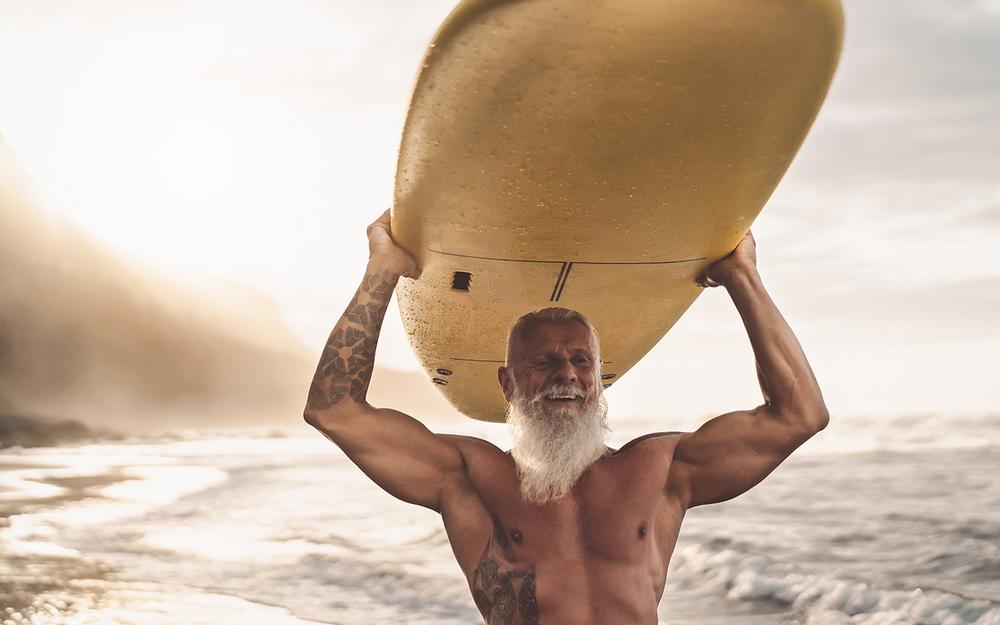
The normal biological ageing process does not cause problems until people are into their late 90s / Photo: AlessandroBiascioli / shutterstock
Before COVID, we were preparing an article for HCM called the Inverse Gym Law. This was based on a famous article published in The Lancet fifty years ago called the Inverse Care Law in which the author, the late Julian Tudor Hart, demonstrated that the volume and quality of healthcare was inversely related to need.
Our argument was that the fitness industry is also delivering a service that is inversely related to the potential for benefit.
Most of the people working with trainers and using gyms and fitness centres are young people, whereas the benefit that can be obtained from these resources increases with every decade of life that passes.
This is because the fitness gap opens up for most people in their early twenties when they get their first job – usually a sitting job – and their first car and that gap grows progressively wider until it reaches a point when it means the individual will drop below what has been called The Line, namely the level of ability where they can no longer carry out crucial tasks such as getting to the toilet in time.
The complicating factor is that the normal biological ageing process – which by itself does not cause problems until people are into their late 90s – does reduce resilience. This means that with each decade that goes by, fitness and ability are lost faster and are more difficult to recover.
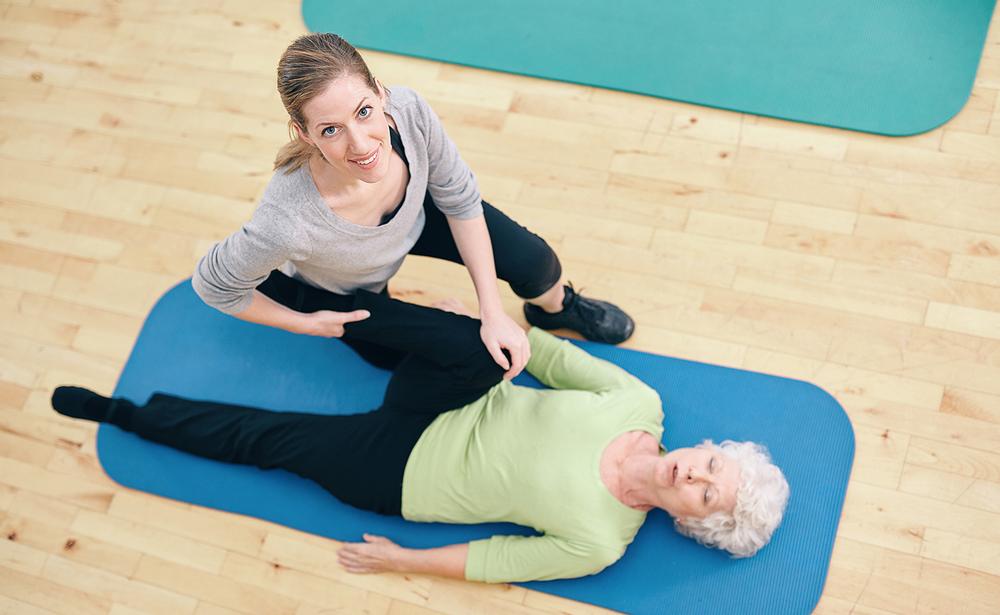
However the evidence is clear that people of any age, no matter how many long-term conditions they may have, can close the fitness gap if they undertake the right exercise regime.
Although deprivation remains a huge problem, many older people are well off financially and so – pre-pandemic – represented an untapped market for the fitness industry, but then along came COVID-19.
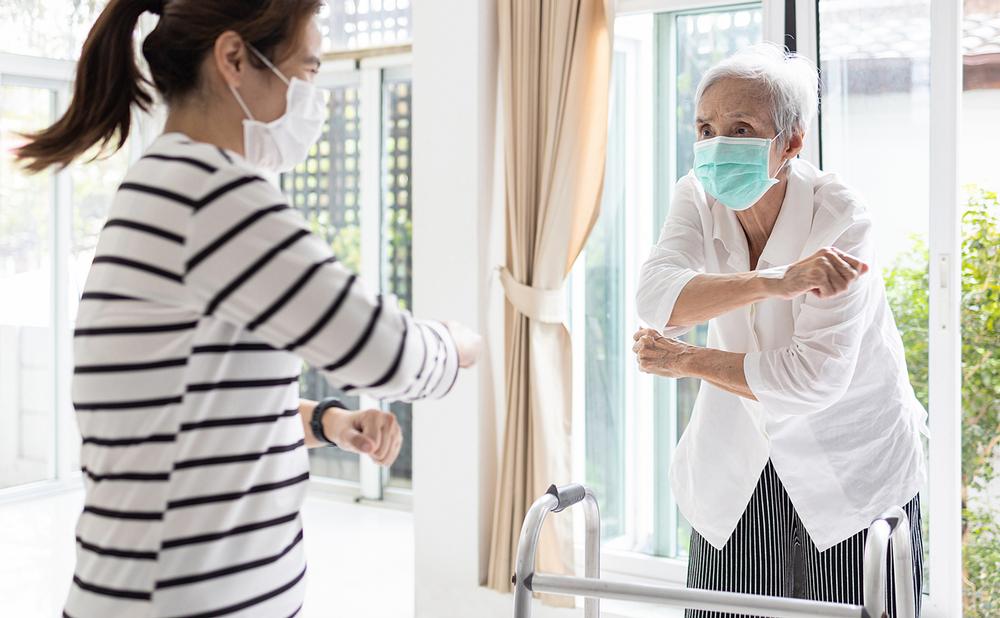
Learning from the pandemic Older people are at greater risk from coronavirus infection and for this reason are advised to practice what was initially called socially distancing – namely to avoid interaction with other, younger people, although it was emphasised in the prime minister’s first speech that getting out for exercise was very important.
COVID-19 has had a huge impact on older people in terms of fatalities, particularly in care homes, but what has emerged – more importantly – is the impact of lockdown on their health and this has been called the deconditioning pandemic, or the second pandemic.
The impact of this deconditioning is dramatically revealed in recent reports by AgeUK and the Centre for Ageing Better. One quarter of older people cannot walk as far and one fifth feel less steady on their feet and there have also been huge psychological impacts in terms of isolation and depression, which are both risk factors for dementia.
The need for reconditioning Evidence shows people can regain lost ability, no matter their age or the number of conditions they have, but how can this reconditioning be brought about?
Social care bears a great burden as a result of deconditioning among older people, but is prevented from taking action by the current ‘culture of care’, which to most people means doing things FOR others.
This approach was laid down in 1948 in the National Assistance Act, which made it clear that younger people with special needs, “the crippled, deaf, dumb and blind”, needed education to overcome their difficulties, whereas the aged simply needed ‘practical assistance”, either at home or in care homes.
As a result, a culture developed which assumed that every problem was due to ageing and could be solved by just doing things for people.
Persistent culture The Social Care Act of 2014 was much more enlightened and Section 2 emphasises the need to prevent the need for social care, but the culture has not changed.
The NHS is, by definition, a health service but in practice it is a National Disease Service and of course it has a vitally important role to play in, for example, treating stroke and providing joint replacement – two examples of the miracles of the second healthcare revolution – the high-tech revolution. The first being the Public Health Revolution of the 19th century.
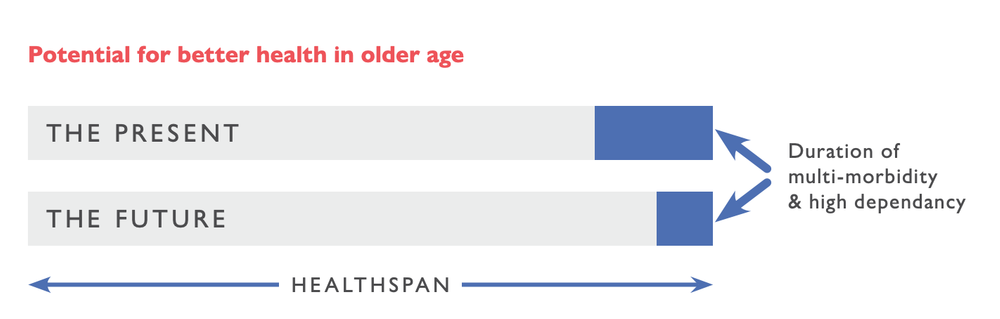
With additional problems posed by COVID-19, it’s unlikely the NHS will be able to rise to the challenge of reconditioning the elderly, which should actually be the first step in the development of a completely different approach and culture to help people live longer, better and have a shorter period of multi-morbidity and dependency at the end of life.
The opportunity In a major project organised by the Oxfordshire Activity Partnership, seventeen Active Partnerships are working towards a common set of objectives to help people live longer, better and to change the culture from a culture of care to a culture of enablement – or perhaps we could even use the term coaching – based on a definition of coaching as being activities to help people close the gap between potential and performance.
The key workforce are PTs and this means that the sector formerly known as the fitness industry is playing a key role in promoting wellbeing.
The term fitness of course is an accurate term, but it is so deeply associated with younger people that to change the culture it is better to use another term, and wellbeing is probably the single best term to use.
I believe the industry should change its brand from being a fitness industry, mostly working in real estate, to a wellbeing industry, working with people of any age or any level of health, either individually or in groups – online as well as in buildings.
Muir Gray is director of the optimal ageing programme at Oxford, a member of Active Oxfordshire and an Honorary Fellow of the Faculty of Sport and Exercise Medicine
Opinion: Kenny Butler – ukactive
Gyms, pools and leisure centres are essential places for the health and wellbeing of older adults, where they achieve not only greater physical activity levels, but also improved social connections, generating health, economic and social value.
The industry has proven these places are COVID-secure and that they’re more important than ever in this new chapter in the fight against COVID-19.
These places deliver 66 per cent of cancer rehabilitation and all the nation’s GP Exercise on Referral services. They’re also where 17.1m people reach the recommended levels of activity each week – second only to walking.
The industry now has a partnership with NHS England through social prescribing, and has put itself forward to help with the backlog of rehabilitation for elective surgeries and other rehabilitation needs in an ever-growing deconditioning crisis.
This industry is an essential service in the prevention and treatment of disease, as well as enhancing the physical and mental health of the nation.
Exercise interventions can shorten the period of dependency at the end of life / Photo: CGN089/shutterstock
The fitness industry can play a key role in promoting wellbeing in older people / Photo: Jacob Lund/shutterstock
Global Wellness Day (GWD) will mark its 15th anniversary on Saturday 13 June 2026, with the
theme: #JoyMagenta – a celebration of the healing qualities of simple gestures and activities
that spark joy.
Global luxury hospitality brand, Six Senses, has partnered with longevity healthcare provider,
HUM2N, to launch a clinic at Six Senses London, at The Whiteley.
As part of its first hotel partnership, Mayrlife – the medical health resort company known for its
site in Altaussee, Austria – has launched a day clinic at the Rosewood Vienna.
Premium London health club, KX Chelsea, will imminently unveil its most significant
redevelopment since its launch in 2002 to create an integrated wellness model combining
training, recovery and relaxation.
Rosewood Le Guanahani St Barth, on the northeast coast of Saint Barthélemy in the French
West Indies, is offering a programme of ocean-inspired yoga classes between 8-14 June to
celebrate Global Wellness Day (GWD).
Hotel de France, located on the British Isle of Jersey, has created a wellness retreat package
that includes a hot yoga session that will take place in Jersey Zoo’s butterfly sanctuary.
The Ritz-Carlton, Langkawi, in Malaysia, has revealed a schedule for Global Wellness Day
(GWD) that includes guided rainforest walks, mindful movement and guided coastal meditation
experiences.
Longevitix, a clinical platform for preventive and longevity medicine, has launched its AI-
powered intelligence system to help physicians deliver continuous, personalised longevity-
focused care at scale.
Atmantan Wellness Centre, an integrative wellness destination in Mulshi, near Pune in India, is
expanding its portfolio by adding a new centre in Hyderabad that will launch between 2028 and
2029.
A recent survey by the UK Spa Association (UKSA) into the industry’s approach to cancer care
has revealed that almost half of participating respondents (46 per cent) are unaware that
cancer is a disability and guests with a cancer diagnosis must be given
+ More news
COMPANY PROFILES
Pearl Tree Pearl Tree was established in 2014 by Soraya and
Sarry Jouzy with a mission to champion
personal w [more...]
+ More profiles
DIRECTORY
+ More directory
DIARY
15-18 Jun 2026 HLTH Europe RAI Convention Centre,Amsterdam,Netherlands
17-18 Jun 2026 Elevate London Excel London,London,United Kingdom