When fitness went digital, home workouts jumped from an estimated
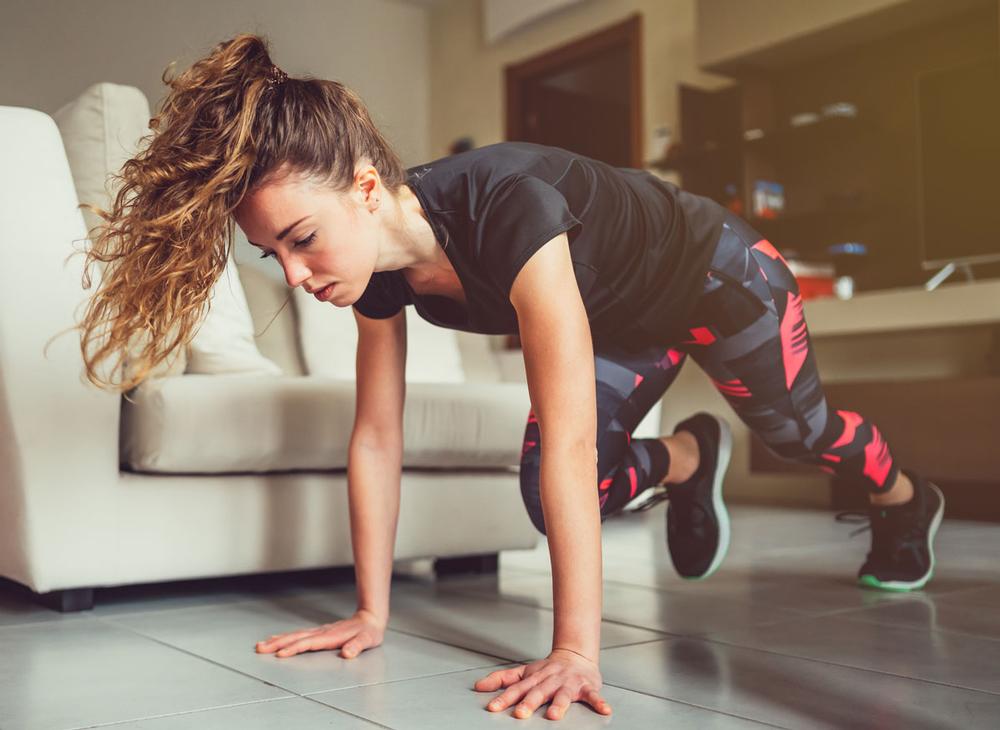
8 per cent to 53 per cent / Fusso pics/Shutterstock
COVID-19 opened a vast new space for individual responsibility which moved the focus onto daily movement, exercise, health improvement and wellbeing. Exercise became one of the few defined reasons people could leave their home during the lockdowns of 2020-21.
While the traditional sector lay closed or working at reduced capacity, home workouts jumped from an estimated 8 per cent to 53 per cent when fitness went digital. Outdoor exercise classes between lockdowns jumped more than 400 per cent and will remain popular for some time.
The new category of Connected Fitness took off: bundling hardware, software and a user experience captivating a growing audience. Three Connected Fitness unicorns were created in 2020 and more than $1bn (£0.7bn, €0.8bn) was invested in this new category in just one year. Celebrities, sports people, brands, sites, instructors, keen amateurs and PTs all took to digital, some successfully monetising the new offering against a wash of free product.
An annus horribilis Meanwhile, the traditional suppliers who once owned the industry lost a lot in their annus horribilis. The Leisure Database Company has trend data showing how the UK fitness sector has been recession proof during 1980-81, 1990-91, 2008-09 however, the pandemic has given the sector an unprecedented shock which dwarfs any recession.
No event has reduced occupancy levels to 65 per cent or less, no supplier or operator has modelled business being shuttered or hampered as in 2020.
The UK fitness industry private sector lost around £3.7bn (€4.3bn, $5bn) and the public sector £1.4 bn (€1.6bn, $2bn).
Pre-virus, London was trending as hard as New York or Los Angeles, with around 16,000 boutique classes each week, where the top brands sold 10 class packages for between £180-£250 (€207-€287, $250-$347). The private fitness clubs had 15.2 per cent penetration rate across the capital and the average monthly direct debit across the 549 clubs was £66.43 (€76, $92.)
The 271 public sector sites in the capital charged an average of £34.52 (€40, $49) and achieved a 5.6 per cent penetration rate. Figures show how the rest of the country was having a fitainment moment, I was often quoted as saying that fitness was enjoying a ‘golden period’ with growth across all sectors.
The industry is expected to shrink in the short term – to what extent will be covered in our full audit, to be published in our next State of the Fitness Industry Report.
Change is the norm A quick poll on Instagram and Twitter suggests the micro trends are transforming gatherings into on-demand platforms, but humans are, above all else, social animals, and the energies of cities comes from the gatherings. I, for one, couldn’t wait to exercise with others and a badass instructor, and this is where the industry’s power lies.
Exercise for the masses could be the legacy of the pandemic, as we move from crisis to recovery. A year is a long time for habits to change and new ones to form. What we considered ground-breaking is ever-evolving and merging into other sectors. Change should be considered the norm and hybrid exercise and movement is one of the consequences of lockdown.
Few scientists expect to see total eradication of the virus, so our thoughts need to turn to a self-charging hybrid-body approach to one’s personal fitness. To paraphrase a supplier’s tagline, your body is your machine. The population at large discovered COVID-needs-must activities which became the mother of invention for both strength, functional and cardio.
As we move from assessing and managing the complex series’ of risks and daily monitoring of infections, reported cases, hospitalisations, deaths and the R number we need to embrace wellbeing.
Ambassadors such as Sir David Attenborough and Chris Packham are encouraging people to reconnect with nature in a ten-minute connection. All local authorities have waiting lists for allotments and developers are including communal grow gardens in new developments.
Fitness needs to look for spaces which can be repurposed to cater for green initiatives which researchers have found good for mental health and exercise.
The concept of green premiums will be promoted as the UK hosts the COP26 climate summit in Glasgow in November 2021. Pope Francis has said it’s time to ‘change course’ and committed the Vatican to net zero emissions. Fitness brands and suppliers need to move in the same direction.
Catering for septugenarians The Pontiff has also set an annual day, the fourth Sunday in July, to honour older people. COVID-19 hit the oldest hardest: three quarters of those who have died in the UK have been over 75. Currently, less than 1 per cent of the population over 75 participate in sport or fitness.
The industry needs to rethink what it means to be old, when adults in this age bracket value their health and have accrued more wealth than any other age bracket. Seventy-five is the new 65, or for some, 50 plus. By 2031 more than 27 per cent of the population will be aged 70 plus, the industry can no longer ignore this huge percentage of the population.
There are around 11,900 local councils in the UK including town, parish, community, neighbourhood and village where we will see public health and wellness prioritised. Facilities embedded in these communities will lead the charge in empowering individuals to put their sedentary lifestyle behind them. I propose a new E-rating where E equals the overall exercise and indicator of the health of each neighbourhood. To administer the vaccine so successfully we needed a centralised organisation, in levelling up the health of the nation, we need the exact opposite.
COVID-19 is showing the NHS to be all-powerful in thought and deed. The population applauding on Thursday evenings was emotional and unifying during the darker moments. Going forward exercise, movement and wellness needs to be linked to health and education and considered from cradle to grave.
It’s time for a new megatrend of health and wellness. The convergence between fitness and health is here to stay and data will drive constant innovation in biodata.
The question is, when staying fit is the most important thing people can possibly do, how does the industry get the message across to the bulk of the population?
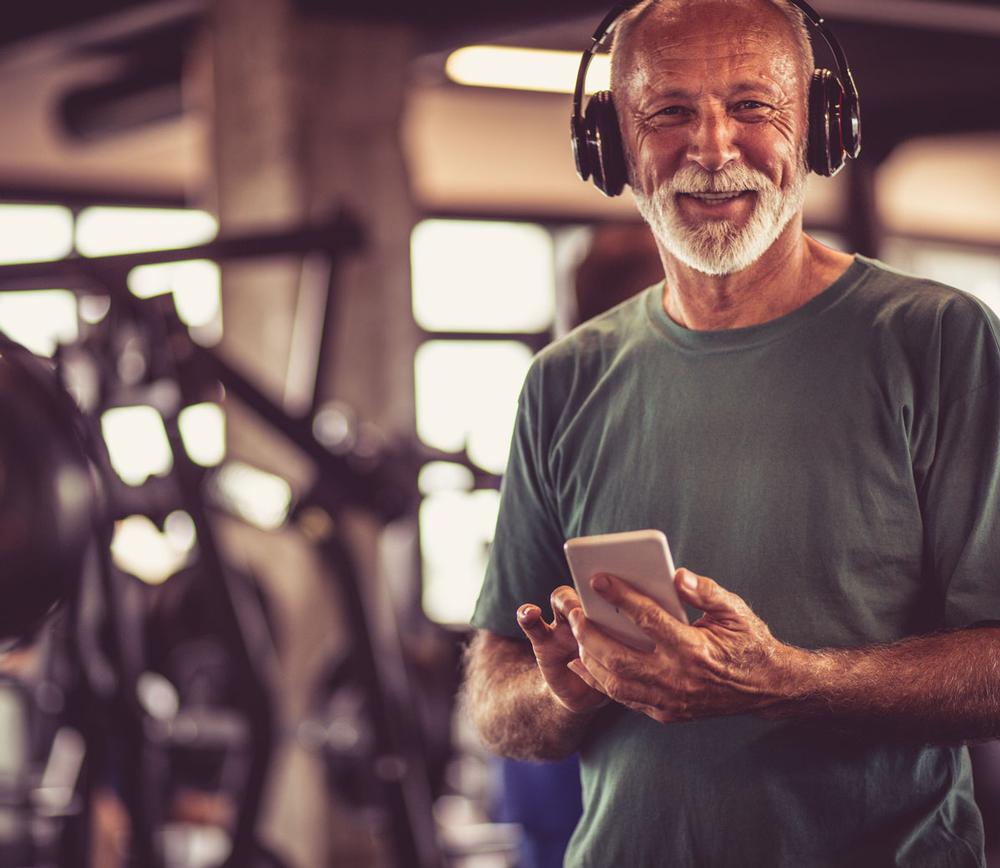
The industry needs to rethink what is old: 75 is now the new 65 or 50 plus for some / SHUTTERSTOCK/Mladen Zivkovic
A recent survey by the UK Spa Association (UKSA) into the industry’s approach to cancer care
has revealed that almost half of participating respondents (46 per cent) are unaware that
cancer is a disability and guests with a cancer diagnosis must be given
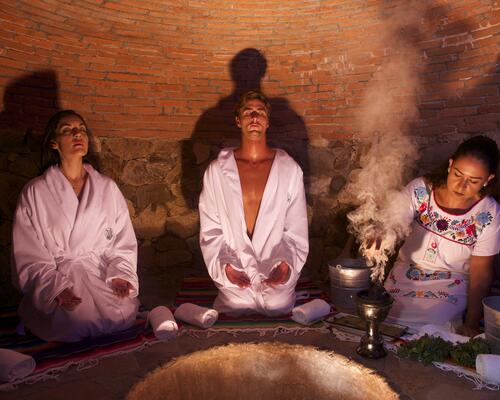
Mexican operator, Solmar Hotels and Resorts, is hosting a series of events in celebration of
Global Wellness Day, including a Temazcal ceremony at its Playa Grande Resort and Spa in Los
Cabos.
Mandarin Oriental has announced a standalone residence brand, Mansions, which will debut at
Emirates Palace, Mandarin Oriental Mansions, Abu Dhabi, in 2029.
Four Seasons Resort The Nam Hai in Hoi An, Vietnam, has put together a Global Wellness Day
(GWD) agenda with activations rooted in nature and shaped by four pillars of Joy – in
alignment with the day’s theme #JoyMagenta.
The Global Wellness Summit (GWS) will celebrate its 20th anniversary at the 2026 event in
Phuket, Thailand, later this year with the theme: The Science, Art and Soul of Wellness.
Auko, an all-inclusive development, is opening in Phong Nha in Vietnam in Q3 2026, with a
series of 30 tented eco-lodges and wellness hospitality operations by Lumina Wellbeing.
Therme Manchester’s 28-acre development, which will include interconnected glass pavilions
that measure 65,000sq m, will be the largest bathing and wellbeing attraction in the world once
complete, according to prof David Russell, CEO of Therme UK.
Naples Beach Club, a Four Seasons Resort, has opened a 2,800sq m spa called The Sanctuary,
with the design and concept inspired by the Native American people that populated Florida’s
Southwest coast – the Calusa.
Swire Hotels’ luxury hospitality brand Upper House has revealed it will roll out its two-day
House of Healing retreats at its three hotels in Hong Kong, Chengdu and Shanghai.
+ More news
COMPANY PROFILES
Bioline Jatò Bioline Jatò is a family Italian company
operating in the professional skincare
industry since 197 [more...]