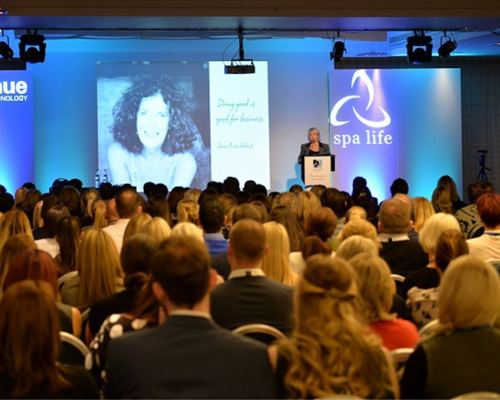
The Spa Life UK Convention returns from 21–23 June 2026 at Whittlebury Park Hotel, Spa &
Golf Resort, bringing together spa managers, directors and owners for two days of focused
education, meaningful connection and commercial insight. ... more
Safe Active studies show gym operators across Europe are being effective in controlling COVID-19 / Shutterstock/Halfpoint
As a scientist, I’ve seen more than enough of this virus to know that until we reach a stage of 100 per cent vaccination coverage across the world, we’ll face more mutations and disruptions to our lives, our businesses and our operations.
We must expect disruption but plan to thrive regardless.
Evidence-based approach A central pillar of maintaining the confidence of our stakeholders and customers has been our robust evidence-based approach to assessing risk and reducing the risk of transmission in our facilities. This evidence has contributed to the position we’ve been able to establish as an industry via the Safe Active study, which is conducted by Think Active, the research unit of Europe Active.
Working in partnership with the Advanced Wellbeing Research Centre, the Centre for Sport Studies at King Juan Carlos University in Spain and the UK Active Research Institute, Think Active released the first edition of the Safe Active study in December 2020. It has proven critical in providing an evidence base with which to engage policymakers across Europe.
For this reason, while hoping we were on an irreversible path into the new normal, we’ve also been working to ensure we’re in the strongest position possible as we enter what’s clearly a new and dangerous phase in our management of the pandemic.
The second Safe Active study The Safe Active study second edition released in December 2021, shows a reported rate of positive COVID-19 cases in the gym population as being 0.88 cases per 100,000 visits when taking into account numbers in the combined Safe Active study 2021 and the UK Active 2021 data sets.
These numbers were taken from a total sample of 185 million visits across nine countries. The self-reported data suggests again that fitness clubs and leisure centres (where industry-standard mitigation is in place) provide safe public spaces in which to exercise, with very low self-reported connections with cases of COVID-19.
This does not mean we should demand governments leave us alone to operate without consideration of the fact that we remain in the grip of a pandemic.
It’s essential we maintain the very highest standards of operation, as there’s no way we can deny the evidence of risk of aerosol transmission. Instead, we must redouble our efforts to ensure adequate ventilation in all our clubs. And we must also recognise the inequality that we see in our usage patterns and work tirelessly to build confidence in those customers who remain insufficiently comfortable to return.
Benefits outweigh the risks Our right to continue improving the health and wellbeing of communities will be linked to the degree to which we can demonstrate our commitment to doing so safely, and evidence that the benefit we provide far outweighs the risks that might be faced.
In that context, the only irreversible thing must be the commitment of the leaders of our industry to high-quality evidence-based research that helps us understand where we are today, and what we must do to arrive at where we want to be in the future.
Our sector has the opportunity to be among the primary drivers of wellbeing across Europe. Let’s keep making strides in that direction.
Within GO fit, an organisation I serve as chief scientific officer, we’ve taken a conscious decision to evolve our approach in line with the virus, with a focus on ensuring the safety of our customers and our team.
Throughout the crisis, we’ve worked with colleagues across the industry to build confidence in our safety and our professionalism.
Within our home market of Spain, this has resulted in a designation as an essential service in many regions, being protected as a consequence and able to remain open so we can continue to strengthen the wellbeing of the communities we serve.
A recent survey by the UK Spa Association (UKSA) into the industry’s approach to cancer care
has revealed that almost half of participating respondents (46 per cent) are unaware that
cancer is a disability and guests with a cancer diagnosis must be given
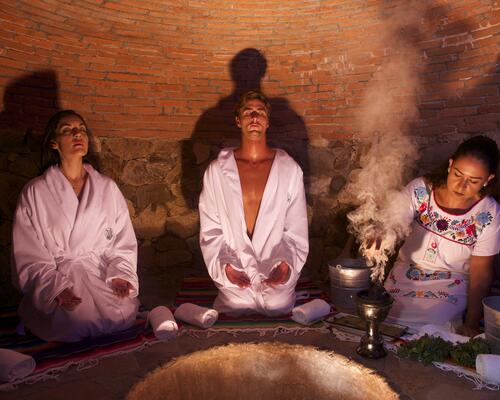
Mexican operator, Solmar Hotels and Resorts, is hosting a series of events in celebration of
Global Wellness Day, including a Temazcal ceremony at its Playa Grande Resort and Spa in Los
Cabos.
Mandarin Oriental has announced a standalone residence brand, Mansions, which will debut at
Emirates Palace, Mandarin Oriental Mansions, Abu Dhabi, in 2029.
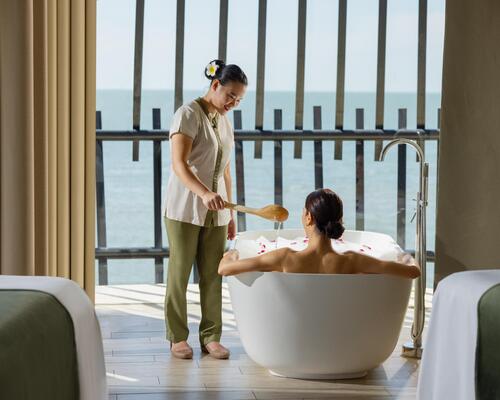
Four Seasons Resort The Nam Hai in Hoi An, Vietnam, has put together a Global Wellness Day
(GWD) agenda with activations rooted in nature and shaped by four pillars of Joy – in
alignment with the day’s theme #JoyMagenta.
The Global Wellness Summit (GWS) will celebrate its 20th anniversary at the 2026 event in
Phuket, Thailand, later this year with the theme: The Science, Art and Soul of Wellness.
Auko, an all-inclusive development, is opening in Phong Nha in Vietnam in Q3 2026, with a
series of 30 tented eco-lodges and wellness hospitality operations by Lumina Wellbeing.
Therme Manchester’s 28-acre development, which will include interconnected glass pavilions
that measure 65,000sq m, will be the largest bathing and wellbeing attraction in the world once
complete, according to prof David Russell, CEO of Therme UK.
Naples Beach Club, a Four Seasons Resort, has opened a 2,800sq m spa called The Sanctuary,
with the design and concept inspired by the Native American people that populated Florida’s
Southwest coast – the Calusa.
Swire Hotels’ luxury hospitality brand Upper House has revealed it will roll out its two-day
House of Healing retreats at its three hotels in Hong Kong, Chengdu and Shanghai.