GWI launches White Paper Series: ‘Understanding Wellness’
By Jane Kitchen 01 Aug 2019
The Global Wellness Institute (GWI), a nonprofit research and educational resource for the wellness industry, has launched a new white paper series with an aim to bring clear, expert insights on how wellness is evolving now and into the future.
The ‘Understanding Wellness’ white paper series are designed to be a “go-to primer” for policymakers, businesspeople, researchers and students.
Authored by GWI senior research fellows Ophelia Yeung and Katherine Johnston, the first paper, The Global Forces Driving the Growth of the Wellness Economy, examines the four macro forces that are propelling consumer demand and the ongoing, surging growth of the wellness economy around the world.
Future topics will include important definitions and terminologies, a thorough history of wellness, and the wellness movement’s social and economic implications.
“Wellness is a concept that is both ancient and contemporary,” said Yeung. “Because of that, most people have an intuitive understanding of what it means, how to apply it to daily life, or how to create business opportunities out of it. The wellness economy is now a US$4.2tr global industry. Yet, the questions that we most often encounter are: ‘What is wellness?’ ‘Why is it growing?’ and ‘What does it really mean?’ In the ‘Understanding Wellness’ series, we want to answer these questions because a common language for and basic understanding of wellness can help bridge the divide with other industries and disciplines and broaden its applications and impacts.”
The white paper suggests that in recent decades, vast economic, technological, social, demographic, and environmental changes have transformed every aspect of our lives — our homes and communities, food, work, shopping, education, friendship, leisure, travel, etc. — with both positive and negative impacts on our wellbeing, and that the growth of wellness practices and businesses is a consumer response to these developments.
The paper outlines the four forces driving the wellness boom, as follows:
1) The world’s population is growing sicker, lonelier and older. Deteriorating health, the spread of loneliness and mental illness, and the ramifications of aging all negatively impact people’s happiness and wellbeing. In response, consumers around the world are proactively turning to wellness approaches as alternatives to address these challenges.
2) The environmental crisis is also a health crisis. Environmental degradation and its causes are bringing immediate, direct, severe and widespread harm to human health and wellbeing—from the air we breathe to how we procure and consume food to how we live and travel. As people become aware of these risks, they’re seeking out alternative lifestyles that are simultaneously healthier for themselves and more sustainable for the planet.
3) Health systems are failing to keep up while the economic burden rises. Health systems are failing in countries all around the world, and the economic burden is unsustainable. Therefore, it’s not surprising that consumers, employers and even governments are turning to wellness approaches to complement and address deficiencies in healthcare and to turn from “sick care” to prevention.
4) Demographics, value systems and lifestyles are all evolving toward wellness. Consumer values are changing fast, moving toward a lifestyle of wellness that is fundamentally shifting consumer behaviours and consumption patterns. This shift is bolstered by the rise of the middle class, urbanisation, the accessibility of so many new options, and a burgeoning concern about the impact of ubiquitous technology.
“Over the last 11 years, our work has focused on defining and measuring the industries that comprise the wellness economy — and GWI has become the leading resource for wellness industry data,” said Johnston. “Through that work, we have built up a vast conceptual knowledge of wellness, its drivers, and its implications. We’re excited to present foundational information about wellness through this new white paper series.”
The first paper examines the four macro forces that are propelling consumer demand and the ongoing, surging growth of the wellness economy around the world Credit: Shutterstock/524257324
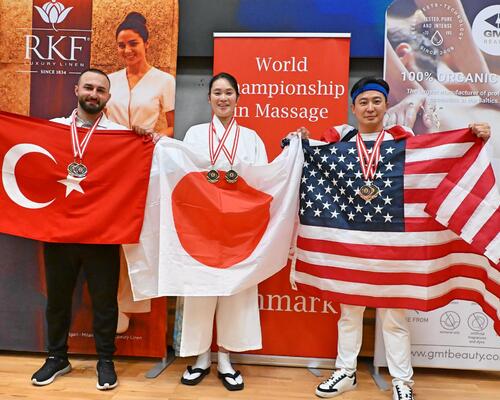
Turkey came first at this year’s World Championship in Massage between 3-5 July in Copenhagen, Denmark. Organised by the International Massage Association (IMA), the ninth edition of this tournament saw the highest number of participants ...More
Synergy – The Retreat Show, the global trade show for retreats, has launched a global research initiative that will provide insights into the retreat sector from both consumer and industry perspectives. The resulting report, which ...More
The Wellness Tourism Association (WTA) has published a non-regulatory global industry framework designed to ensure the retreat market offers responsible experiences. The Six Principles for Responsible Retreats have been created to provide a shared reference ...More
A new survey of international spa practitioners shows that stress, burnout and wellbeing concerns have caused one in three respondents to consider leaving the industry. The Therapist Wellbeing Report is based on responses from 159 ...More
Wellness hotels generating less than US$1 million (€932,700, £785,200) – or 10 per cent of total revenue from wellness and leisure – recorded the strongest RevPAR and TRevPAR growth in 2025 across categories when compared ...More
Robert Thurman, an expert on Tibetan Buddhism and the spiritual director of Menla Retreat and Dewa Spa in Woodstock, has died, aged 84. Thurman – also known for being father to actress Uma Thurman – ...More
Fairmont Cheshire, The Mere, has opened today (10 July) near Knutsford in the north-west of England with a 1,715sq m Fairmont Spa that has been designed using a ‘Wellness without Walls’ concept. The Select Group, ...More
Marriott International has partnered with Fitwel, a healthy building certification system that aims to optimise occupant health. Marriott has become Fitwel’s first Enterprise Partner and the new healthy building solutions will be implemented across the ...More
Becky Pelkonen, the sauna advocate and researcher, has unveiled the draft of a global public sauna-bathing charter. The ten guiding principles form the foundation for people building, running and championing public sauna-bathing. The draft, which ...More
Lefay Resorts, the portfolio of two luxury wellness properties in Italy, has added emotional dance classes and group cold plunge sessions in response to market demand for social connection. The brand says it is encouraging ...More
Preidlhof Luxury DolceVita Resort, the destination resort and spa in Naturno, South Tyrol in Italy, will reveal a new spa in February 2027, designed by wellness expert and consultant Patrizia Bortolin. Bortolin has been the ...More
Anna Bjurstam – who left her role as Wellness Pioneer at Six Senses Hotels and Resorts at the end of June – has launched a new wellness, longevity and 'consciousness consultancy' called Wahayla. Bjurstam is ...More
In the fast-paced world of fitness and wellness, where high-intensity workouts push us to
our limits and the sweat pours, the importance of efficient recovery cannot be overstated. ... more