19-21 Jul 2026
The Global Ambassador ,
Phoenix,
United States
|
22-25 Jul 2026
The Global Ambassador ,
Phoenix,
United States
|
23-26 Aug 2026
The Riviera Maya Edition Kanai,
Playa del Carmen,
Mexico
|
10-12 Sep 2026
MITEC Kuala Lumpur,Malaysia,
Malaysia
|
18-20 Sep 2026
Sheraton Norfolk Waterside,
Norfolk,
United States
|
22-23 Sep 2026
Four Seasons Hotel Bangkok at Chao Phraya River,
Bangkok ,
Thailand
|
27-29 Sep 2026
Farnham Estate Spa & Golf Resort,
Ireland
|
29 Sep - 02 Oct 2026
Pical Resort, Valamar Collection,
Porec,
Croatia
|
|
|
 |
| Heavily processed foods cause overeating and weight gain, study finds |
|
|
| By Jane Kitchen 17 May 2019 |

Participants, on average, gained 0.9 kilograms, or 2 pounds, while they were on the ultra-processed diet and lost an equivalent amount on the unprocessed diet Credit: shutterstock/182011403
|
|
People eating ultra-processed foods ate more calories and gained more weight than when they ate a minimally processed diet, according to results from a National Institutes of Health study.
The difference occurred even though meals provided to the volunteers in both the ultra-processed and minimally processed diets had the same number of calories and macronutrients. The results were published in Cell Metabolism.
This small-scale study of 20 adult volunteers, conducted by researchers at the NIH's National Institute of Diabetes and Digestive and Kidney Diseases (NIDDK), is the first randomized controlled trial examining the effects of ultra-processed foods as defined by the NOVA classification system. This system considers foods "ultra-processed" if they have ingredients predominantly found in industrial food manufacturing, such as hydrogenated oils, high-fructose corn syrup, flavoring agents, and emulsifiers.
Previous observational studies looking at large groups of people had shown associations between diets high in processed foods and health problems. But, because none of the past studies randomly assigned people to eat specific foods and then measured the results, scientists could not say for sure whether the processed foods were a problem on their own, or whether people eating them had health problems for other reasons, such as a lack of access to fresh foods.
"Though we examined a small group, results from this tightly controlled experiment showed a clear and consistent difference between the two diets," said Kevin D. Hall, Ph.D., an NIDDK senior investigator and the study's lead author. "This is the first study to demonstrate causality – that ultra-processed foods cause people to eat too many calories and gain weight."
For the study, researchers admitted 20 healthy adult volunteers, 10 male and 10 female, to the NIH Clinical Center for one continuous month and, in random order for two weeks on each diet, provided them with meals made up of ultra-processed foods or meals of minimally processed foods. For example, an ultra-processed breakfast might consist of a bagel with cream cheese and turkey bacon, while the unprocessed breakfast was oatmeal with bananas, walnuts, and skim milk.
The ultra-processed and unprocessed meals had the same amount of calories, sugars, fiber, fat, and carbohydrates, and participants could eat as much or as little as they wanted.
On the ultra-processed diet, people ate about 500 calories more per day than they did on the unprocessed diet. They also ate faster on the ultra-processed diet and gained weight, whereas they lost weight on the unprocessed diet. Participants, on average, gained 0.9 kilograms, or 2 pounds, while they were on the ultra-processed diet and lost an equivalent amount on the unprocessed diet.
"We need to figure out what specific aspect of the ultra-processed foods affected people's eating behaviour and led them to gain weight," Hall said. "The next step is to design similar studies with a reformulated ultra-processed diet to see if the changes can make the diet effect on calorie intake and body weight disappear."
For example, slight differences in protein levels between the ultra-processed and unprocessed diets in this study could potentially explain as much as half the difference in calorie intake.
"Over time, extra calories add up, and that extra weight can lead to serious health conditions," said NIDDK Director Griffin P. Rodgers, M.D. "Research like this is an important part of understanding the role of nutrition in health and may also help people identify foods that are both nutritious and accessible – helping people stay healthy for the long term."
While the study reinforces the benefits of unprocessed foods, researchers note that ultra-processed foods can be difficult to restrict. "We have to be mindful that it takes more time and more money to prepare less-processed foods," Hall said. "Just telling people to eat healthier may not be effective for some people without improved access to healthy foods."
|
|
|
| News |
| 1 to 12 of 9512 news stories |
|
|
|
14 Jul 2026
Turkey came first at this year’s World Championship in Massage between 3-5 July in Copenhagen, Denmark. Organised by the International Massage Association (IMA), the ninth edition of this tournament saw the highest number of participants ... More
|
 |
|
|
|
14 Jul 2026
Synergy – The Retreat Show, the global trade show for retreats, has launched a global research initiative that will provide insights into the retreat sector from both consumer and industry perspectives. The resulting report, which ... More
|
|
|
|
|
14 Jul 2026
The Wellness Tourism Association (WTA) has published a non-regulatory global industry framework designed to ensure the retreat market offers responsible experiences. The Six Principles for Responsible Retreats have been created to provide a shared reference ... More
|
|
|
|
|
12 Jul 2026
A new survey of international spa practitioners shows that stress, burnout and wellbeing concerns have caused one in three respondents to consider leaving the industry. The Therapist Wellbeing Report is based on responses from 159 ... More
|
|
|
|
|
09 Jul 2026
Wellness hotels generating less than US$1 million (€932,700, £785,200) – or 10 per cent of total revenue from wellness and leisure – recorded the strongest RevPAR and TRevPAR growth in 2025 across categories when compared ... More
|
|
|
|
|
08 Jul 2026
Robert Thurman, an expert on Tibetan Buddhism and the spiritual director of Menla Retreat and Dewa Spa in Woodstock, has died, aged 84. Thurman – also known for being father to actress Uma Thurman – ... More
|
|
|
|
|
10 Jul 2026
Fairmont Cheshire, The Mere, has opened today (10 July) near Knutsford in the north-west of England with a 1,715sq m Fairmont Spa that has been designed using a ‘Wellness without Walls’ concept. The Select Group, ... More
|
|
|
|
|
10 Jul 2026
Marriott International has partnered with Fitwel, a healthy building certification system that aims to optimise occupant health. Marriott has become Fitwel’s first Enterprise Partner and the new healthy building solutions will be implemented across the ... More
|
|
|
|
|
10 Jul 2026
Becky Pelkonen, the sauna advocate and researcher, has unveiled the draft of a global public sauna-bathing charter. The ten guiding principles form the foundation for people building, running and championing public sauna-bathing. The draft, which ... More
|
|
|
|
|
09 Jul 2026
Lefay Resorts, the portfolio of two luxury wellness properties in Italy, has added emotional dance classes and group cold plunge sessions in response to market demand for social connection. The brand says it is encouraging ... More
|
|
|
|
|
03 Jul 2026
Preidlhof Luxury DolceVita Resort, the destination resort and spa in Naturno, South Tyrol in Italy, will reveal a new spa in February 2027, designed by wellness expert and consultant Patrizia Bortolin. Bortolin has been the ... More
|
|
|
|
|
10 Jul 2026
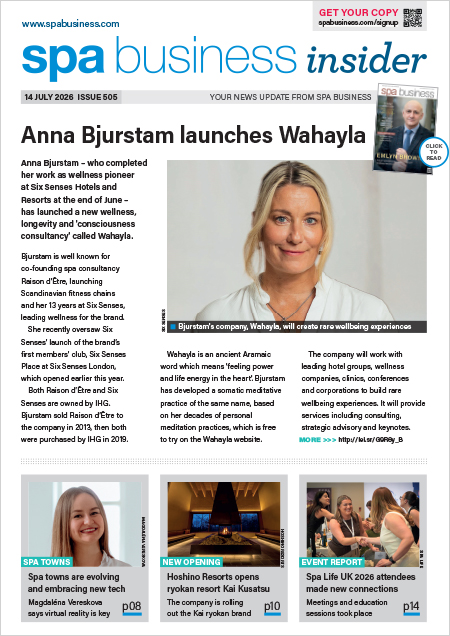
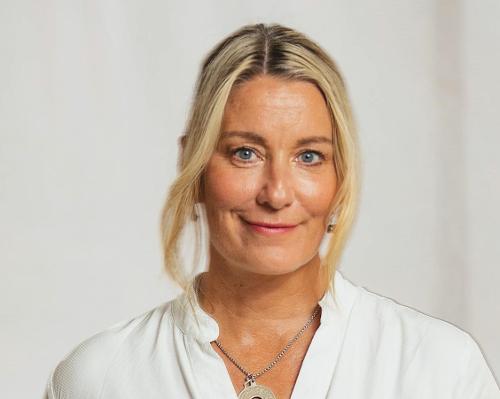
Anna Bjurstam – who left her role as Wellness Pioneer at Six Senses Hotels and Resorts at the end of June – has launched a new wellness, longevity and 'consciousness consultancy' called Wahayla. Bjurstam is ... More
|
|
|
|
|
| bbspa_Group |
| The technical advice offered by bbspa is
delivered via four specialist departments which offer
[more] |
|
|
 |
|