Comfort Zone
Comfort Zone
Comfort Zone
 
EMPLOYERS: POST A JOB
Free ezines & magazines
News Video Training Products Magazines Spa Business spa-kit Handbook What's on Advertise Subscribe
Catalogue gallery
More catalogues
Diary dates
Powered by leisurediary.com
21-23 Jun 2026
Midlands (Venue TBA), Liphook, United Kingdom
22-22 Jun 2026
Worldwide,
26-27 Jun 2026
Tobacco Docks, London, United Kingdom
03-05 Jul 2026
Copenhagen, Copenhagen, Denmark
19-21 Jul 2026
The Global Ambassador , Phoenix, United States
22-25 Jul 2026
The Global Ambassador , Phoenix, United States
23-26 Aug 2026
The Riviera Maya Edition Kanai, Playa del Carmen, Mexico
10-12 Sep 2026
MITEC Kuala Lumpur,Malaysia, Malaysia
WHO reveals shocking US$300bn inactivity timebomb
By Frances Marcellin 19 Oct 2022
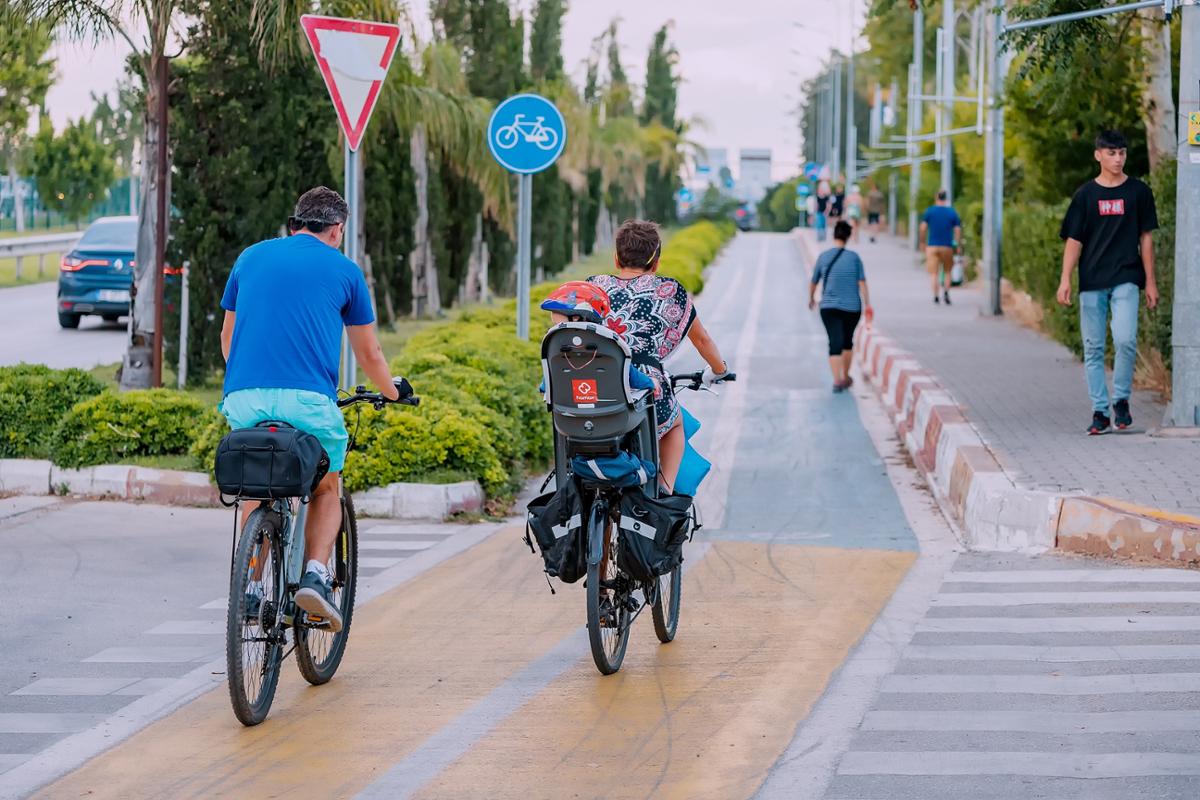
Only 40 per cent of the 194 countries tracked by the WHO have road design standards that make walking and cycling safer Credit: frantic00 / Shutterstock
The World Health Organization’s (WHO) has released new report Global Status Report on Physical Activity 2022
Report shows that physical inactivity from 2020-2030 will result in 500m people developing a preventable non-communicable disease (NCD) at a cost of US$300bn
Those meeting recommended levels of physical activity – 300 minutes a week for adults – reduce risk of premature death by 20-30 per cent
Two leading causes of these new NCD cases are hypertension (47 per cent) and depression (43 per cent)
A new report from The World Health Organization (WHO), Global Status Report on Physical Activity 2022, has revealed that physical inactivity between 2020 and 2030 will result in almost 500m people developing a preventable, non-communicable disease (NCD), at a cost of US$300bn, if governments do not act urgently.

The report analysed data from 194 countries to check the extent to which governments are implementing policy recommendations for physical activity across all ages and abilities – as outlined in WHO’s Global Action Plan on Physical Activity (GAPPA) 2018–2030. It discovered that the global target of a 15 per cent reduction in the level of physical inactivity in adults will not be met if efforts aren’t accelerated.

This conclusion is partly due to WHO’s findings that 81 per cent of boys and girls aged 11-17 are engaging in less than an hour of physical activity each day, identifying an urgent need to scale and redouble efforts to meet the 15 per cent target. Those who meet recommended levels of physical activity – 300 minutes a week for adults – have a 20-30 per cent reduced risk of premature death.

Less than half of the 194 countries surveyed have a national physical activity policy. Out of those who do, less than 40 per cent are operational. Just 30 per cent of countries have national physical activity guidelines for all age groups. Adults are monitored in most countries, but only 75 per cent monitor physical activity in adolescents and less than 30 per cent monitor physical activity in children under five years of age.

“We need more countries to scale up implementation of policies to support people to be more active through walking, cycling, sport and other physical activity,” said Dr Tedros Adhanom Ghebreyesus, WHO director general. “The benefits are huge, not only for the physical and mental health of individuals but also for societies, environments and economies. We hope countries and partners will use this report to build more active, healthier and fairer societies for all.”

According to the WHO, NCDs are currently responsible for the death of 41m people each year. The main types are cardiovascular (such as heart attacks and strokes), which account for most deaths at 17.9m per year, cancers, chronic respiratory diseases (such as asthma) and diabetes.

The WHO predicts that two causes of new cases of NCDs – those developed 2020-2030 – will occur because of hypertension (47 per cent) and depression (43 per cent). “The new cases of these two diseases will account for 22 per cent and 28 per cent respectively of total direct health care costs,” states the WHO. “Meanwhile 21 per cent of costs will be incurred for the treatment of dementia, even though this only accounts for 3 per cent of total preventable cases.” The cost is high due to the high-cost nature of dementia treatment.

The report underlines that around 7-8 per cent of all cases of cardiovascular disease, depression and dementia, and about 5 per cent of type-2 diabetes cases, could be prevented if people were more active.

Some of the barriers to progression include: inequalities in levels of physical activity between women and men (which exist in most countries), girls and boys, old and young and the socioeconomically advantaged and disadvantaged; environments that are not conducive to activity – only 40 per cent of countries have road design standards that make walking and cycling safer; and the promotion of physical activity from healthcare providers as part of patient care.

The report also highlights that the economic impact of physical inactivity is “unequally distributed across regions” and is “disproportionate in relation to the disease burden”. The largest economic cost will occur among high-income countries, accounting for 70 per cent of expenditure.

To help countries increase levels of participation WHO set out evidence-based GAPPA policy areas in 2018: active societies, active environments, active people and active systems. However, while carrying out research for the new Global Status Report on Physical Activity 2022report, significant gaps in global data were found to exist, making it difficult to track progress on important policy actions, such as the provision of public open space, walking and cycling infrastructure and physical education in schools.

“We're missing globally approved indicators to measure access to parks, cycle lanes, foot paths – even though we know that data does exist in some countries – and consequently, we cannot report or track the global provision of infrastructure that will facilitate increases in physical activity,” said Dr Fiona Bull, head of WHO’s physical activity unit. “It can be a vicious circle, as no indicator and no data leads to no tracking and no accountability, and then too often, to no policy and no investment.

“What gets measured gets done, and we have some way to go to comprehensively and robustly track national actions on physical activity.”


News
1 to 12 of 9479 news stories
12 Jun 2026
Global luxury hospitality brand, Six Senses, has partnered with longevity healthcare provider, HUM2N, to launch a clinic at Six Senses London, at The Whiteley. This collaboration is significant as it reflects a shift by Six ... More
10 Jun 2026
Premium London health club, KX Chelsea, is gearing up to unveil its most significant redevelopment since its launch in 2002. The club has been reimagined to create an integrated wellness model combining training, recovery and ... More
15 Jun 2026
Barons Eden, the UK parent company that operates luxury destination properties in England, has rebranded to become Hiddenwell. The change to the parent identity was carried out following research conducted to help the business strengthen ... More
09 Jun 2026
Hotel de France, located on the British Isle of Jersey, has created a wellness retreat package that includes a hot yoga session that will take place in Jersey Zoo’s butterfly sanctuary. The all-inclusive two-night Ayush ... More
08 Jun 2026
Longevitix, a clinical platform for preventive and longevity medicine, has launched its AI-powered intelligence system to help physicians deliver continuous, personalised longevity-focused care at scale. Longevitix combines years of scattered patient data into a complete ... More
07 Jun 2026
Luxury wellness resort, The Retreat Costa Rica, has introduced its Vida Mía Longevity Centre at the property’s Vida Mía Healing Centre and Spa.  The longevity centre adds physician-guided programming to the resort, which was founded ... More
08 Jun 2026
Atmantan Wellness Centre, an integrative wellness destination in Mulshi, near Pune in India, is expanding its portfolio by adding a new centre in Hyderabad that will launch between 2028 and 2029. Atmantan is a retreat ... More
11 Jun 2026
As part of its first hotel partnership, Mayrlife – the medical health resort company known for its site in Altaussee, Austria – has launched a day clinic at the Rosewood Vienna. Mayrlife offers holistic health ... More
10 Jun 2026
Rosewood Le Guanahani St Barth, on the northeast coast of Saint Barthélemy in the French West Indies, is offering a programme of ocean-inspired yoga classes between 8-14 June to celebrate Global Wellness Day (GWD). GWD ... More
09 Jun 2026
The Ritz-Carlton, Langkawi, in Malaysia, has revealed a schedule for Global Wellness Day (GWD) that includes guided rainforest walks, mindful movement and guided coastal meditation experiences. Founded in 2012 by Belgin Aksoy in Turkey, GWD ... More
05 Jun 2026
Mexican operator, Solmar Hotels and Resorts, is hosting a series of events in celebration of Global Wellness Day, including a Temazcal ceremony at its Playa Grande Resort and Spa in Los Cabos. The not-for-profit movement, ... More
12 Jun 2026
Global Wellness Day (GWD) marked its 15th anniversary on Saturday 13 June 2026, with the theme: #JoyMagenta – a celebration of the healing qualities of simple gestures and activities that spark joy. Founded in 2012 ... More
     
International SPA Association - iSPA
Templespa Ltd
Company Profile
We Work Well Inc
In 2019 Monica Helmstetter and Lucy Hugo founded the American hosted buyer event company We Work [more]
 
MORE PROFILES
Featured Supplier
Meet Desert Therapy: Aromatherapy Associates' first new blend in seven years
There is a particular quality of stillness found only in the desert. ... more
International SPA Association - iSPA
Product news
Pharmos Natur launches Lunar Skin Ritual using products designed to work at night
HPO Tech introduces hyperbaric chamber, Oyster
Glow beyond protection: meet Comfort Zone Hydramemory Hybrid Glow SPF 30
Rebalance Tech ramps up Impulse rollout
Manduka debuts premium P/ROX hybrid fitness mat
Voya launches Resurge Hair and Scalp Elixir and spa treatments
Directory

 
JOBS
NEWS
VIDEO
TRAINING
PRODUCTS
MAGAZINE
 
SPA BUSINESS
SPA-KIT.NET
SPA BUSINESS HANDBOOK
SUBSCRIBE
ADVERTISE
FREE DIGITAL SUBSCRIPTIONS
CONTACT US

Leisure Media
Tel: +44 (0)1462 431385

©Cybertrek 2026


Comfort Zone
Comfort Zone
Comfort Zone
Comfort Zone
News   Products   Magazine
NEWS
WHO reveals shocking US$300bn inactivity timebomb
POSTED 19 Oct 2022 . BY Frances Marcellin
Only 40 per cent of the 194 countries tracked by the WHO have road design standards that make walking and cycling safer Credit: frantic00 / Shutterstock
The World Health Organization’s (WHO) has released new report Global Status Report on Physical Activity 2022
Report shows that physical inactivity from 2020-2030 will result in 500m people developing a preventable non-communicable disease (NCD) at a cost of US$300bn
Those meeting recommended levels of physical activity – 300 minutes a week for adults – reduce risk of premature death by 20-30 per cent
Two leading causes of these new NCD cases are hypertension (47 per cent) and depression (43 per cent)
A new report from The World Health Organization (WHO), Global Status Report on Physical Activity 2022, has revealed that physical inactivity between 2020 and 2030 will result in almost 500m people developing a preventable, non-communicable disease (NCD), at a cost of US$300bn, if governments do not act urgently.

The report analysed data from 194 countries to check the extent to which governments are implementing policy recommendations for physical activity across all ages and abilities – as outlined in WHO’s Global Action Plan on Physical Activity (GAPPA) 2018–2030. It discovered that the global target of a 15 per cent reduction in the level of physical inactivity in adults will not be met if efforts aren’t accelerated.

This conclusion is partly due to WHO’s findings that 81 per cent of boys and girls aged 11-17 are engaging in less than an hour of physical activity each day, identifying an urgent need to scale and redouble efforts to meet the 15 per cent target. Those who meet recommended levels of physical activity – 300 minutes a week for adults – have a 20-30 per cent reduced risk of premature death.

Less than half of the 194 countries surveyed have a national physical activity policy. Out of those who do, less than 40 per cent are operational. Just 30 per cent of countries have national physical activity guidelines for all age groups. Adults are monitored in most countries, but only 75 per cent monitor physical activity in adolescents and less than 30 per cent monitor physical activity in children under five years of age.

“We need more countries to scale up implementation of policies to support people to be more active through walking, cycling, sport and other physical activity,” said Dr Tedros Adhanom Ghebreyesus, WHO director general. “The benefits are huge, not only for the physical and mental health of individuals but also for societies, environments and economies. We hope countries and partners will use this report to build more active, healthier and fairer societies for all.”

According to the WHO, NCDs are currently responsible for the death of 41m people each year. The main types are cardiovascular (such as heart attacks and strokes), which account for most deaths at 17.9m per year, cancers, chronic respiratory diseases (such as asthma) and diabetes.

The WHO predicts that two causes of new cases of NCDs – those developed 2020-2030 – will occur because of hypertension (47 per cent) and depression (43 per cent). “The new cases of these two diseases will account for 22 per cent and 28 per cent respectively of total direct health care costs,” states the WHO. “Meanwhile 21 per cent of costs will be incurred for the treatment of dementia, even though this only accounts for 3 per cent of total preventable cases.” The cost is high due to the high-cost nature of dementia treatment.

The report underlines that around 7-8 per cent of all cases of cardiovascular disease, depression and dementia, and about 5 per cent of type-2 diabetes cases, could be prevented if people were more active.

Some of the barriers to progression include: inequalities in levels of physical activity between women and men (which exist in most countries), girls and boys, old and young and the socioeconomically advantaged and disadvantaged; environments that are not conducive to activity – only 40 per cent of countries have road design standards that make walking and cycling safer; and the promotion of physical activity from healthcare providers as part of patient care.

The report also highlights that the economic impact of physical inactivity is “unequally distributed across regions” and is “disproportionate in relation to the disease burden”. The largest economic cost will occur among high-income countries, accounting for 70 per cent of expenditure.

To help countries increase levels of participation WHO set out evidence-based GAPPA policy areas in 2018: active societies, active environments, active people and active systems. However, while carrying out research for the new Global Status Report on Physical Activity 2022report, significant gaps in global data were found to exist, making it difficult to track progress on important policy actions, such as the provision of public open space, walking and cycling infrastructure and physical education in schools.

“We're missing globally approved indicators to measure access to parks, cycle lanes, foot paths – even though we know that data does exist in some countries – and consequently, we cannot report or track the global provision of infrastructure that will facilitate increases in physical activity,” said Dr Fiona Bull, head of WHO’s physical activity unit. “It can be a vicious circle, as no indicator and no data leads to no tracking and no accountability, and then too often, to no policy and no investment.

“What gets measured gets done, and we have some way to go to comprehensively and robustly track national actions on physical activity.”
RELATED STORIES
New Deloitte report finds the health and fitness sector contributes up to US$91.22bn a year to global GDP


A new report by Deloitte, outlining the social and economic value of the global health and fitness industry, has been released by The Global Health & Fitness Alliance (GHFA), in collaboration with IHRSA.
Obesity causes 1.2m premature deaths a year in Europe, says World Health Organization


According to The World Health Organization's recently-released research study, WHO European Regional Obesity Report, a third of children and almost two-thirds of adults in Europe are obese.
Prehab4Cancer programme cuts treatment time for cancer patients


A new cancer prehabilitation programme is achieving groundbreaking results by bringing the health and fitness and activity sectors together with medics.
Global Health and Fitness Alliance commissions Deloitte to prove the value of the sector


The Global Health and Fitness Alliance (GHFA) has commissioned Deloitte to produce a major new report, The Economic Impact of the Health and Fitness Industry, with the support of IHRSA and the goal of securing a seat at the table in terms of World Health Organization policy development.
MORE NEWS
Barons Eden rebrands to Hiddenwell ahead of spa hotel portfolio expansion
Barons Eden, the UK parent company that operates luxury destination properties in England, has rebranded to become Hiddenwell.
Belgin Aksoy marks 15 years of Global Wellness Day
Global Wellness Day (GWD) marked its 15th anniversary on Saturday 13 June 2026, with the theme: #JoyMagenta – a celebration of the healing qualities of simple gestures and activities that spark joy.
HUM2N launches longevity clinic at Six Senses London
Global luxury hospitality brand, Six Senses, has partnered with longevity healthcare provider, HUM2N, to launch a clinic at Six Senses London, at The Whiteley.
Mayrlife opens first hotel day clinic in partnership with Rosewood Vienna
As part of its first hotel partnership, Mayrlife – the medical health resort company known for its site in Altaussee, Austria – has launched a day clinic at the Rosewood Vienna.
KX Chelsea invests £15 million to upgrade its wellness offering
Premium London health club, KX Chelsea, will imminently unveil its most significant redevelopment since its launch in 2002 to create an integrated wellness model combining training, recovery and relaxation.
Rosewood Le Guanahani St Barth offers ocean-themed yoga for Global Wellness Day
Rosewood Le Guanahani St Barth, on the northeast coast of Saint Barthélemy in the French West Indies, is offering a programme of ocean-inspired yoga classes between 8-14 June to celebrate Global Wellness Day (GWD).
+ More news   
 
COMPANY PROFILES
We Work Well Inc

In 2019 Monica Helmstetter and Lucy Hugo founded the American hosted buyer event company We Work Wel [more...]
+ More profiles  
DIRECTORY
+ More directory  
DIARY


15-18 Jun 2026

HLTH Europe

RAI Convention Centre, Amsterdam, Netherlands
17-18 Jun 2026

Elevate London

Excel London, London, United Kingdom
+ More diary  


CONTACT US

Leisure Media
Tel: +44 (0)1462 431385

©Cybertrek 2026

ABOUT LEISURE MEDIA
LEISURE MEDIA MAGAZINES
LEISURE MEDIA HANDBOOKS
LEISURE MEDIA WEBSITES
LEISURE MEDIA PRODUCT SEARCH
PRINT SUBSCRIPTIONS
FREE DIGITAL SUBSCRIPTIONS